Home
Department Of Physics text logo
  • Research
    • Our research
    • Our research groups
    • Our research in action
    • Research funding support
    • Summer internships for undergraduates
  • Study
    • Undergraduates
    • Postgraduates
  • Engage
    • For alumni
    • For business
    • For schools
    • For the public
  • Support
Menu
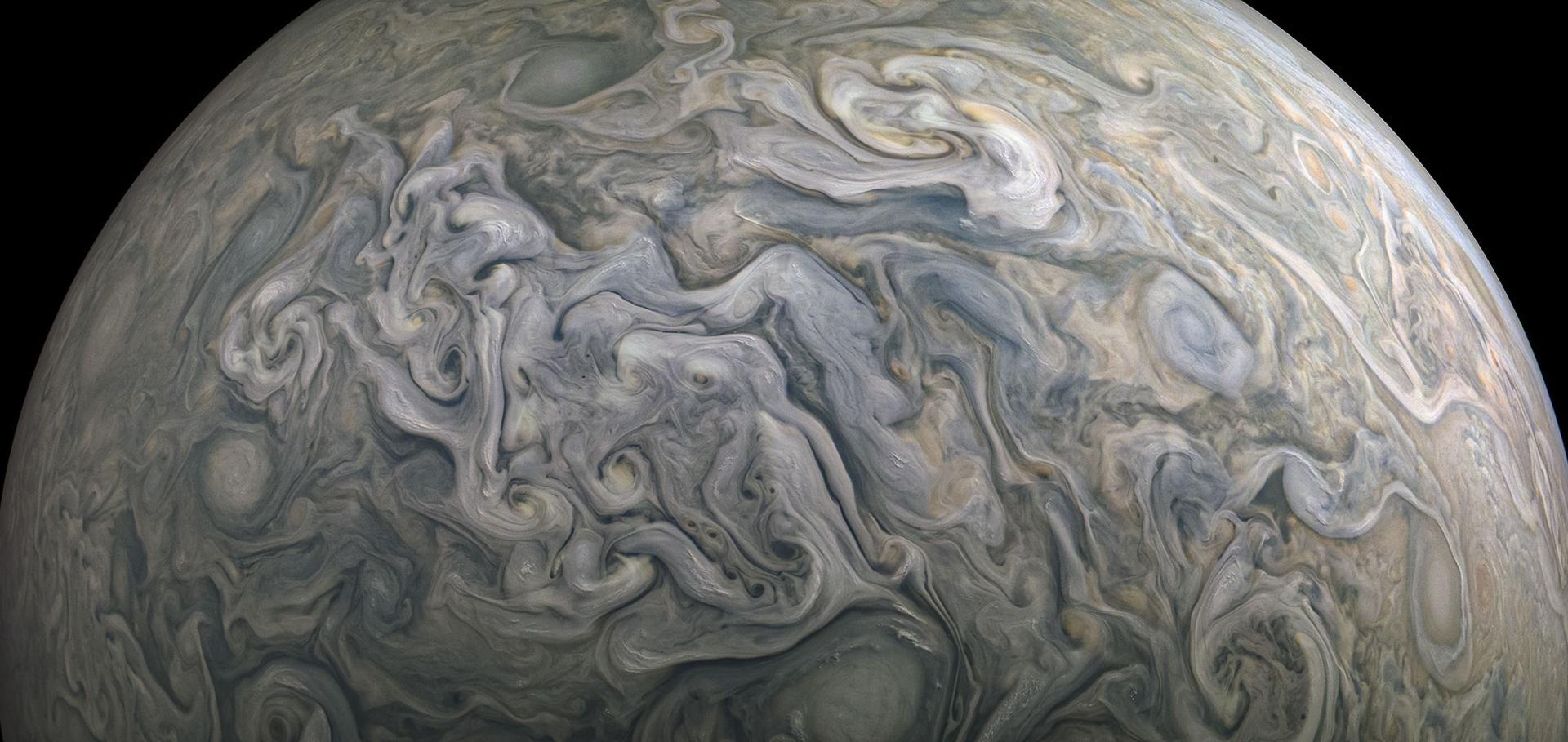
Juno Jupiter image

Alex Albinski

DTC Student

Research theme

  • Climate physics

Sub department

  • Atmospheric, Oceanic and Planetary Physics

Research groups

  • Atmospheric processes
alex.albinski@keble.ox.ac.uk
  • About
  • Publications

Shipping and fishing vessels as sources of marine plastic debris for the Seychelles.

Mar Pollut Bull 233:Pt 1 (2026) 120064

Authors:

Alex L Albinski, Helen L Johnson, Jessica Savage, April J Burt, Noam S Vogt-Vincent

Abstract:

Large quantities of plastic pollution are accumulating at small island nations across the western Indian Ocean. Despite a historical focus on terrestrial inputs, recent research suggests that most pollution arriving at some islands may come from fishing and shipping activity. We use a 2D Lagrangian particle-tracking model, combined with satellite-tracked shipping and fishing data, to identify major fisheries and shipping lanes which are responsible for plastic debris beaching at the Seychelles. Virtual particles, representing plastic debris, are released monthly over multiple decades and are advected by currents from a 1/50°(∼2 km) regional ocean model. We find most fishing debris originates from within the Seychelles' own exclusive economic zone, and sources of shipping debris are concentrated along major shipping routes. Sources vary seasonally, due to wind-induced reversals of surface currents between monsoons. Finally, we find variation in the quantity and seasonality of debris accumulation on a sub-island scale. Therefore, higher-resolution models that resolve local currents and kilometre scale islands may play a vital role in clean-up and management efforts.
More details from the publisher

Shipping and fisheries are major sources of plastic pollution for the Seychelles

Copernicus Publications (2026)

Authors:

Alex Albinski, Jessica Savage, April Burt, Noam Vogt-Vincent, Helen Johnson

Abstract:

Marine plastic debris that is discarded into the ocean and eventually beaches is an acute problem for small island nations such as the Seychelles. To address this problem and enable anticipatory action, the sources of marine plastic debris need to be identified. Recent observations suggest that not all of the debris that arrives at the Seychelles is from terrestrial input. However, there is currently a lack of quantitative attribution of maritime debris sources.Therefore, we investigate the potential shipping and fishing vessel plastic debris sources in the southwestern Indian Ocean that beach at the Seychelles. We use a 2D Lagrangian particle-tracking model, based on OceanParcels, with particles that are advected by currents from a 1/50° (~2 km) regional ocean model. We combine this with satellite-tracked fishing and shipping data to inform particle starting locations and weightings. This model resolution allows us to resolve island to sub-island accumulation patterns.Spatially, model results suggest that debris beaching at the Seychelles from shipping vessels is concentrated along a limited number of high-activity shipping routes. The port destinations of these routes are consistent with the origin of plastic bottles inferred from labels in a previous study. Model results also show that 50-66% of fishing debris that beaches at the Seychelles is discarded within its own exclusive economic zone, depending on the island group.Temporally, the season during which debris is discarded strongly impacts the likelihood of beaching. This seasonal profile varies in amplitude and phase between islands due to wind-driven surface current changes. Additionally, we find debris beaching patterns can vary substantially between islands and on a sub-island scale. This highlights the importance of higher-resolution models for investigating plastic accumulation at kilometre-scale islands. We also assess the model against observations including bottle drifters and seasonal accumulation data at the Aldabra Atoll, the latter of which is consistent with sub-island scale accumulation seasonality from the model.Given that most marine debris originates from a few major shipping routes and from within the Seychelles exclusive economic zone, we suggest targeted enforcement of MARPOL Annex V could tackle the source of the issue.
More details from the publisher

Footer Menu

  • Contact us
  • Giving to the Dept of Physics
  • Work with us
  • Media

User account menu

  • Log in

Follow us

FIND US

Clarendon Laboratory,

Parks Road,

Oxford,

OX1 3PU

CONTACT US

Tel: +44(0)1865272200

University of Oxfrod logo Department Of Physics text logo
IOP Juno Champion logo Athena Swan Silver Award logo

© University of Oxford - Department of Physics

Cookies | Privacy policy | Accessibility statement

Built by: Versantus

  • Home
  • Research
  • Study
  • Engage
  • Our people
  • News & Comment
  • Events
  • Our facilities & services
  • About us
  • Giving to Physics
  • Current students
  • Staff intranet