Home
Department Of Physics text logo
  • Research
    • Our research
    • Our research groups
    • Our research in action
    • Research funding support
    • Summer internships for undergraduates
  • Study
    • Undergraduates
    • Postgraduates
  • Engage
    • For alumni
    • For business
    • For schools
    • For the public
Menu
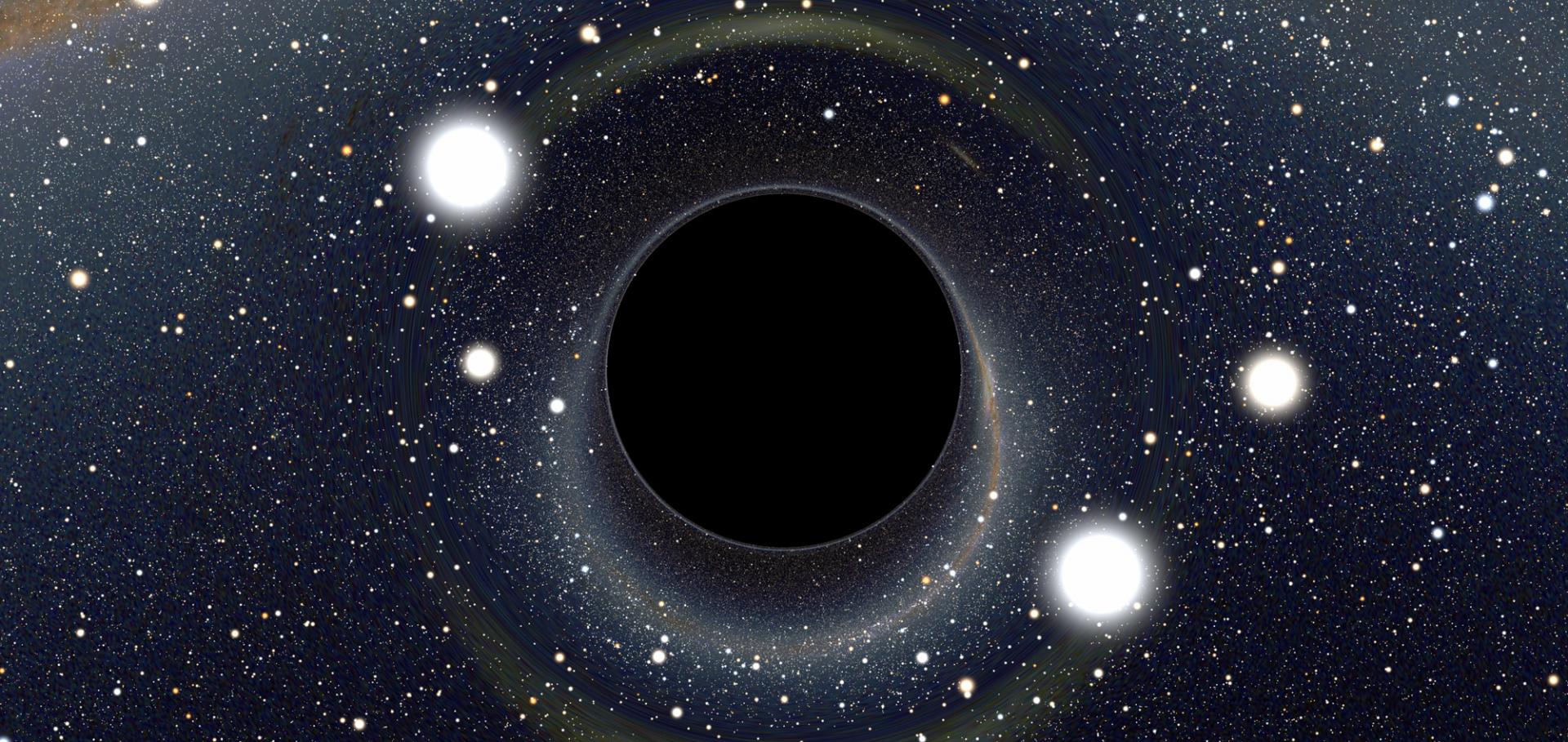
Black Hole

Lensing of space time around a black hole. At Oxford we study black holes observationally and theoretically on all size and time scales - it is some of our core work.

Credit: ALAIN RIAZUELO, IAP/UPMC/CNRS. CLICK HERE TO VIEW MORE IMAGES.

Michele Cappellari

Professor of Astrophysics

Research theme

  • Astronomy and astrophysics

Sub department

  • Astrophysics

Research groups

  • Galaxy formation and evolution
  • Extremely Large Telescope
michele.cappellari@physics.ox.ac.uk
Telephone: 01865 (2)73647
Denys Wilkinson Building, room 755
  • About
  • Publications

OASIS high-resolution integral field spectroscopy of the SAURON ellipticals and lenticulars

ASTRON NACHR 325:2 (2004) 100-103

Authors:

R McDermid, E Emsellem, M Cappellari, H Kuntschner, R Bacon, M Bureau, Y Copin, RL Davies, J Falcon-Barroso, P Ferruit, D Krajnovic, RF Peletier, K Shapiro, F Wernli, PT de Zeeuw

Abstract:

We present a summary of high-spatial resolution follow-up observations of the elliptical (E) and lenticular (SO) galaxies in the SAURON survey using the OASIS integral field spectrograph. The OASIS observations explore the central 8" x 10" regions of these galaxies using a spatial sampling four times higher than SAURON, often revealing previously undiscovered features. Around 75% (31/48) of the SAURON E/SOs with central velocity dispersion greater than or similar to 120 kin s(-1) were observed with OASIS, covering well the original SAURON representative sample. We present here an overview of this follow-up survey, and some preliminary results on individual objects, including a previously unreported counter-rotating core in NGC4382; the decoupled stellar and gas velocity fields of NGC 2768; and the strong age gradient towards the centre of NGC 3489.
More details from the publisher
More details

Orbital structure of triaxial galaxies

IAU SYMP (2004) 179-180

Authors:

G van de Ven, E Verolme, M Cappellari, T de Zeeuw

Abstract:

We have developed a method to construct realistic triaxial dynamical models for elliptical galaxies, allowing us to derive best-fitting parameters, such as the mass-to-light ratio and the black hole mass, and to study the orbital structure. We use triaxial theoretical Abel models to investigate the robustness of the method.
More details from the publisher
More details

Parametric recovery of line-of-sight velocity distributions from absorption-line spectra of galaxies via penalized likelihood

PUBLICATIONS OF THE ASTRONOMICAL SOCIETY OF THE PACIFIC 116:816 (2004) 138-147

Authors:

M Cappellari, E Emsellem
More details from the publisher
Details from ArXiV

SAURON dynamical modeling of NGC 2974

IAU SYMP (2004) 305-306

Authors:

D Krajnovic, M Cappellari, E Emsellem, R McDermid

Abstract:

We present a three-integral orbit superposition Schwarschild model of NGC 2974, observed with the integral-field unit SAURON. We explore the dynamical structure of the stars and gas.
More details from the publisher
More details

The second generation VLT instrument MUSE: Science drivers and instrument design

P SOC PHOTO-OPT INS 5492 (2004) 1145-1149

Authors:

R Bacon, S Bauer, R Bower, S Cabrit, M Cappellari, M Carollo, FO Combes, R Davies, B Delabre, H Dekker, J Devriendt, S Djidel, M Duchateau, JP Dubois, E Emsellem, P Ferruit, M Franx, G Gilmore, B Guiderdoni, F Henault, N Hubin, B Jungwiert, A Kelz, M Le Louarn, I Lewis, JL Lizon, R Mc Dermid, S Morris, U Laux, O Le Fevre, B Lantz, S Lilly, J Lynn, L Pasquin, A Pecontal, PPD Popovic, A Quirrenbach, R Reiss, M Roth, M Steinmetz, R Stuik, L Wisotzki, T de Zeeuw

Abstract:

The Multi Unit Spectroscopic Explorer (MUSE) is a second generation VLT panoramic integral-field spectrograph operating in the visible wavelength range. MUSE has a field of 1x1 arcmin(2) sampled at 0.20.2 arcsec(2) and is assisted by a ground layer adaptive optics system using four laser guide stars. The simultaneous spectral range is 0.465-0.93 mum, at a resolution of Rsimilar to3000. MUSE couples the discovery potential of a large imaging device to the measuring capabilities of a high-quality spectrograph, while taking advantage of the increased spatial resolution provided by adaptive optics. This makes MUSE a unique and tremendously powerful instrument for discovering and characterizing objects that lie beyond the reach of even the deepest imaging surveys. MUSE has also a high spatial resolution mode with 7.5x7.5 arcsec(2) field of view sampled at 25 milli-arcsec. In this mode MUSE should be able to get diffraction limited data-cube in the 0.6-1 mum wavelength range. Although MUSE design has been optimized for the study of galaxy formation and evolution, it has a wide range of possible applications; e.g. monitoring of outer planets atmosphere, young stellar objects environment, supermassive black holes and active nuclei in nearby galaxies or massive spectroscopic survey of stellar fields.
More details from the publisher
More details

Pagination

  • First page First
  • Previous page Prev
  • …
  • Page 118
  • Page 119
  • Page 120
  • Page 121
  • Current page 122
  • Page 123
  • Page 124
  • Page 125
  • Page 126
  • …
  • Next page Next
  • Last page Last

Footer Menu

  • Contact us
  • Giving to the Dept of Physics
  • Work with us
  • Media

User account menu

  • Log in

Follow us

FIND US

Clarendon Laboratory,

Parks Road,

Oxford,

OX1 3PU

CONTACT US

Tel: +44(0)1865272200

University of Oxfrod logo Department Of Physics text logo
IOP Juno Champion logo Athena Swan Silver Award logo

© University of Oxford - Department of Physics

Cookies | Privacy policy | Accessibility statement

Built by: Versantus

  • Home
  • Research
  • Study
  • Engage
  • Our people
  • News & Comment
  • Events
  • Our facilities & services
  • About us
  • Giving to Physics
  • Current students
  • Staff intranet