Home
Department Of Physics text logo
  • Research
    • Our research
    • Our research groups
    • Our research in action
    • Research funding support
    • Summer internships for undergraduates
  • Study
    • Undergraduates
    • Postgraduates
  • Engage
    • For young people
    • For teachers
    • For the public
    • For alumni
    • For business
  • Support
Menu
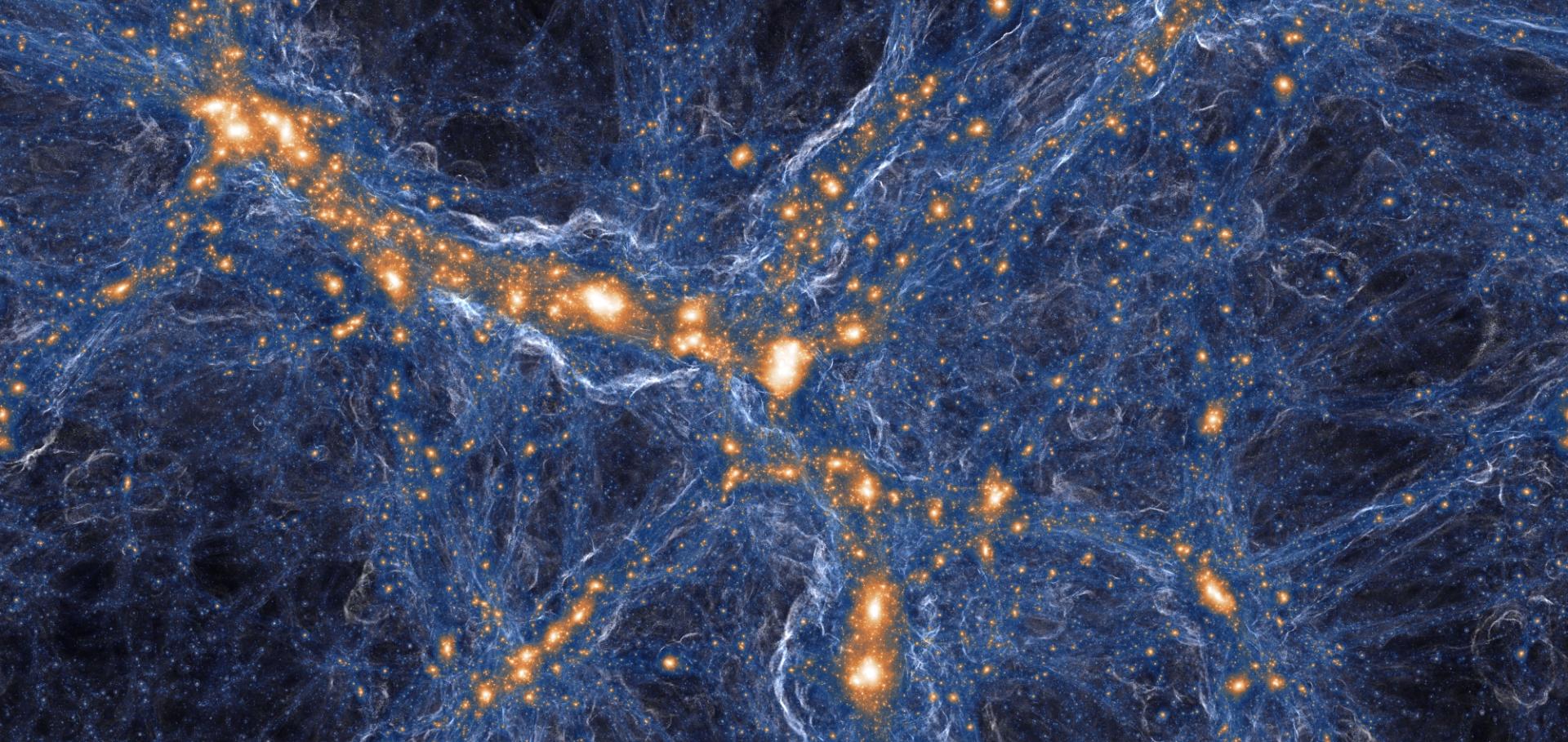
Cosmic Web
Credit: llustrisTNG collaboration

Jessica Cowell

Grad Student

Research theme

  • Particle astrophysics & cosmology

Sub department

  • Astrophysics

Research groups

  • Beecroft Institute for Particle Astrophysics and Cosmology
jessica.cowell@physics.ox.ac.uk
Denys Wilkinson Building, room 651
Personal Website
  • About
  • Publications

First Constraints from Marked Angular Power Spectra with Subaru Hyper Suprime-Cam Survey First-Year Data

Monthly Notices of the Royal Astronomical Society Oxford University Press (OUP) (2026) stag033

Authors:

Jessica A Cowell, Joaquin Armijo, Leander Thiele, Gabriela A Marques, Camila P Novaes, Daniela Grandón, Sihao Cheng, Masato Shirasaki, David Alonso, Jia Liu

Abstract:

Abstract We present the first application of marked power spectra to weak lensing data, using maps from the Subaru Hyper Suprime-Cam Year 1 (HSC-Y1) survey. Marked convergence fields, constructed by weighting the convergence field with non-linear functions of its smoothed version, are designed to encode higher-order information while remaining computationally tractable. Using simulations tailored to the HSC-Y1 data, we test three mark functions that up- or down-weight different density environments. Our results show that combining multiple types of marked auto- and cross-spectra improves constraints on the clustering amplitude parameter $S_8\equiv \sigma _8\sqrt{\Omega _{\rm m}/0.3}$ by ≈43 percnt compared to standard two-point power spectra. When applied to the HSC-Y1 data, this translates into a constraint on S8 = 0.807 ± 0.024. We assess the sensitivity of the marked power spectra to systematics, including baryonic effects, intrinsic alignment, photometric redshifts, and multiplicative shear bias. We note that some of the additional information introduced by the marked field originates from scales smaller than the scale cut, and is partly Gaussian in nature. This does not invalidate our systematic tests. These results demonstrate the promise of marked statistics as a practical and powerful tool for extracting non-Gaussian information from weak lensing surveys.
More details from the publisher
More details

First Constraints from Marked Angular Power Spectra with Subaru Hyper Suprime-Cam Survey First-Year Data

(2025)

Authors:

Jessica A Cowell, Joaquin Armijo, Leander Thiele, Gabriela A Marques, Camila P Novaes, Daniela Grandón, Sihao Cheng, Masato Shirasaki, David Alonso, Jia Liu
More details from the publisher
Details from ArXiV

Cosmology from HSC Y1 weak lensing data with combined higher-order statistics and simulation-based inference

Physical Review D American Physical Society (APS) 111:8 (2025) 083510

Authors:

Camila P Novaes, Leander Thiele, Joaquin Armijo, Sihao Cheng, Jessica A Cowell, Gabriela A Marques, Elisa GM Ferreira, Masato Shirasaki, Ken Osato, Jia Liu
More details from the publisher
More details

Cosmological constraints using Minkowski functionals from the first year data of the Hyper Suprime-Cam

Monthly Notices of the Royal Astronomical Society Oxford University Press (OUP) 537:4 (2025) 3553-3560

Authors:

Joaquin Armijo, Gabriela A Marques, Camila P Novaes, Leander Thiele, Jessica A Cowell, Daniela Grandón, Masato Shirasaki, Jia Liu
More details from the publisher
More details

Fast Projected Bispectra: the filter-square approach

The Open Journal of Astrophysics Maynooth University 8 (2025)

Authors:

Lea Harscouet, Jessica A Cowell, Julia Ereza, David Alonso, Hugo Camacho, Andrina Nicola, Anže Slosar

Abstract:

<jats:p>The study of third-order statistics in large-scale structure analyses has been hampered by the increased complexity of bispectrum estimators (compared to power spectra), the large dimensionality of the data vector, and the difficulty in estimating its covariance matrix. In this paper we present the filtered-squared bispectrum (FSB), an estimator of the projected bispectrum effectively consisting of the cross-correlation between the square of a field filtered on a range of scales and the original field. Within this formalism, we are able to recycle much of the infrastructure built around power spectrum measurement to construct an estimator that is both fast and robust against mode-coupling effects caused by incomplete sky observations. Furthermore, we demonstrate that the existing techniques for the estimation of analytical power spectrum covariances can be used within this formalism to calculate the bispectrum covariance at very high accuracy, naturally accounting for the most relevant Gaussian and non-Gaussian contributions in a model-independent manner.</jats:p>
More details from the publisher
Details from ORA

Pagination

  • Current page 1
  • Page 2
  • Page 3
  • Next page Next
  • Last page Last

Footer Menu

  • Contact us
  • Giving to the Dept of Physics
  • Work with us
  • Media

User account menu

  • Log in

Follow us

FIND US

Clarendon Laboratory,

Parks Road,

Oxford,

OX1 3PU

CONTACT US

Tel: +44(0)1865272200

University of Oxfrod logo Department Of Physics text logo
IOP Juno Champion logo Athena Swan Silver Award logo

© University of Oxford - Department of Physics

Cookies | Privacy policy | Accessibility statement

Built by: Versantus

  • Home
  • Research
  • Study
  • Engage
  • Our people
  • News & Comment
  • Events
  • Our facilities & services
  • About us
  • Giving to Physics
  • Current students
  • Staff intranet