
Home
Department Of Physics text logo
  • Research
    • Our research
    • Our research groups
    • Our research in action
    • Research funding support
    • Summer internships for undergraduates
  • Study
    • Undergraduates
    • Postgraduates
  • Engage
    • For young people
    • For teachers
    • For the public
    • For alumni
    • For business
  • Support
Menu
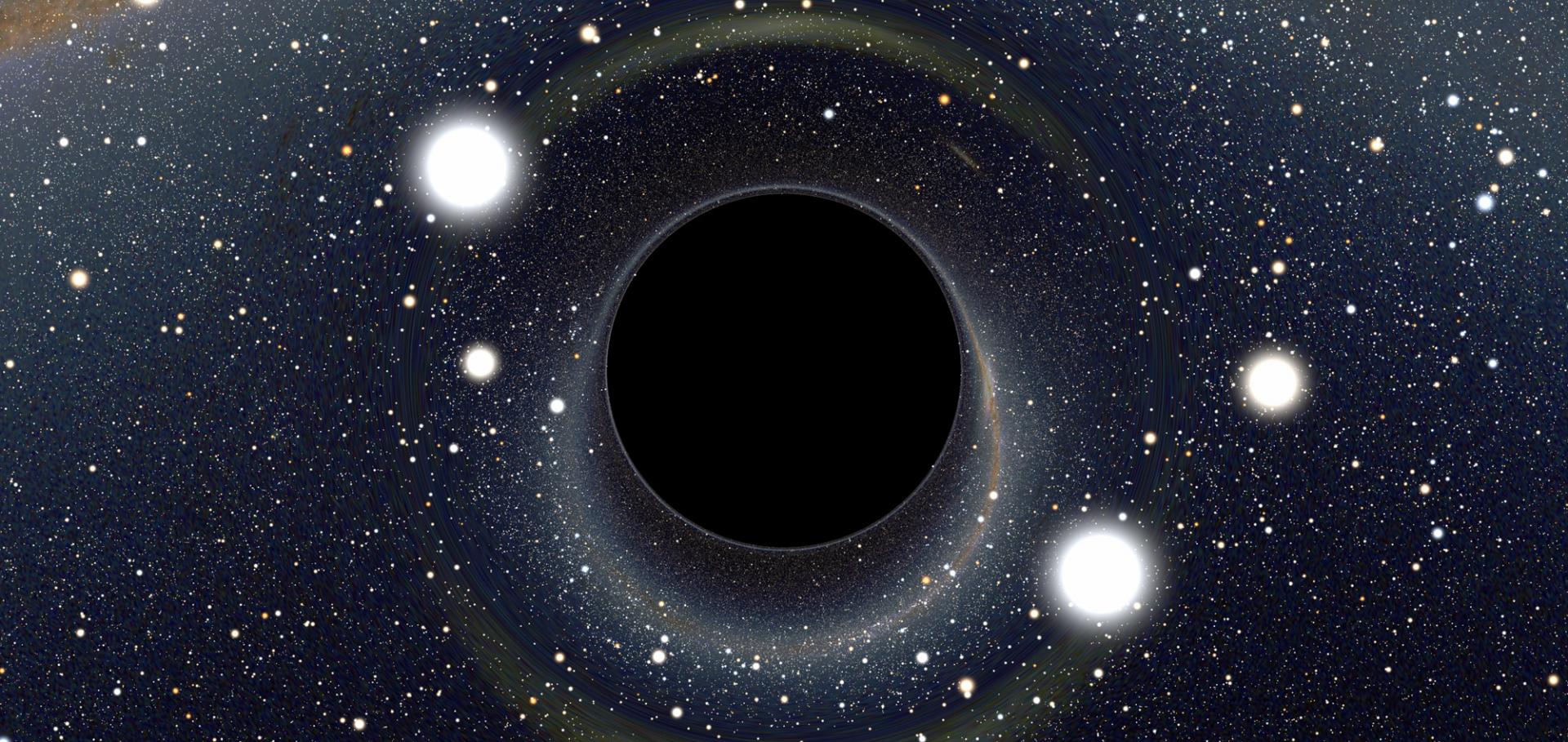
Black Hole

Lensing of space time around a black hole. At Oxford we study black holes observationally and theoretically on all size and time scales - it is some of our core work.

Credit: ALAIN RIAZUELO, IAP/UPMC/CNRS. CLICK HERE TO VIEW MORE IMAGES.

Prof Chris Lintott

Professor of Astrophysics and Citizen Science Lead

Research theme

  • Astronomy and astrophysics

Sub department

  • Astrophysics

Research groups

  • Zooniverse
  • Beecroft Institute for Particle Astrophysics and Cosmology
  • Rubin-LSST
chris.lintott@physics.ox.ac.uk
Telephone: 01865 (2)73638
Denys Wilkinson Building, room 532C
www.zooniverse.org
orcid.org/0000-0001-5578-359X
  • About
  • Citizen science
  • Group alumni
  • Publications

Zooniverse labs

Zooniverse lab
Build your own Zooniverse project

The Zooniverse lab lets anyone build their own citizen science project

Zooniverse Lab

Hot Cores : Probes of High-Redshift Galaxies

Mon.Not.Roy.Astron.Soc. 360 (2005) 1527-1531

Authors:

CJ Lintott, S Viti, DA Williams, JMC Rawlings, I Ferreras

Abstract:

The very high rates of second generation star formation detected and inferred in high redshift objects should be accompanied by intense millimetre-wave emission from hot core molecules. We calculate the molecular abundances likely to arise in hot cores associated with massive star formation at high redshift, using several independent models of metallicity in the early Universe. If the number of hot cores exceeds that in the Milky Way Galaxy by a factor of at least one thousand, then a wide range of molecules in high redshift hot cores should have detectable emission. It should be possible to distinguish between independent models for the production of metals and hence hot core molecules should be useful probes of star formation at high redshift.
Details from ArXiV
More details from the publisher

Hot cores: Probes of high-redshift galaxies

Monthly Notices of the Royal Astronomical Society 360:4 (2005) 1527-1531

Authors:

CJ Lintott, S Viti, DA Williams, JMC Rawlings, I Ferreras

Abstract:

The very high rates of second generation star formation detected and inferred in high-redshift objects should be accompanied by intense millimetre-wave emission from hot core molecules. We calculate the molecular abundances likely to arise in hot cores associated with massive star formation at high redshift, using several different models of metallicity in the early Universe. If the number of hot cores exceeds that in the Milky Way Galaxy by a factor of at least 1000, then a wide range of molecules in high-redshift hot cores should have detectable emission. It should be possible to distinguish between different models for the production of metals and hence hot core molecules should be useful probes of star formation at high redshift. © 2005 RAS.
More details from the publisher

Molecular abundance ratios as a tracer of accelerated collapse in regions of high-mass star formation

Astrophysical Journal 620:2 I (2005) 795-799

Authors:

CJ Lintott, S Viti, JMC Rawlings, DA Williams, TW Hartquist, P Caselli, I Zinchenko, P Myers

Abstract:

Recent observations suggest that the behavior of tracer species such as N2H+ and CS is significantly different in regions of high- and low-mass star formation. In the latter, N2H+ is a good tracer of mass, while CS is not. Observations show the reverse to be true in high-mass star formation regions. We use a computational chemical model to show that the abundances of these and other species may be significantly altered by a period of accelerated collapse in high-mass star-forming regions. We suggest that these results provide a potential explanation of the observations, and make predictions for the behavior of other species. © 2005. The American Astronomical Society. All rights reserved.
More details from the publisher

Molecular abundance ratios as a tracer of accelerated collapse in regions of high mass star formation?

ArXiv astro-ph/0410653 (2004)

Authors:

CJ Lintott, S Viti, JMC Rawlings, DA Williams, TW Hartquist, P Caselli, I Zinchenko, P Myers

Abstract:

Recent observations suggest that the behaviour of tracer species such as N_2H+ and CS is significantly different in regions of high and low mass star formation. In the latter, N_2H+ is a good tracer of mass, while CS is not. Observations show the reverse to be true in high-mass star formation regions. We use a computational chemical model to show that the abundances of these and other species may be significantly altered by a period of accelerated collapse in high mass star forming regions. We suggest these results provide a potential explanation of the observations, and make predictions for the behaviour of other species.
Details from ArXiV
More details from the publisher

Normal black holes in bulge-less galaxies: the largely quiescent, merger-free growth of black holes over cosmic time

MNRAS

Authors:

G Martin, S Kaviraj, M Volonteri, BD Simmons, JEG Devriendt, CJ Lintott, RJ Smethurst, Y Dubois, C Pichon

Abstract:

Understanding the processes that drive the formation of black holes (BHs) is a key topic in observational cosmology. While the observed $M_{\mathrm{BH}}$--$M_{\mathrm{Bulge}}$ correlation in bulge-dominated galaxies is thought to be produced by major mergers, the existence of a $M_{\mathrm{BH}}$--$M_{\star}$ relation, across all galaxy morphological types, suggests that BHs may be largely built by secular processes. Recent evidence that bulge-less galaxies, which are unlikely to have had significant mergers, are offset from the $M_{\mathrm{BH}}$--$M_{\mathrm{Bulge}}$ relation, but lie on the $M_{\mathrm{BH}}$--$M_{\star}$ relation, has strengthened this hypothesis. Nevertheless, the small size and heterogeneity of current datasets, coupled with the difficulty in measuring precise BH masses, makes it challenging to address this issue using empirical studies alone. Here, we use Horizon-AGN, a cosmological hydrodynamical simulation to probe the role of mergers in BH growth over cosmic time. We show that (1) as suggested by observations, simulated bulge-less galaxies lie offset from the main $M_{\mathrm{BH}}$--$M_{\mathrm{Bulge}}$ relation, but on the $M_{\mathrm{BH}}$--$M_{\star}$ relation, (2) the positions of galaxies on the $M_{\mathrm{BH}}$--$M_{\star}$ relation are not affected by their merger histories and (3) only $\sim$35 per cent of the BH mass in today's massive galaxies is directly attributable to merging -- the majority ($\sim$65 per cent) of BH growth, therefore, takes place gradually, via secular processes, over cosmic time.
More details
More details from the publisher
Details from ORA
More details
Details from ArXiV

Pagination

  • First page First
  • Previous page Prev
  • …
  • Page 51
  • Page 52
  • Page 53
  • Page 54
  • Page 55
  • Page 56
  • Page 57
  • Current page 58
  • Page 59
  • Next page Next
  • Last page Last

Footer Menu

  • Contact us
  • Giving to the Dept of Physics
  • Work with us
  • Media

User account menu

  • Log in

Follow us

FIND US

Clarendon Laboratory,

Parks Road,

Oxford,

OX1 3PU

CONTACT US

Tel: +44(0)1865272200

University of Oxfrod logo Department Of Physics text logo
IOP Juno Champion logo Athena Swan Silver Award logo

© University of Oxford - Department of Physics

Cookies | Privacy policy | Accessibility statement

Built by: Versantus

  • Home
  • Research
  • Study
  • Engage
  • Our people
  • News & Comment
  • Events
  • Our facilities & services
  • About us
  • Giving to Physics
  • Current students
  • Staff intranet