

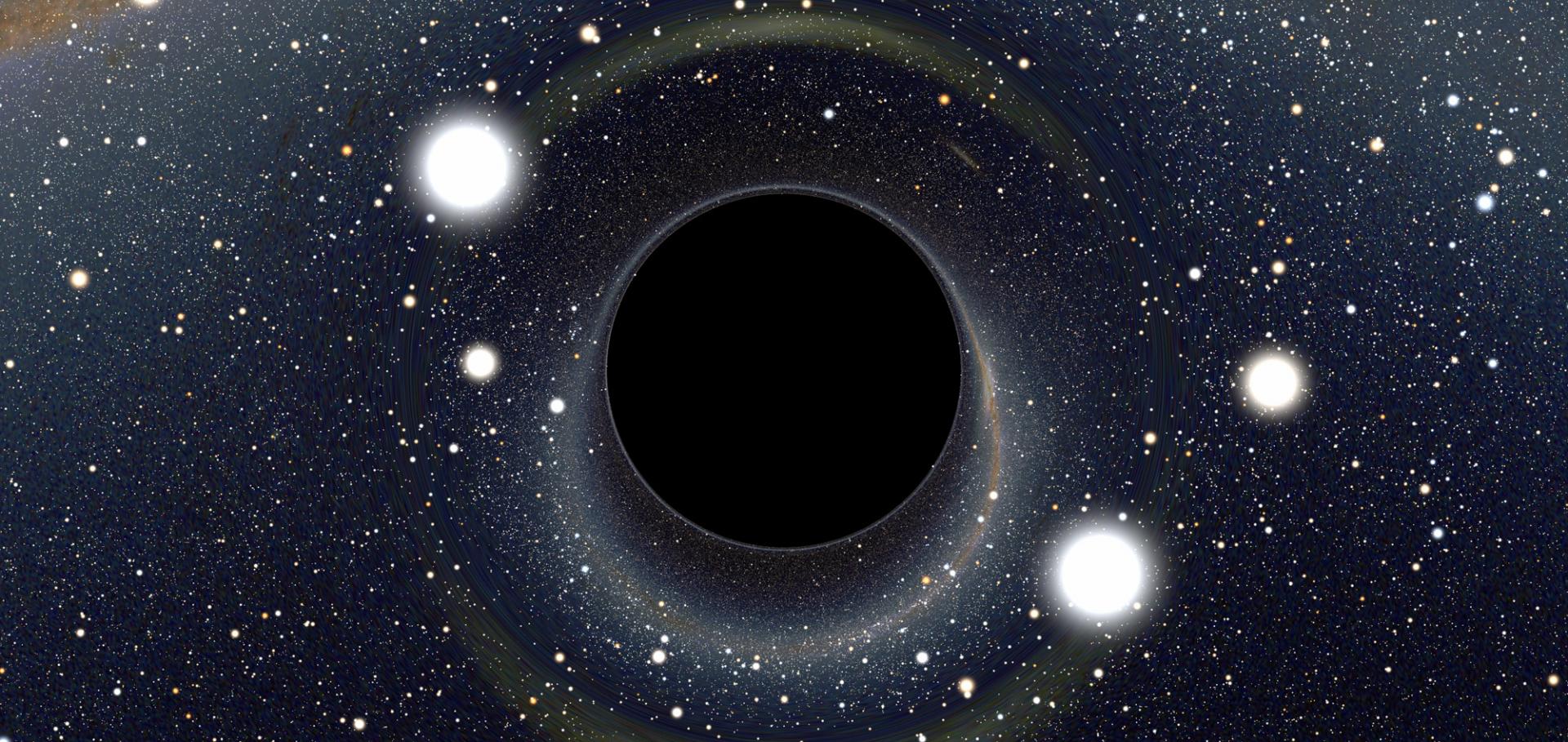

A complex state transition from the black hole candidate swift J1753.5-0127
Monthly Notices of the Royal Astronomical Society 429:2 (2013) 1244-1257
Abstract:
We present our monitoring campaign of the outburst of the black hole candidate Swift J1753.5-0127, observed with the Rossi X-ray Timing Explorer and the Swift satellites. After ̃4.5 yr since its discovery, the source had a transition to the hard intermediate state. We performed spectral and timing studies of the transition showing that, unlike the majority of the transient black holes, the system did not go to the soft states but it returned to the hard state after a few months. During this transition Swift J1753.5-0127 features properties which are similar to those displayed by the black hole Cygnus X-1. We compared Swift J1753.5-0127 to one dynamically confirmed black hole and two neutron stars showing that its power spectra are in agreement with the binary hosting a black hole. We also suggest that the prolonged period at low flux that followed the initial flare is reminiscent of that observed in other X-ray binaries, as well as in cataclysmic variables. © 2012 The Authors. Published by Oxford University Press on behalf of the Royal Astronomical Society.Testing reflection features in 4U 1705−44 with XMM-Newton, BeppoSAX, and RXTE in the hard and soft states
Astronomy & Astrophysics EDP Sciences 550 (2013) a5
X-ray follow-ups of XSS J12270-4859: a low-mass X-ray binary with gamma-ray Fermi-LAT association⋆
Astronomy & Astrophysics EDP Sciences 550 (2013) a89
Swift observations of the ultraluminous X-ray source XMMU J004243.6+412519 in M31
Monthly Notices of the Royal Astronomical Society Oxford University Press (OUP) 428:3 (2013) 2480-2488
The optical counterpart of the bright x-ray transient swift j1745-26
Monthly Notices of the Royal Astronomical Society 432:2 (2013) 1133-1137