Home
Department Of Physics text logo
  • Research
    • Our research
    • Our research groups
    • Our research in action
    • Research funding support
    • Summer internships for undergraduates
  • Study
    • Undergraduates
    • Postgraduates
  • Engage
    • For young people
    • For teachers
    • For the public
    • For alumni
    • For business
  • Support
Menu
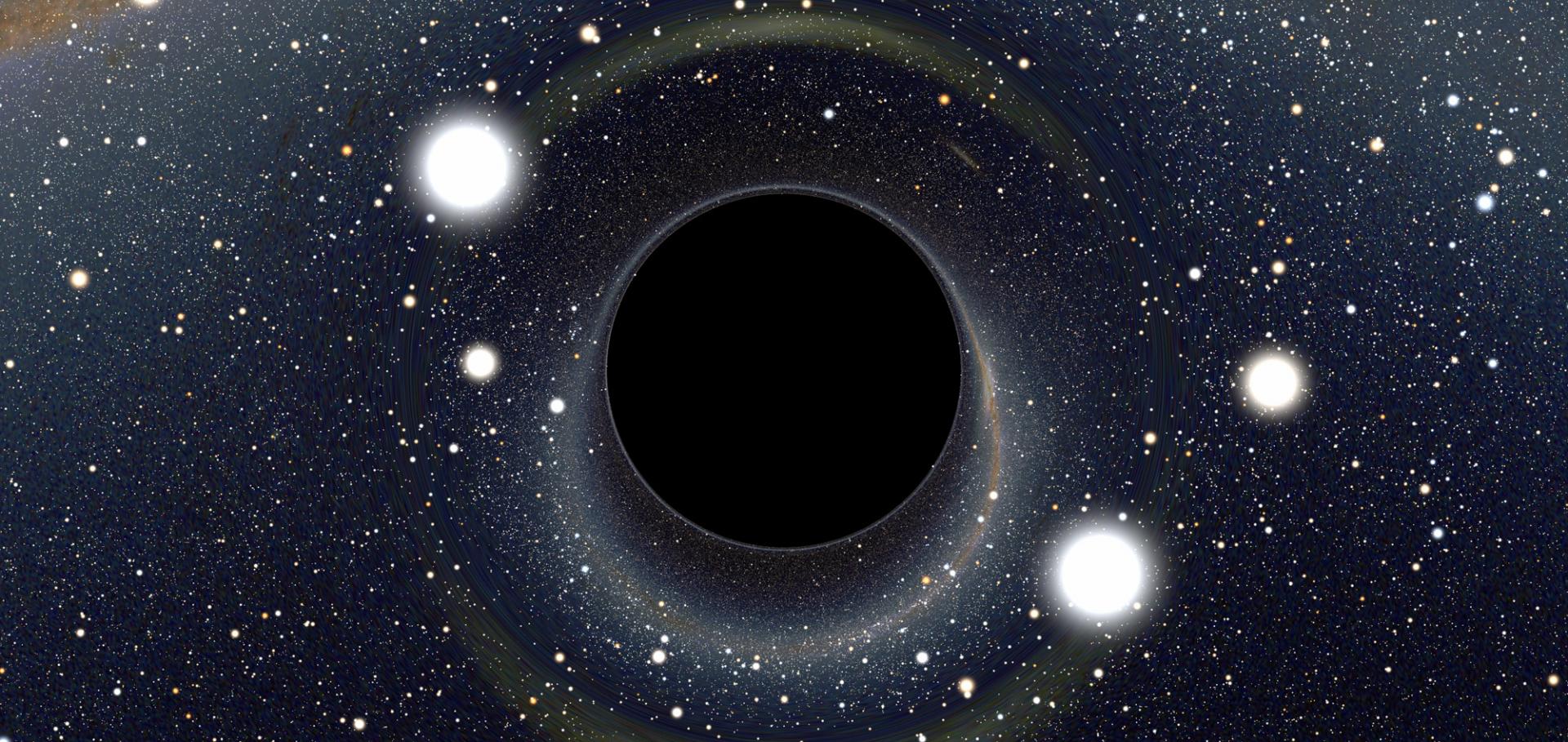
Black Hole

Lensing of space time around a black hole. At Oxford we study black holes observationally and theoretically on all size and time scales - it is some of our core work.

Credit: ALAIN RIAZUELO, IAP/UPMC/CNRS. CLICK HERE TO VIEW MORE IMAGES.

Professor Stephen Smartt CBE FRS MRIA

Professor of Astrophysics

Research theme

  • Astronomy and astrophysics

Sub department

  • Astrophysics

Research groups

  • Hintze Centre for Astrophysical Surveys
  • Pulsars, transients and relativistic astrophysics
  • Rubin-LSST
stephen.smartt@physics.ox.ac.uk
Telephone: 01865273405
Denys Wilkinson Building, room 714
  • About
  • Publications

Photometric and spectroscopic evolution of the interacting transient AT 2016jbu (Gaia16cfr)

(2021)

Authors:

SJ Brennan, M Fraser, J Johansson, A Pastorello, R Kotak, HF Stevance, T-W Chen, JJ Eldridge, S Bose, PJ Brown, E Callis, R Cartier, M Dennefeld, Subo Dong, P Duffy, N Elias-Rosa, G Hosseinzadeh, E Hsiao, H Kuncarayakti, A Martin-Carrillo, B Monard, A Nyholm, G Pignata, D Sand, BJ Shappee, SJ Smartt, BE Tucker, L Wyrzykowski, H Abbot, S Benetti, S Blondin, Ping Chen, J Bento, A Delgado, L Galbany, M Gromadzki, CP Gutiérrez, L Hanlon, DL Harrison, D Hiramatsu, ST Hodgkin, TW-S Holoien, DA Howell, C Inserra, E Kankare, S Kozlowski, K Maguire, TE Müller-Bravo, C McCully, P Meintjes, N Morrell, M Nicholl, D O'Neill, P Pietrukowicz, R Poleski, JL Prieto, A Rau, DE Reichart, T Schweyer, M Shahbandeh, J Skowron, J Sollerman, I Soszńyski, MD Stritzinger, M Szymański, L Tartaglia, A Udalski, K Ulaczyk, DR Young, M van Leeuwen, B van Soelen
More details from the publisher

Progenitor, environment, and modelling of the interacting transient, AT 2016jbu (Gaia16cfr)

(2021)

Authors:

SJ Brennan, M Fraser, J Johansson, A Pastorello, R Kotak, HF Stevance, T-W Chen, JJ Eldridge, S Bose, PJ Brown, E Callis, R Cartier, M Dennefeld, Subo Dong, P Duffy, N Elias-Rosa, G Hosseinzadeh, E Hsiao, H Kuncarayakti, A Martin-Carrillo, B Monard, G Pignata, D Sand, BJ Shappee, SJ Smartt, BE Tucker, L Wyrzykowski, H Abbot, S Benetti, S Blondin, Ping Chen, J Bento, A Delgado, L Galbany, M Gromadzki, CP Gutiérrez, L Hanlon, DL Harrison, D Hiramatsu, ST Hodgkin, TW-S Holoien, DA Howell, C Inserra, E Kankare, S Kozlowski, K Maguire, TE Müller-Bravo, C McCully, P Meintjes, N Morrell, M Nicholl, D O'Neill, P Pietrukowicz, R Poleski, JL Prieto, A Rau, DE Reichart, T Schweyer, M Shahbandeh, J Skowron, J Sollerman, I Soszńyski, MD Stritzinger, M Szymański, L Tartaglia, A Udalski, K Ulaczyk, DR Young, M van Leeuwen, B van Soelen
More details from the publisher

Corrigendum: “Design and operation of the ATLAS Transient Science Server” (2020, PASP, 132, 085002)

Publications of the Astronomical Society of the Pacific IOP Publishing 133:1020 (2021) 029201

Authors:

KW Smith, SJ Smartt, DR Young, JL Tonry, L Denneau, H Flewelling, AN Heinze, HJ Weiland, B Stalder, A Rest, CW Stubbs, JP Anderson, T-W Chen, P Clark, A Do, F Förster, M Fulton, J Gillanders, OR McBrien, D O’Neill, S Srivastav, DE Wright
More details from the publisher
More details

NEO population, velocity bias, and impact risk from an ATLAS analysis

Planetary Science Journal 2:1 (2021)

Authors:

AN Heinze, L Denneau, JL Tonry, SJ Smartt, N Erasmus, A Fitzsimmons, JE Robinson, H Weiland, H Flewelling, B Stalder, A Rest, DR Young

Abstract:

We estimate the total population of near-Earth objects (NEOs) in the solar system using an extensive, "solarsystem-to-pixels"fake-asteroid simulation to debias detections of real NEOs by the ATLAS survey. Down to absolute magnitudes H = 25 and 27.6 (diameters of ~34 and 10 m, respectively, for 15% albedo), we find total populations of (3.72 ± 0.49) × 105 and (1.59 ± 0.45) × 107 NEOs, respectively. Most of the plausible sources of error tend toward underestimation, so the true populations are likely larger. We find the distribution of H magnitudes steepens for NEOs fainter than H ~ 22.5, making small asteroids more common than extrapolation from brighter H mags would predict. Our simulation indicates a strong bias against detecting small but dangerous asteroids that encounter Earth with high relative velocities - i.e., asteroids in highly inclined and/or eccentric orbits. Worldwide NEO discovery statistics indicate this bias affects global NEO detection capability to the point that an observational census of small asteroids in such orbits is probably not currently feasible. Prompt and aggressive followup of NEO candidates, combined with closer collaborations between segments of the global NEO community, can increase detection rates for these dangerous objects.
More details from the publisher
Details from ORA
More details

The Young Supernova Experiment: Survey Goals, Overview, and Operations

The Astrophysical Journal American Astronomical Society 908:2 (2021) 143

Authors:

DO Jones, RJ Foley, G Narayan, J Hjorth, ME Huber, PD Aleo, KD Alexander, CR Angus, K Auchettl, VF Baldassare, SH Bruun, KC Chambers, D Chatterjee, DL Coppejans, DA Coulter, L DeMarchi, G Dimitriadis, MR Drout, A Engel, KD French, A Gagliano, C Gall, T Hung, L Izzo, WV Jacobson-Galán, CD Kilpatrick, H Korhonen, R Margutti, SI Raimundo, E Ramirez-Ruiz, A Rest, C Rojas-Bravo, MR Siebert, SJ Smartt, KW Smith, G Terreran, Q Wang, R Wojtak, A Agnello, Z Ansari, N Arendse, A Baldeschi, PK Blanchard, D Brethauer, JS Bright, JS Brown, TJL de Boer, SA Dodd, JR Fairlamb, C Grillo, A Hajela, C Cold, AN Kolborg, JAP Law-Smith, C-C Lin, EA Magnier, K Malanchev, D Matthews, B Mockler, D Muthukrishna, Y-C Pan, H Pfister, DK Ramanah, S Rest, A Sarangi, SL Schrøder, C Stauffer, MC Stroh, KL Taggart, S Tinyanont, RJ Wainscoat
More details from the publisher

Pagination

  • First page First
  • Previous page Prev
  • …
  • Page 35
  • Page 36
  • Page 37
  • Page 38
  • Current page 39
  • Page 40
  • Page 41
  • Page 42
  • Page 43
  • …
  • Next page Next
  • Last page Last

Footer Menu

  • Contact us
  • Giving to the Dept of Physics
  • Work with us
  • Media

User account menu

  • Log in

Follow us

FIND US

Clarendon Laboratory,

Parks Road,

Oxford,

OX1 3PU

CONTACT US

Tel: +44(0)1865272200

University of Oxfrod logo Department Of Physics text logo
IOP Juno Champion logo Athena Swan Silver Award logo

© University of Oxford - Department of Physics

Cookies | Privacy policy | Accessibility statement

Built by: Versantus

  • Home
  • Research
  • Study
  • Engage
  • Our people
  • News & Comment
  • Events
  • Our facilities & services
  • About us
  • Giving to Physics
  • Current students
  • Staff intranet