Home
Department Of Physics text logo
  • Research
    • Our research
    • Our research groups
    • Our research in action
    • Research funding support
    • Summer internships for undergraduates
  • Study
    • Undergraduates
    • Postgraduates
  • Engage
    • For alumni
    • For business
    • For schools
    • For the public
  • Support
Menu
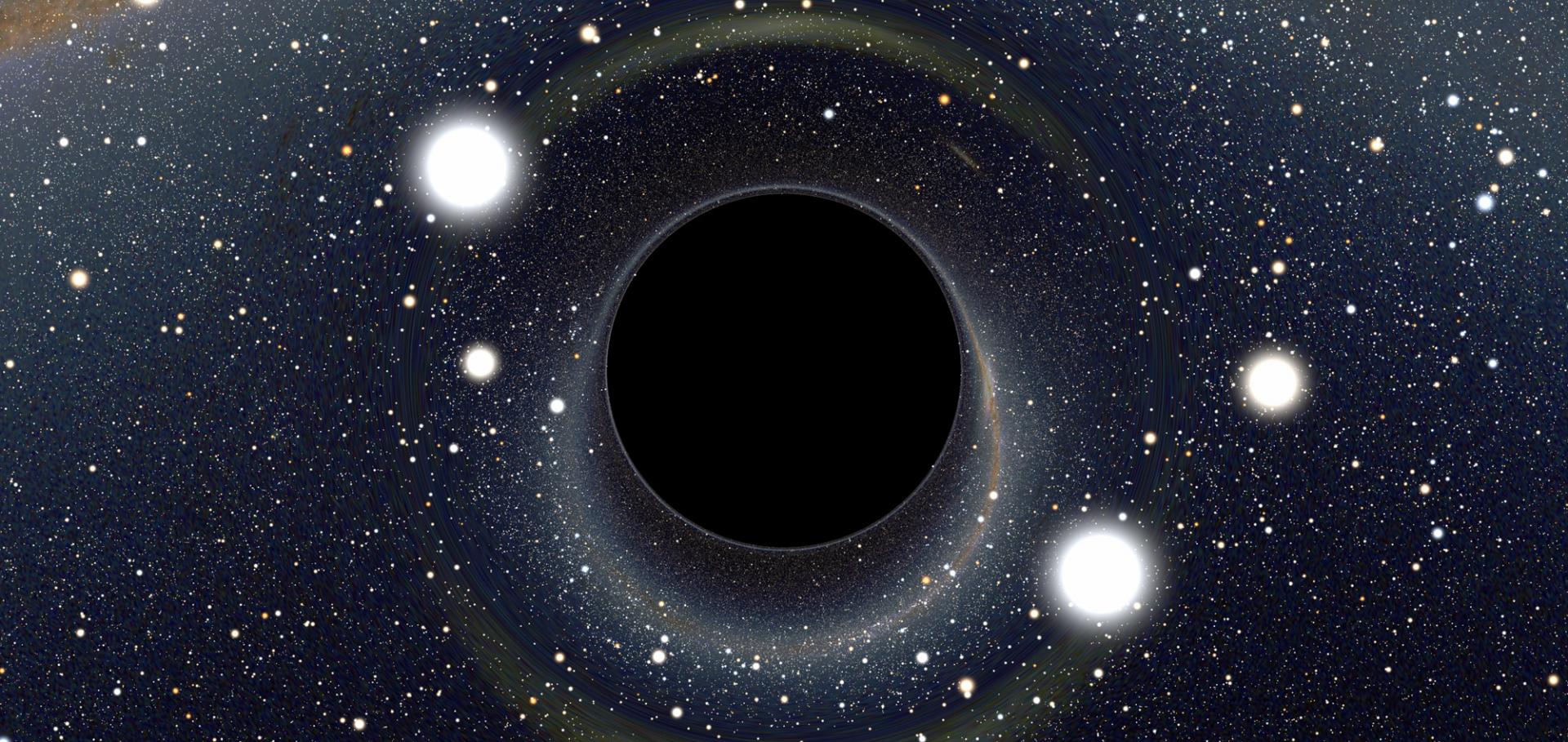
Black Hole

Lensing of space time around a black hole. At Oxford we study black holes observationally and theoretically on all size and time scales - it is some of our core work.

Credit: ALAIN RIAZUELO, IAP/UPMC/CNRS. CLICK HERE TO VIEW MORE IMAGES.

Dr Geert Jan Talens

Postdoctoral Research Assistant

Research theme

  • Astronomy and astrophysics

Sub department

  • Astrophysics

Research groups

  • Exoplanets and Stellar Physics
geertjan.talens@physics.ox.ac.uk
Denys Wilkinson Building, room 712
  • About
  • Publications

The β Pictoris b Hill sphere transit campaign

Astronomy & Astrophysics EDP Sciences 648 (2021) a15

Authors:

MA Kenworthy, SN Mellon, JI Bailey, R Stuik, P Dorval, GJJ Talens, SR Crawford, EE Mamajek, I Laginja, M Ireland, B Lomberg, RB Kuhn, I Snellen, K Zwintz, R Kuschnig, GM Kennedy, L Abe, A Agabi, D Mekarnia, T Guillot, F Schmider, P Stee, Y de Pra, M Buttu, N Crouzet, P Kalas, JJ Wang, K Stevenson, E de Mooij, A-M Lagrange, S Lacour, A Lecavelier des Etangs, M Nowak, PA Strøm, Z Hui, L Wang
More details from the publisher
More details

MASCARA-4 b/bRing-1 b: A retrograde hot Jupiter around a bright A-type star

Astronomy & Astrophysics EDP Sciences 635 (2020) a60

Authors:

P Dorval, GJJ Talens, GPPL Otten, R Brahm, A Jordán, P Torres, L Vanzi, A Zapata, T Henry, L Paredes, WC Jao, H James, R Hinojosa, GA Bakos, Z Csubry, W Bhatti, V Suc, D Osip, EE Mamajek, SN Mellon, A Wyttenbach, R Stuik, M Kenworthy, J Bailey, M Ireland, S Crawford, B Lomberg, R Kuhn, I Snellen
More details from the publisher
More details

Gravity-darkening Analysis of the Misaligned Hot Jupiter MASCARA-4 b

Astrophysical Journal 888:2 (2020)

Authors:

JP Ahlers, E Kruse, KD Colón, P Dorval, GJ Talens, I Snellen, S Albrecht, G Otten, G Ricker, R Vanderspek, D Latham, S Seager, J Winn, JM Jenkins, K Haworth, S Cartwright, R Morris, P Rowden, P Tenenbaum, EB Ting

Abstract:

MASCARA-4 b is a hot Jupiter in a highly misaligned orbit around a rapidly rotating A3V star that was observed for 54 days by the Transiting Exoplanet Survey Satellite (TESS). We perform two analyses of MASCARA-4 b using a stellar gravity-darkened model. First, we measure MASCARA-4 b's misaligned orbital configuration by modeling its TESS photometric light curve. We take advantage of the asymmetry in MASCARA-4 b's transit due to its host star's gravity-darkened surface to measure MASCARA-4 b's true spin-orbit angle to be 104°. We also detect a ∼4σ secondary eclipse at 0.491 � 0.007 orbital phase, proving that the orbit is slightly eccentric. Second, we model MASCARA-4 b's insolation including gravity darkening and find that the planet's received X-ray and ultraviolet flux varies by 4% throughout its orbit. MASCARA-4 b's short-period, polar orbit suggests that the planet likely underwent dramatic orbital evolution to end up in its present-day configuration and that it receives a varying stellar irradiance that perpetually forces the planet out of thermal equilibrium. These findings make MASCARA-4 b an excellent target for follow-up characterization to better understand the orbital evolution and present-day environment of planets around high-mass stars.
More details from the publisher

An unusually large gaseous transit in a debris disc

Monthly Notices of the Royal Astronomical Society 490:4 (2019) 5218-5227

Authors:

DP Iglesias, J Olofsson, A Bayo, S Zieba, M Montesinos, J Smoker, GM Kennedy, N Godoy, B Pantoja, GJ Talens, Z Wahhaj, C Zamora

Abstract:

We present the detection of an unusually large transient gas absorption in several ionized species in the debris disc star HD 37306 using high-resolution optical spectra. We have been analysing a large sample of debris discs searching for circumstellar gas absorptions aiming to determine the frequency of gas in debris discs. HD 37306 stood out showing remarkably broad absorptions superimposed on to several photospheric Ca II, Fe II, and Ti II lines. The observed absorptions, unlike typical exocometary transits, lasted for at least eight days. Here, we analyse simultaneous spectroscopic and photometric data of the event and evaluate different scenarios that might explain the observed features. We conclude that the most likely scenario might be an exocometary break-up releasing a significant amount of gas close to the star, producing an occulting 'ring'/'torus' shape.
More details from the publisher

Revisiting the pulsational characteristics of the exoplanet host star β Pictoris⋆⋆⋆⋆⋆⋆

Astronomy & Astrophysics EDP Sciences 627 (2019) a28

Authors:

K Zwintz, DR Reese, C Neiner, A Pigulski, R Kuschnig, M Müllner, S Zieba, L Abe, T Guillot, G Handler, M Kenworthy, R Stuik, AFJ Moffat, A Popowicz, SM Rucinski, GA Wade, WW Weiss, JI Bailey, S Crawford, M Ireland, B Lomberg, EE Mamajek, SN Mellon, GJ Talens
More details from the publisher
More details

Pagination

  • First page First
  • Previous page Prev
  • Page 1
  • Page 2
  • Page 3
  • Current page 4
  • Page 5
  • Next page Next
  • Last page Last

Footer Menu

  • Contact us
  • Giving to the Dept of Physics
  • Work with us
  • Media

User account menu

  • Log in

Follow us

FIND US

Clarendon Laboratory,

Parks Road,

Oxford,

OX1 3PU

CONTACT US

Tel: +44(0)1865272200

University of Oxfrod logo Department Of Physics text logo
IOP Juno Champion logo Athena Swan Silver Award logo

© University of Oxford - Department of Physics

Cookies | Privacy policy | Accessibility statement

Built by: Versantus

  • Home
  • Research
  • Study
  • Engage
  • Our people
  • News & Comment
  • Events
  • Our facilities & services
  • About us
  • Giving to Physics
  • Current students
  • Staff intranet