Home
Department Of Physics text logo
  • Research
    • Our research
    • Our research groups
    • Our research in action
    • Research funding support
    • Summer internships for undergraduates
  • Study
    • Undergraduates
    • Postgraduates
  • Engage
    • For alumni
    • For business
    • For schools
    • For the public
  • Support
Menu
CMP
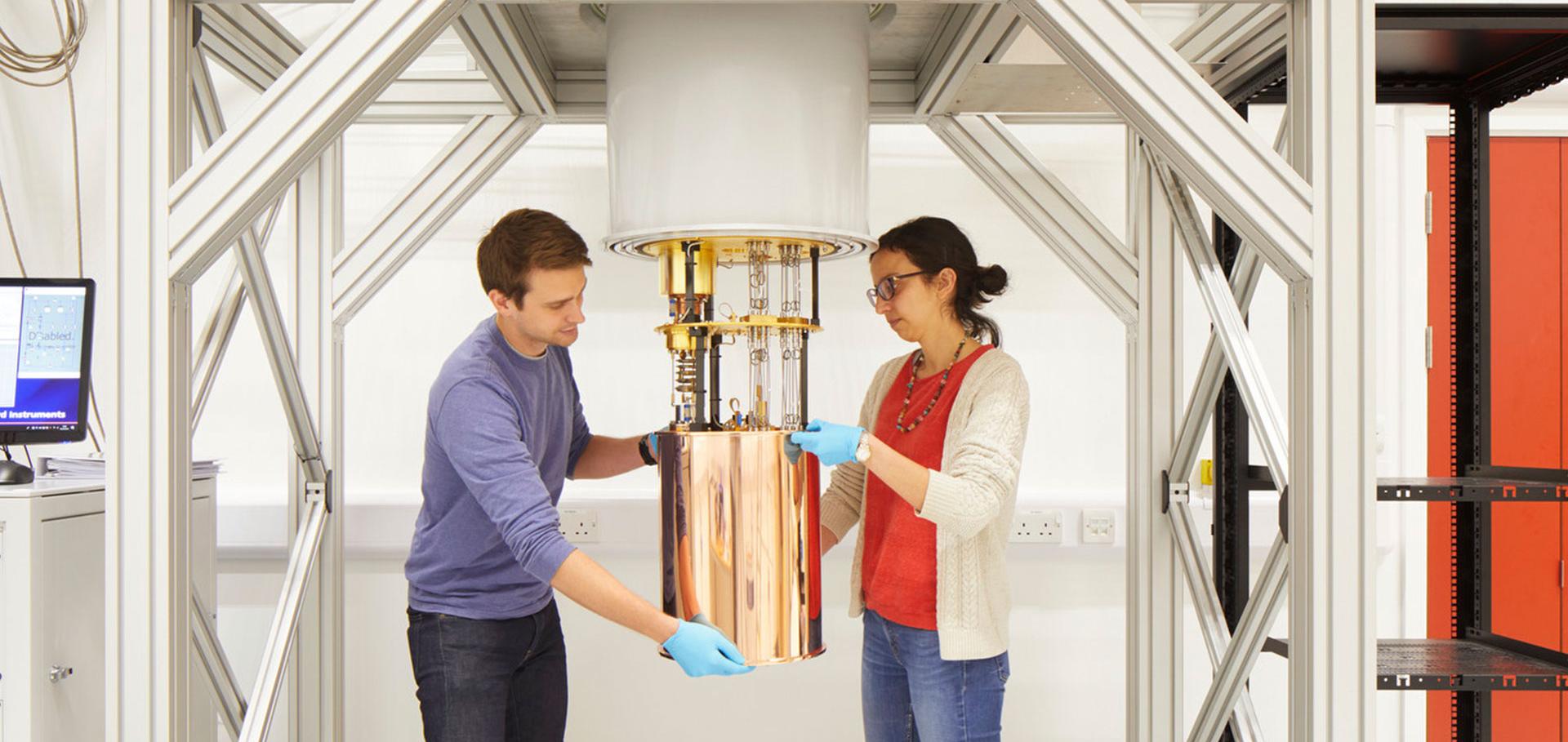
Credit: Jack Hobhouse

Fengning Yang

Visitor

Sub department

  • Condensed Matter Physics

Research groups

  • Photovoltaic & Optoelectronic Device Group
fengning.yang@physics.ox.ac.uk
Robert Hooke Building
  • About
  • Publications

A Durable and Efficient Electrocatalyst for Saline Water Splitting with Current Density Exceeding 2000 mA cm−2

Advanced Functional Materials 31:21 (2021)

Authors:

F Yang, Y Luo, Q Yu, Z Zhang, S Zhang, Z Liu, W Ren, HM Cheng, J Li, B Liu

Abstract:

Water electrolysis is promising for industrial hydrogen production to achieve a sustainable and green hydrogen economy, but the high cost of the technology limits its market share. Developing efficient yet economic electrocatalysts is crucial to decrease the cost of electricity and electrolytic cell. Meanwhile, electrolysis in seawater electrolyte can further reduce feedstock cost. Here, a type of electrocatalyst is synthesized, where trace precious metals are strongly anchored on a corrosion-resistive matrix. As an example, the produced Pt/Ni-Mo electrocatalyst only needs an overpotential of 113 mV to reach an ultrahigh current density of 2000 mA cm−2 in the saline-alkaline electrolyte, demonstrating the best performance reported thus far. It shows high activity and long durability in various electrolytes and under harsh conditions, including strong alkaline and simulated seawater electrolytes, and under elevated temperatures up to 80 °C. This electrocatalyst is produced on a large scale at a low cost and shows good performance in a commercial membrane electrode assembly stack, demonstrating its feasibility for practical water electrolysis.
More details from the publisher
More details

Manipulating Electrocatalysis using Mosaic Catalysts.

Small science 1:5 (2021) 2000059

Authors:

Yuting Luo, Sum Wai Chiang, Lei Tang, Zhiyuan Zhang, Fengning Yang, Qiangmin Yu, Baofu Ding, Bilu Liu

Abstract:

Understanding the mechanisms and developing strategies toward efficient electrocatalysis at gas-liquid-solid interfaces are important yet challenging. In the past decades, researchers have devoted many efforts to improve catalyst activity by modulating electronic properties of catalysts in terms of chemical components and physical features. Herein, a mosaic catalyst, which is defined as a catalyst with spatially isolated and periodically distributed active areas, is developed to dramatically improve the activity of catalysts. Taking Pt catalyst as an example, the mosaic Pt leads to high catalytic performance, showing a specific activity 11 times higher than that of uniform Pt films for hydrogen evolution reaction (HER), as well as higher current densities than commercial Pt/C and uniform Pt films. Such a strategy is found to be general to other catalysts (e.g., 2D PtS) and other reactions (e.g., oxygen evolution reaction). The improved catalytic performance of the mosaic catalysts is attributed to enhanced mass transferability and local electric field strength, both of which are determined by the occupation ratios of catalysts. The work shines new light on manipulating electrocatalysis from the perspective of the spatial structures of catalysts, which guides the design of efficient catalysts for heterogeneous reactions.
More details from the publisher

Improvement of wheat seed vitality by dielectric barrier discharge plasma treatment.

Bioelectromagnetics 39:2 (2018) 120-131

Authors:

Qiao Guo, Yiran Meng, Guangzhou Qu, Tiecheng Wang, Fengning Yang, Dongli Liang, Shibin Hu

Abstract:

Influences of discharge voltage on wheat seed vitality were investigated in a dielectric barrier discharge (DBD) plasma system at atmospheric pressure and temperature. Six different treatments were designed, and their discharge voltages were 0.0, 9.0, 11.0, 13.0, 15.0, and 17.0 kV, respectively. Fifty seeds were exposed to the DBD plasma atmosphere with an air flow rate of 1.5 L min-1 for 4 min in each treatment, and then the DBD plasma-treated seeds were prepared for germination in several Petri dishes. Each treatment was repeated three times. Germination indexes, growth indexes, surface topography, water uptake, permeability, and α-amylase activity were measured. DBD plasma treatment at appropriate energy levels had positive effects on wheat seed germination and seedling growth. The germination potential, germination index, and vigor index significantly increased by 31.4%, 13.9%, and 54.6% after DBD treatment at 11.0 kV, respectively, in comparison to the control. Shoot length, root length, dry weight, and fresh weight also significantly increased after the DBD plasma treatment. The seed coat was softened and cracks were observed, systematization of the protein was strengthened, and amount of free starch grain increased after the DBD plasma treatment. Water uptake, relative electroconductivity, soluble protein, and α-amylase activity of the wheat seed were also significantly improved after the DBD plasma treatment. Roles of active species and ultraviolet radiation generated in the DBD plasma process in wheat seed germination and seedling growth are proposed. Bioelectromagnetics. 39:120-131, 2018. © 2017 Wiley Periodicals, Inc.
More details from the publisher

Pagination

  • First page First
  • Previous page Prev
  • Page 1
  • Page 2
  • Current page 3

Footer Menu

  • Contact us
  • Giving to the Dept of Physics
  • Work with us
  • Media

User account menu

  • Log in

Follow us

FIND US

Clarendon Laboratory,

Parks Road,

Oxford,

OX1 3PU

CONTACT US

Tel: +44(0)1865272200

University of Oxfrod logo Department Of Physics text logo
IOP Juno Champion logo Athena Swan Silver Award logo

© University of Oxford - Department of Physics

Cookies | Privacy policy | Accessibility statement

Built by: Versantus

  • Home
  • Research
  • Study
  • Engage
  • Our people
  • News & Comment
  • Events
  • Our facilities & services
  • About us
  • Giving to Physics
  • Current students
  • Staff intranet