Home
Department Of Physics text logo
  • Research
    • Our research
    • Our research groups
    • Our research in action
    • Research funding support
    • Summer internships for undergraduates
  • Study
    • Undergraduates
    • Postgraduates
  • Engage
    • For young people
    • For teachers
    • For the public
    • For alumni
    • For business
  • Support
Menu
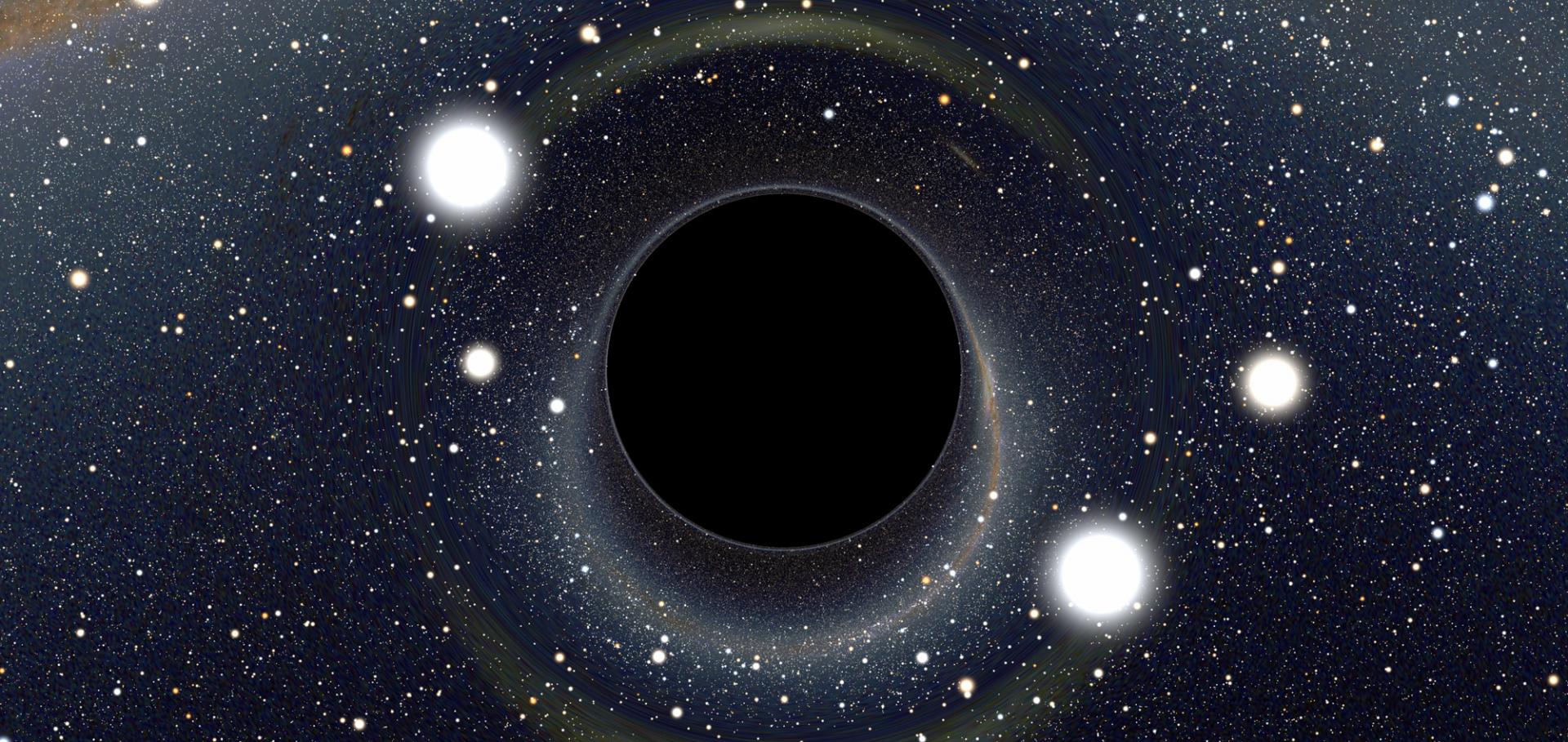
Black Hole

Lensing of space time around a black hole. At Oxford we study black holes observationally and theoretically on all size and time scales - it is some of our core work.

Credit: ALAIN RIAZUELO, IAP/UPMC/CNRS. CLICK HERE TO VIEW MORE IMAGES.

Martin Bureau

Professor of Astrophysics

Research theme

  • Astronomy and astrophysics

Sub department

  • Astrophysics

Research groups

  • Galaxy formation and evolution
  • Hintze Centre for Astrophysical Surveys
martin.bureau@physics.ox.ac.uk
Telephone: 01865 (2)73377
Denys Wilkinson Building, room 701
Home page
ORCID
  • About
  • Publications

Revisiting the (V/sigma)-epsilon anisotropy diagram of early-type galaxies using integral-field kinematics

Monthly Notices of the Royal Astronomical Society Oxford University Press (OUP) (2007)

Authors:

M Cappellari, R Bacon, M Bureau, RL Davies, PT de Zeeuw, E Emsellem, J Falcon-Barroso, D Krajnovic, H Kuntschner, RM McDermid, RF Peletier, M Sarzi, RCE van den Bosch, G van de Ven

Abstract:

We use integral-field observation of the stellar kinematics obtained with SAURON in combination with Schwarzschild dynamical models to revisit our understanding of the classic (V/sigma)-epsilon anisotropy diagram of early-type galaxies.
Details from ORA
Details from ArXiV
More details

Early-type galaxy formation history from GALEX-SAURON

Proceedings of the International Astronomical Union 3:S245 (2007) 193-194

Authors:

H Jeong, SK Yi, M Bureau, D Kranović, RL Davies
More details from the publisher

Fast and slow rotators: The build-up of the red sequence

Proceedings of the International Astronomical Union 3:S245 (2007) 11-14

Authors:

E Emsellem, M Cappellari, D Krajnović, G Van De Ven, R Bacon, M Bureau, RL Davies, PT De Zeeuw, J Falcón-Barroso, H Kuntschner, RM McDermid, RF Peletier, M Sarzi, RCE Van Den Bosch

Abstract:

Using the unique dataset obtained within the course of the SAURON project, a radically new view of the structure, dynamics and stellar populations of early-type galaxies has emerged. We show that galaxies come in two broad flavours (slow and fast rotators), depending on whether or not they exhibit clear large-scale rotation, as indicated via a robust measure of the specific angular momentum of baryons. This property is also linked with other physical characteristics of early-type galaxies, such as: the presence of dynamically decoupled cores, orbital structure and anisotropy, stellar populations and dark matter content. I here report on the observed link between this baryonic angular momentum and a mass sequence, and how this uniquely relates to the building of the red sequence via dissipative/dissipationless mergers and secular evolution. © 2008 Copyright International Astronomical Union 2008.
More details from the publisher

Disk growth in bulge-dominated galaxies: molecular gas and morphological evolution

Proceedings of the International Astronomical Union Cambridge University Press (CUP) 3:S245 (2007) 173-176

Authors:

Lisa Young, Martin Bureau, Alison Crocker, Francoise Combes
More details from the publisher
Details from ArXiV

Vertical surface brightness profiles of boxy bulges

Proceedings of the International Astronomical Union Cambridge University Press (CUP) 3:S245 (2007) 129-130

Authors:

G Aronica, M Bureau, E Athanassoula, R-J Dettmar
More details from the publisher

Pagination

  • First page First
  • Previous page Prev
  • …
  • Page 65
  • Page 66
  • Page 67
  • Page 68
  • Current page 69
  • Page 70
  • Page 71
  • Page 72
  • Page 73
  • …
  • Next page Next
  • Last page Last

Footer Menu

  • Contact us
  • Giving to the Dept of Physics
  • Work with us
  • Media

User account menu

  • Log in

Follow us

FIND US

Clarendon Laboratory,

Parks Road,

Oxford,

OX1 3PU

CONTACT US

Tel: +44(0)1865272200

University of Oxfrod logo Department Of Physics text logo
IOP Juno Champion logo Athena Swan Silver Award logo

© University of Oxford - Department of Physics

Cookies | Privacy policy | Accessibility statement

Built by: Versantus

  • Home
  • Research
  • Study
  • Engage
  • Our people
  • News & Comment
  • Events
  • Our facilities & services
  • About us
  • Giving to Physics
  • Current students
  • Staff intranet