Home
Department Of Physics text logo
  • Research
    • Our research
    • Our research groups
    • Our research in action
    • Research funding support
    • Summer internships for undergraduates
  • Study
    • Undergraduates
    • Postgraduates
  • Engage
    • For young people
    • For teachers
    • For the public
    • For alumni
    • For business
  • Support
Menu
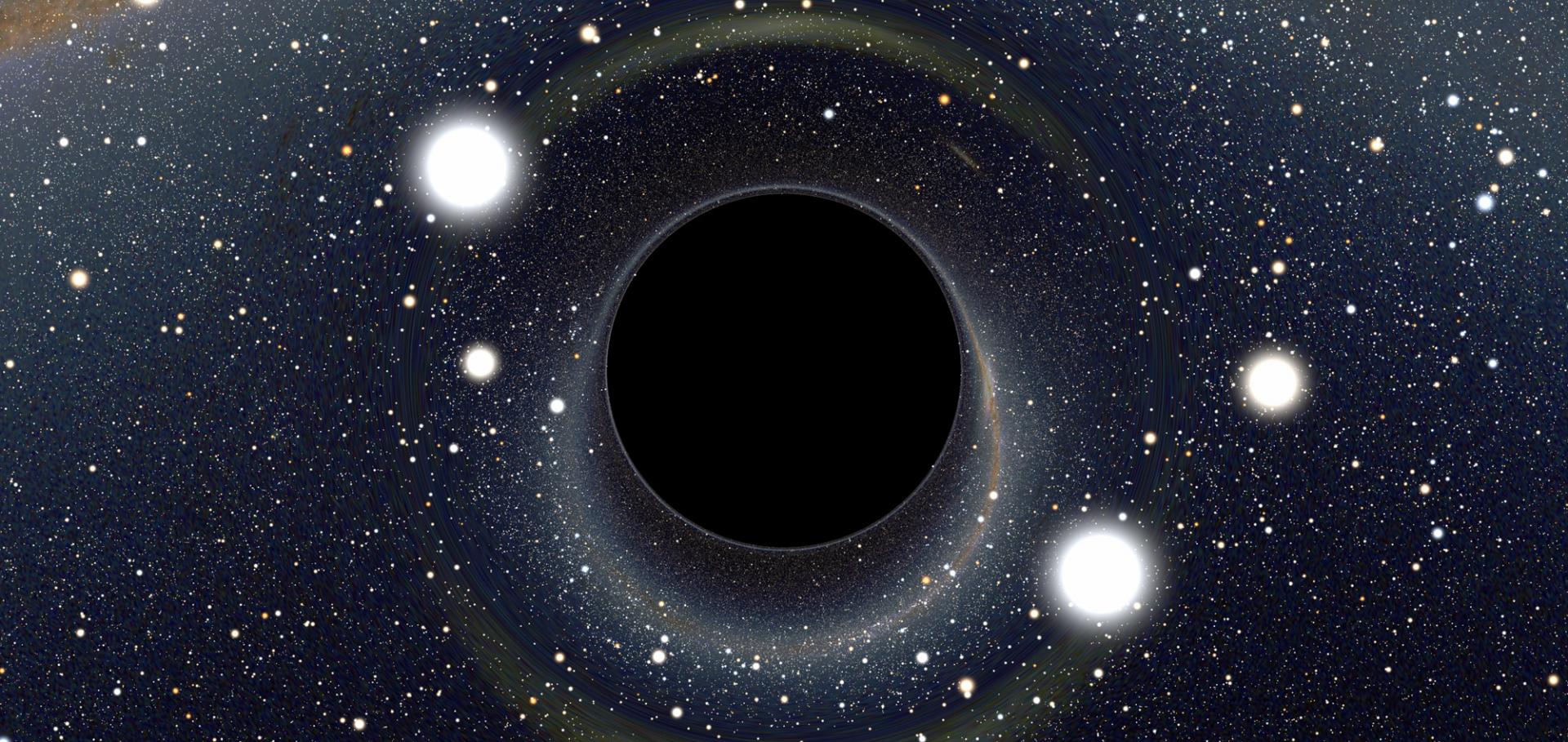
Black Hole

Lensing of space time around a black hole. At Oxford we study black holes observationally and theoretically on all size and time scales - it is some of our core work.

Credit: ALAIN RIAZUELO, IAP/UPMC/CNRS. CLICK HERE TO VIEW MORE IMAGES.

Martin Bureau

Professor of Astrophysics

Research theme

  • Astronomy and astrophysics

Sub department

  • Astrophysics

Research groups

  • Galaxy formation and evolution
  • Hintze Centre for Astrophysical Surveys
martin.bureau@physics.ox.ac.uk
Telephone: 01865 (2)73377
Denys Wilkinson Building, room 701
Home page
ORCID
  • About
  • Publications

Optical BVI imaging and HI synthesis observations of the dwarf irregular galaxy ESO364-G029

ASTRONOMY & ASTROPHYSICS 470:1 (2007) 123-135

Authors:

MBN Kouwenhoven, M Bureau, S Kim, PT de Zeeuw
More details from the publisher
Details from ArXiV

SAURON observations of sa bulges: The formation of a kinematically decoupled core in NGC 5953

ESO ASTROPHY SYMP (2007) 111-115

Authors:

J Falcon-Barroso, R Bacon, M Bureau, M Cappellari, RL Davies, PT de Zeeuw, E Emsellem, K Fathi, D Krajnovic, H Kuntschner, RM McDermid, RF Peletier, M Sarzi

Abstract:

We present results from our ongoing effort to understand the nature and evolution of nearby galaxies using the SAURON integral-field spectrograph. In this proceeding we focus on the study of the particular case formed by the interacting galaxies NGC 5953 and NGC 5954. We present stellar and gas kinematics of the central regions of NGC5953. We use a simple procedure to determine the age of the stellar populations in the central regions and argue that we may be witnessing the formation of a kinematically decoupled component (hereafter KDC) from cold gas being acquired during the ongoing interaction with NGC 5954.
More details from the publisher
More details

The stellar Populations of E and SO galaxies as seen with SAURON

ESO ASTROPHY SYMP (2007) 123-128

Authors:

H Kuntschner, E Emsellem, R Bacon, M Bureau, M Cappellari, RL Davies, T de Zeeuw, J Falcon-Barroso, D Krajnovic, RM McDermid, RF Peletier, M Serzi

Abstract:

We present selected results from integral-field spectroscopy of 48 early-type galaxies observed as part of the SAURON survey. Maps of the H beta, Fe5015, Mgb and Fe5270 indices in the Lick/IDS system were derived for each of the survey galaxies. The metal line strength maps show generally negative gradients with increasing radius roughly consistent, with the morphology of the light profiles. Remarkable deviations from this general trend exist, particularly the Mg b isoindex contours appear to be flatter than the isophotes of the surface brightness for about 40% of our galaxies without significant dust features. Generally these galaxies exhibit significant rotation. We infer from this that the fast-rotating component features a higher metallicity and/or an increased Mg/Fe ratio, as compared to the galaxy as a whole.We also use the line strength maps to compute average values integrated over circular apertures of one effective radius, and derive luminosity weighted ages and metallicities. The lenticular galaxies show a, wide range in age and metallicity estimates, while elliptical galaxies tend to occupy regions of older stellar populations.
More details from the publisher
More details

Unveiling the boxy bulge and bar of the Andromeda spiral galaxy

ASTROPHYSICAL JOURNAL 658:2 (2007) L91-L94

Authors:

Rachael L Beaton, Steven R Majewski, Puragra Guhathakurta, Michael F Skrutskie, Roc M Cutri, John Good, Richard J Patterson, E Athanassoula, Martin Bureau
More details from the publisher

Young kinematically decoupled components in early-type galaxies

ESO ASTROPHY SYMP (2007) 253-257

Authors:

RM McDermid, E Emsellem, KL Shapiro, R Bacon, M Bureau, M Cappellari, RL Davies, PT de Zeeuw, J Falcon-Barroso, D Krajnovic, H Kuntschner, RF Peletier, M Sarzi

Abstract:

We present results from a series of follow-up observations of a subsample of the representative SAURON survey elliptical (E) and lenticular (SO) galaxies using the OASIS integral-field spectrograph. These observations focus on the central 10 '' x 10 '', with roughly double the spatial resolution of the SAURON observations. This increased spatial resolution reveals a number of interesting and previously unresolved features in the measured stellar kinematics and absorption-line strengths. We find that galaxies exhibiting the youngest global stellar populations (as measured with SAURON) often contain a distinctly young central region (on scales of a few hundred parsec or less) compared to the rest of the galaxy. Moreover, these compact, young components are found to be mostly counter-rotating with respect to the rest of the galaxy. Given that there is no well-established reason for such young components to 'prefer' counter- over co-rotation, this finding raises the following questions: How common are these small KDCs as a function of age? Why are there more young than old compact KDCs? Where are the equivalent co-rotating components? We explore these questions using simple simulated velocity fields and stellar population models, and find that the fading of the young component as it evolves, coupled with the fact that counter-rotating components are more easily detected in the velocity field, may help explain the observed trends.
More details from the publisher
More details

Pagination

  • First page First
  • Previous page Prev
  • …
  • Page 68
  • Page 69
  • Page 70
  • Page 71
  • Current page 72
  • Page 73
  • Page 74
  • Page 75
  • Page 76
  • …
  • Next page Next
  • Last page Last

Footer Menu

  • Contact us
  • Giving to the Dept of Physics
  • Work with us
  • Media

User account menu

  • Log in

Follow us

FIND US

Clarendon Laboratory,

Parks Road,

Oxford,

OX1 3PU

CONTACT US

Tel: +44(0)1865272200

University of Oxfrod logo Department Of Physics text logo
IOP Juno Champion logo Athena Swan Silver Award logo

© University of Oxford - Department of Physics

Cookies | Privacy policy | Accessibility statement

Built by: Versantus

  • Home
  • Research
  • Study
  • Engage
  • Our people
  • News & Comment
  • Events
  • Our facilities & services
  • About us
  • Giving to Physics
  • Current students
  • Staff intranet