


Origin and Evolution of Enceladus’s Tidal Dissipation
Space Science Reviews Springer 219:7 (2023) 57
Abstract:
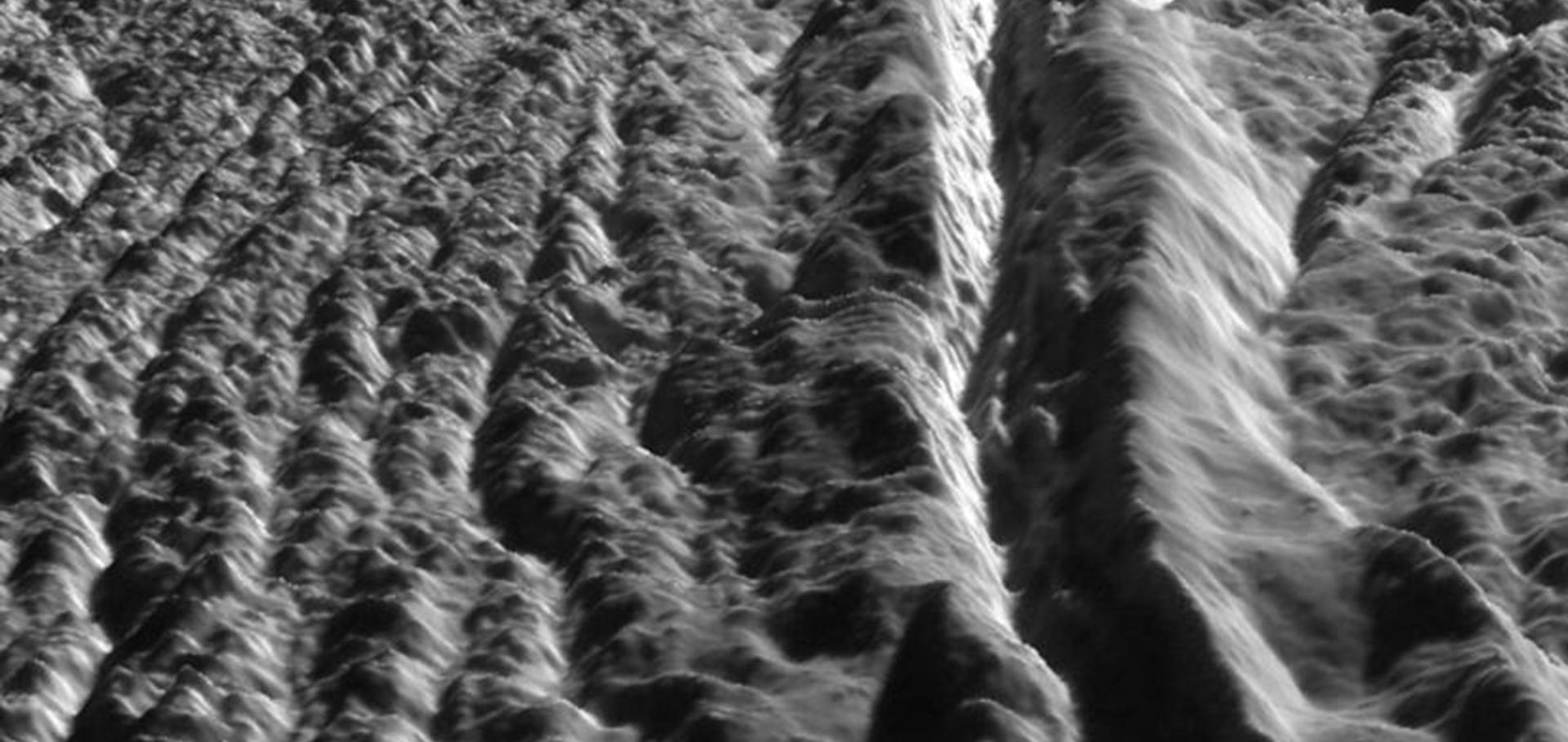
NASA’s Cassini mission revealed endogenic activity at the south pole of Saturn’s moon Enceladus. The activity is concentrated along four fractures in Enceladus’ ice shell, which are much warmer than their surroundings and the source of Enceladus’ plumes. This work provides a review of the current state of knowledge of the energy and mass lost by Enceladus through this activity. Specifically, we discuss the composition of the plumes, along with their spatial and temporal variation. The mass flux loss predicted for the three plume constituents (gas, dust and charged particles) is reviewed and a total mass flux of ejected material that subsequently escapes Enceladus is estimated to be 2.1×10¹¹ kg over a Saturn year. Given that Enceladus’ ocean is predicted to be 1019 kg this loss is sustainable in the very long term (∼1.5 billion Earth years). However, unless a resupply mechanism (such as serpentinization) exists molecular hydrogen is expected to be depleted within ∼1 million Earth years. The difficulty in determining Enceladus’ current heat flow is outlined, along with the advantages and disadvantages of the various techniques used to derive it. We find a robust lower limit for Enceladus’ exogenic production is 7.3 GW. Tidal heating models show endogenic emission of this level is sustainable, and Enceladus may have long-term near-surface heating (a result supported by studies of Enceladus’ geology). Finally, we offer suggestions for future observations, instrumentation, and missions. Enceladus remains a high-priority target for NASA, and as such it is highly likely that we will return to study this enigmatic world. Hopefully these missions will answer some of the questions that remainBolometric Hemispherical Albedo Map of Pluto from New Horizons Observations
The Planetary Science Journal IOP Publishing 4:7 (2023) 132-132
Abstract:
The New Horizons encounter with the Pluto system revealed Pluto to have an extremely spatially variable surface with expansive dark, bright, and intermediate terrains, refractory and volatile ices, and ongoing/recent endogenous and exogenous processes. Albedo is useful for understanding volatile transport because it quantifies absorbed solar energy; albedo may also provide insights into surface processes. Four filters of the New Horizons LORRI and MVIC imagers are used to approximate the bolometric (flux-weighted, wavelength-integrated) albedo. The bolometric hemispherical albedo (local energy balance albedo) as a function of the incidence angle of the solar illumination is measured for both Cthulhu and Sputnik Planitia, which are extensive, extreme dark and extreme bright terrains on Pluto. For both terrains, the bolometric hemispherical albedo increases by >30% from 0° to 90° incidence. The incidence-angle-average bolometric hemispherical albedo of Cthulhu is 0.12 ± 0.01, and that of Sputnik Planitia is 0.80 ± 0.06, where uncertainties are estimates based on scatter from different photometric functional approximations. The bolometric Bond albedo (global energy balance albedo) of Cthulhu is 0.12 ± 0.01, and that of Sputnik Planitia is 0.80 ± 0.07. A map of Pluto’s incidence-angle-average bolometric hemispherical albedo is produced. The incidence-angle-average bolometric hemispherical albedo, spatially averaged over areas north of ≈30° S, is ≈0.54. Pluto has three general albedo categories: (1) very low albedo southern equatorial terrains, including Cthulhu; (2) high-albedo terrains, which constitute most of Pluto’s surface; and (3) very high albedo terrains, including Sputnik Planitia. Pluto’s extraordinary albedo variability with location is also spatially sharp at some placesConstraining Enceladus' heat flow between its tiger stripes
Copernicus Publications (2022)
Constraining Enceladus’ energy emission outside the South Polar Terrain
Copernicus Publications (2022)
Dione’s Thermal Inertia and Bolometric Bond Albedo Derived from Cassini/CIRS Observations of Solar Eclipse Ingress
Planetary Science Journal 3:8 (2022)