Home
Department Of Physics text logo
  • Research
    • Our research
    • Our research groups
    • Our research in action
    • Research funding support
    • Summer internships for undergraduates
  • Study
    • Undergraduates
    • Postgraduates
  • Engage
    • For young people
    • For teachers
    • For the public
    • For alumni
    • For business
  • Support
Menu
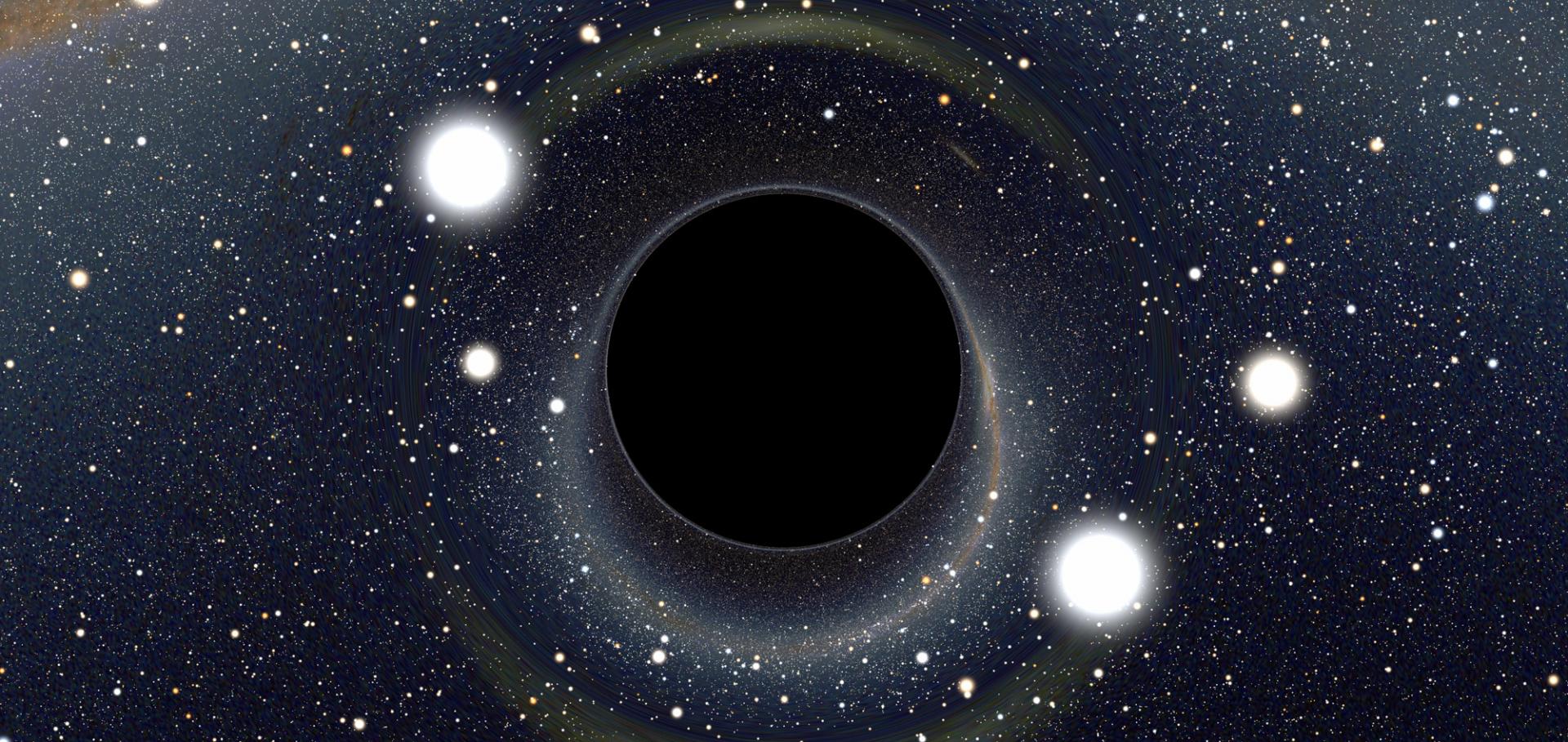
Black Hole

Lensing of space time around a black hole. At Oxford we study black holes observationally and theoretically on all size and time scales - it is some of our core work.

Credit: ALAIN RIAZUELO, IAP/UPMC/CNRS. CLICK HERE TO VIEW MORE IMAGES.

Dr Jake Taylor (he/him)

Glasstone Fellow

Research theme

  • Astronomy and astrophysics
  • Exoplanets and planetary physics

Sub department

  • Astrophysics

Research groups

  • Exoplanet atmospheres
  • Exoplanets and Stellar Physics
jake.taylor@physics.ox.ac.uk
Denys Wilkinson Building, room 463
Personal website
  • About
  • Prizes, awards and recognition
  • Publications

Simultaneous retrieval of orbital phase resolved JWST/MIRI emission spectra of the hot Jupiter WASP-43b: Evidence of water, ammonia and carbon monoxide

Monthly Notices of the Royal Astronomical Society Oxford University Press (OUP) (2024) stae1427-stae1427

Authors:

Jingxuan Yang, Mark Hammond, Anjali AA Piette, Jasmina Blecic, Taylor J Bell, Patrick GJ Irwin, Vivien Parmentier, Shang-Min Tsai, Joanna K Barstow, Nicolas Crouzet, Laura Kreidberg, João M Mendonça, Jake Taylor, Robin Baeyens, Kazumasa Ohno, Lucas Teinturier, Matthew C Nixon
More details from the publisher
Details from ORA
More details

The Impact of Scattering Clouds when Studying Exoplanet Emission Spectra with JWST

Copernicus Publications (2024)

Authors:

Jake Taylor, Vivien Parmentier, Michael Line, Graham Lee, Patrick Irwin, Suzanne Aigrain
More details from the publisher

Nightside clouds and disequilibrium chemistry on the hot Jupiter WASP-43b

Nature Astronomy Nature Research 8:7 (2024) 879-898

Authors:

Taylor J Bell, Nicolas Crouzet, Patricio E Cubillos, Laura Kreidberg, Anjali AA Piette, Michael T Roman, Joanna K Barstow, Jasmina Blecic, Ludmila Carone, Louis-Philippe Coulombe, Elsa Ducrot, Mark Hammond, João M Mendonça, Julianne I Moses, Vivien Parmentier, Kevin B Stevenson, Lucas Teinturier, Michael Zhang, Natalie M Batalha, Jacob L Bean, Björn Benneke, Benjamin Charnay, Katy L Chubb, Brice-Olivier Demory, Xianyu Tan

Abstract:

Hot Jupiters are among the best-studied exoplanets, but it is still poorly understood how their chemical composition and cloud properties vary with longitude. Theoretical models predict that clouds may condense on the nightside and that molecular abundances can be driven out of equilibrium by zonal winds. Here we report a phase-resolved emission spectrum of the hot Jupiter WASP-43b measured from 5 μm to 12 μm with the JWST’s Mid-Infrared Instrument. The spectra reveal a large day–night temperature contrast (with average brightness temperatures of 1,524 ± 35 K and 863 ± 23 K, respectively) and evidence for water absorption at all orbital phases. Comparisons with three-dimensional atmospheric models show that both the phase-curve shape and emission spectra strongly suggest the presence of nightside clouds that become optically thick to thermal emission at pressures greater than ~100 mbar. The dayside is consistent with a cloudless atmosphere above the mid-infrared photosphere. Contrary to expectations from equilibrium chemistry but consistent with disequilibrium kinetics models, methane is not detected on the nightside (2σ upper limit of 1–6 ppm, depending on model assumptions). Our results provide strong evidence that the atmosphere of WASP-43b is shaped by disequilibrium processes and provide new insights into the properties of the planet’s nightside clouds. However, the remaining discrepancies between our observations and our predictive atmospheric models emphasize the importance of further exploring the effects of clouds and disequilibrium chemistry in numerical models.
More details from the publisher
Details from ORA
More details
More details

Quenching-driven equatorial depletion and limb asymmetries in hot Jupiter atmospheres: WASP-96b example

Monthly Notices of the Royal Astronomical Society Oxford University Press (OUP) 529:2 (2024) 1776-1801

Authors:

Maria Zamyatina, Duncan A Christie, Eric Hébrard, Nathan J Mayne, Michael Radica, Jake Taylor, Harry Baskett, Ben Moore, Craig Lils, Denis E Sergeev, Eva-Maria Ahrer, James Manners, Krisztian Kohary, Adina D Feinstein
More details from the publisher
More details

Muted Features in the JWST NIRISS Transmission Spectrum of Hot Neptune LTT 9779b

The Astrophysical Journal Letters American Astronomical Society 962:1 (2024) L20-L20

Authors:

Michael Radica, Louis-Philippe Coulombe, Jake Taylor, Loic Albert, Romain Allart, Björn Benneke, Nicolas B Cowan, Lisa Dang, David Lafrenière, Daniel Thorngren, Étienne Artigau, René Doyon, Laura Flagg, Doug Johnstone, Stefan Pelletier, Pierre-Alexis Roy

Abstract:

The ExoMol database (www.exomol.com) provides molecular data for spectroscopic studies of hot atmospheres. These data are widely used to model atmospheres of exoplanets, cool stars and other astronomical objects, as well as a variety of terrestrial applications. The 2024 data release reports the current status of the database which contains recommended line lists for 91 molecules and 224 isotopologues giving a total of almost 10$^{12}$ individual transitions. New features of the database include extensive "MARVELization" of line lists to allow them to be used for high resolutions studies, extension of several line lists to ultraviolet wavelengths, provision of photodissociation cross sections and extended provision of broadening parameters. Some of the in-house data specifications have been rewritten in JSON and moved to conformity with other international standards. Data products, including specific heats, a database of lifetimes for plasma studies, and the ExoMolHR web app which allows exclusively high resolution data to be extracted, are discussed
More details from the publisher
Details from ORA
More details

Pagination

  • First page First
  • Previous page Prev
  • …
  • Page 3
  • Page 4
  • Page 5
  • Page 6
  • Current page 7
  • Page 8
  • Page 9
  • Page 10
  • Page 11
  • …
  • Next page Next
  • Last page Last

Footer Menu

  • Contact us
  • Giving to the Dept of Physics
  • Work with us
  • Media

User account menu

  • Log in

Follow us

FIND US

Clarendon Laboratory,

Parks Road,

Oxford,

OX1 3PU

CONTACT US

Tel: +44(0)1865272200

University of Oxfrod logo Department Of Physics text logo
IOP Juno Champion logo Athena Swan Silver Award logo

© University of Oxford - Department of Physics

Cookies | Privacy policy | Accessibility statement

Built by: Versantus

  • Home
  • Research
  • Study
  • Engage
  • Our people
  • News & Comment
  • Events
  • Our facilities & services
  • About us
  • Giving to Physics
  • Current students
  • Staff intranet