Home
Department Of Physics text logo
  • Research
    • Our research
    • Our research groups
    • Our research in action
    • Research funding support
    • Summer internships for undergraduates
  • Study
    • Undergraduates
    • Postgraduates
  • Engage
    • For young people
    • For teachers
    • For the public
    • For alumni
    • For business
  • Support
Menu
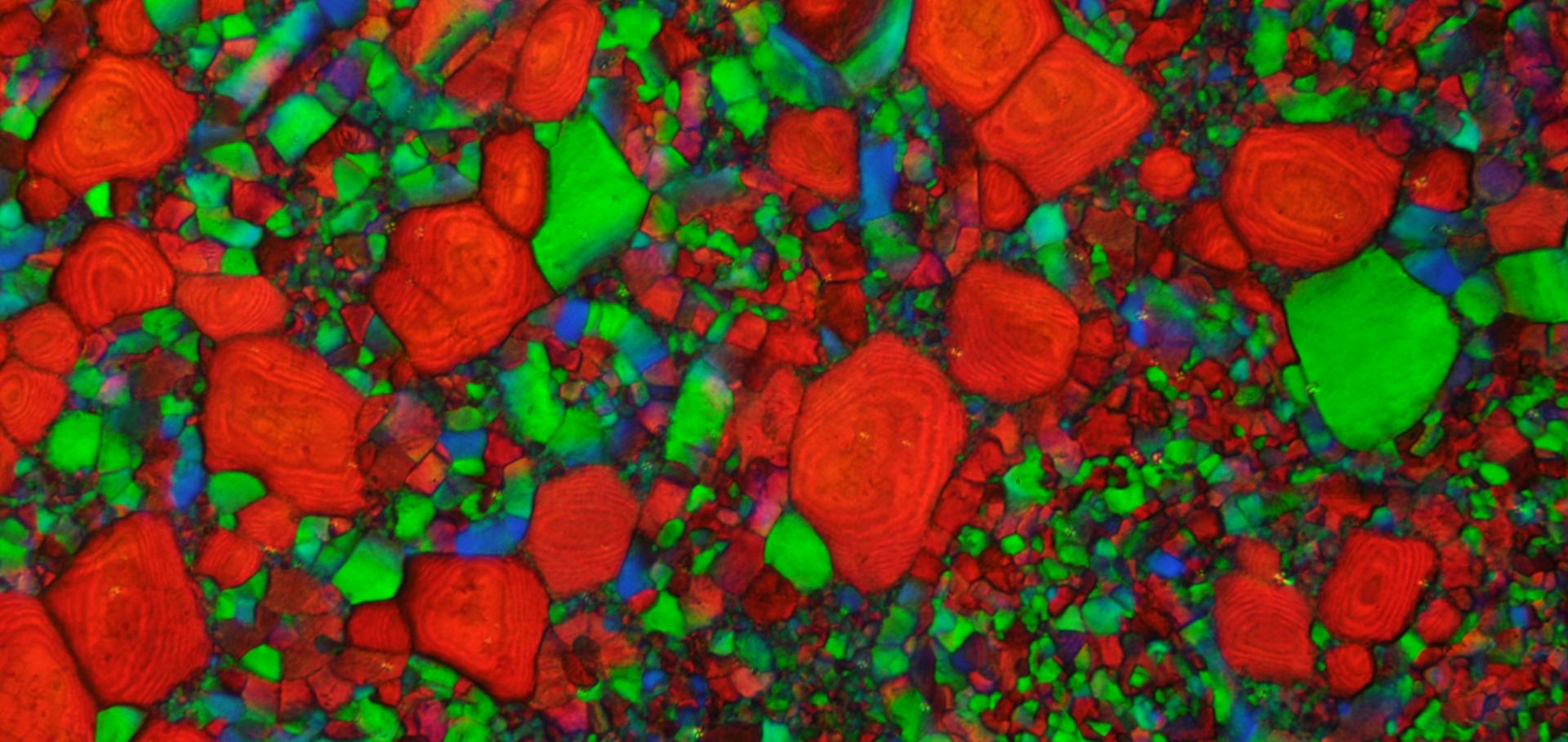
Red blue phase platelets

Banner image: red 'blue phase' platelets I observed under crossed polarisers during an undergraduate summer research project in Cambridge. My first taste of academic research!

Dr Adam Wright

Visitor - Long Term

Sub department

  • Condensed Matter Physics
adam.wright@physics.ox.ac.uk
Google Scholar
ORCiD
Publons/ResearcherID
  • About
  • Publications

Design rules for bifunctional molecules as perovskite/C 60 interfacial passivation: linking mechanisms, efficiency, and stability

Energy & Environmental Science Royal Society of Chemistry (RSC) (2026)

Authors:

Jann B Landgraf, Yashika Gupta, Aleksandra Oranskaia, Oliver Fischer, Edward Butler-Caddle, Sofiia Kosar, Adi Prasetio, Christian Schwarz, Christoph Messmer, Sithisak Chanthalavong, Johanna Modes, Fabian T Thome, Oussama Er-raji, Stefaan De Wolf, Udo Schwingenschlögl, Rebecca L Milot, Adam D Wright, Patricia SC Schulze, Anna Fischer, Stefan W Glunz, Juliane Borchert

Abstract:

Functional-group engineering reveals distinct passivation mechanisms at the perovskite/C 60 interface, enabling the rational design of molecules that balance recombination suppression, device efficiency, and operational stability.
More details from the publisher
More details

A versatile platform for gas-phase molecular polaritonics

The Journal of Chemical Physics AIP Publishing 159:16 (2023) 164202

Authors:

Adam D Wright, Jane C Nelson, Marissa L Weichman
More details from the publisher
More details
More details

A versatile platform for gas-phase molecular polaritonics

ArXiv 2307.11907 (2023)

Authors:

Adam D Wright, Jane C Nelson, Marissa L Weichman
Details from ArXiV

Photovoltaic performance of FAPbI3 perovskite is hampered by intrinsic quantum confinement

ACS Energy Letters American Chemical Society 8:6 (2023) 2543-2551

Authors:

Karim A Elmestekawy, Benjamin M Gallant, Adam D Wright, Philippe Holzhey, Nakita K Noel, Michael B Johnston, Henry J Snaith, Laura M Herz

Abstract:

Formamidinium lead trioiodide (FAPbI3) is a promising perovskite for single-junction solar cells. However, FAPbI3 is metastable at room temperature and can cause intrinsic quantum confinement effects apparent through a series of above-bandgap absorption peaks. Here, we explore three common solution-based film-fabrication methods, neat N,N-dimethylformamide (DMF)–dimethyl sulfoxide (DMSO) solvent, DMF-DMSO with methylammonium chloride, and a sequential deposition approach. The latter two offer enhanced nucleation and crystallization control and suppress such quantum confinement effects. We show that elimination of these absorption features yields increased power conversion efficiencies (PCEs) and short-circuit currents, suggesting that quantum confinement hinders charge extraction. A meta-analysis of literature reports, covering 244 articles and 825 photovoltaic devices incorporating FAPbI3 films corroborates our findings, indicating that PCEs rarely exceed a 20% threshold when such absorption features are present. Accordingly, ensuring the absence of these absorption features should be the first assessment when designing fabrication approaches for high-efficiency FAPbI3 solar cells.

More details from the publisher
Details from ORA
More details
More details

Understanding the Degradation of Methylenediammonium and Its Role in Phase-Stabilizing Formamidinium Lead Triiodide.

Journal of the American Chemical Society (2023)

Authors:

Elisabeth A Duijnstee, Benjamin M Gallant, Philippe Holzhey, Dominik J Kubicki, Silvia Collavini, Bernd K Sturdza, Harry C Sansom, Joel Smith, Matthias J Gutmann, Santanu Saha, Murali Gedda, Mohamad I Nugraha, Manuel Kober-Czerny, Chelsea Xia, Adam D Wright, Yen-Hung Lin, Alexandra J Ramadan, Andrew Matzen, Esther Y-H Hung, Seongrok Seo, Suer Zhou, Jongchul Lim, Thomas D Anthopoulos, Marina R Filip, Michael B Johnston, Robin J Nicholas, Juan Luis Delgado, Henry J Snaith

Abstract:

Formamidinium lead triiodide (FAPbI3) is the leading candidate for single-junction metal-halide perovskite photovoltaics, despite the metastability of this phase. To enhance its ambient-phase stability and produce world-record photovoltaic efficiencies, methylenediammonium dichloride (MDACl2) has been used as an additive in FAPbI3. MDA2+ has been reported as incorporated into the perovskite lattice alongside Cl-. However, the precise function and role of MDA2+ remain uncertain. Here, we grow FAPbI3 single crystals from a solution containing MDACl2 (FAPbI3-M). We demonstrate that FAPbI3-M crystals are stable against transformation to the photoinactive δ-phase for more than one year under ambient conditions. Critically, we reveal that MDA2+ is not the direct cause of the enhanced material stability. Instead, MDA2+ degrades rapidly to produce ammonium and methaniminium, which subsequently oligomerizes to yield hexamethylenetetramine (HMTA). FAPbI3 crystals grown from a solution containing HMTA (FAPbI3-H) replicate the enhanced α-phase stability of FAPbI3-M. However, we further determine that HMTA is unstable in the perovskite precursor solution, where reaction with FA+ is possible, leading instead to the formation of tetrahydrotriazinium (THTZ-H+). By a combination of liquid- and solid-state NMR techniques, we show that THTZ-H+ is selectively incorporated into the bulk of both FAPbI3-M and FAPbI3-H at ∼0.5 mol % and infer that this addition is responsible for the improved α-phase stability.
More details from the publisher
Details from ORA
More details
More details
More details

Pagination

  • First page First
  • Previous page Prev
  • Page 1
  • Current page 2
  • Page 3
  • Page 4
  • Page 5
  • Page 6
  • Page 7
  • Page 8
  • Next page Next
  • Last page Last

Footer Menu

  • Contact us
  • Giving to the Dept of Physics
  • Work with us
  • Media

User account menu

  • Log in

Follow us

FIND US

Clarendon Laboratory,

Parks Road,

Oxford,

OX1 3PU

CONTACT US

Tel: +44(0)1865272200

University of Oxfrod logo Department Of Physics text logo
IOP Juno Champion logo Athena Swan Silver Award logo

© University of Oxford - Department of Physics

Cookies | Privacy policy | Accessibility statement

Built by: Versantus

  • Home
  • Research
  • Study
  • Engage
  • Our people
  • News & Comment
  • Events
  • Our facilities & services
  • About us
  • Giving to Physics
  • Current students
  • Staff intranet