Home
Department Of Physics text logo
  • Research
    • Our research
    • Our research groups
    • Our research in action
    • Research funding support
    • Summer internships for undergraduates
  • Study
    • Undergraduates
    • Postgraduates
  • Engage
    • For young people
    • For teachers
    • For the public
    • For alumni
    • For business
  • Support
Menu
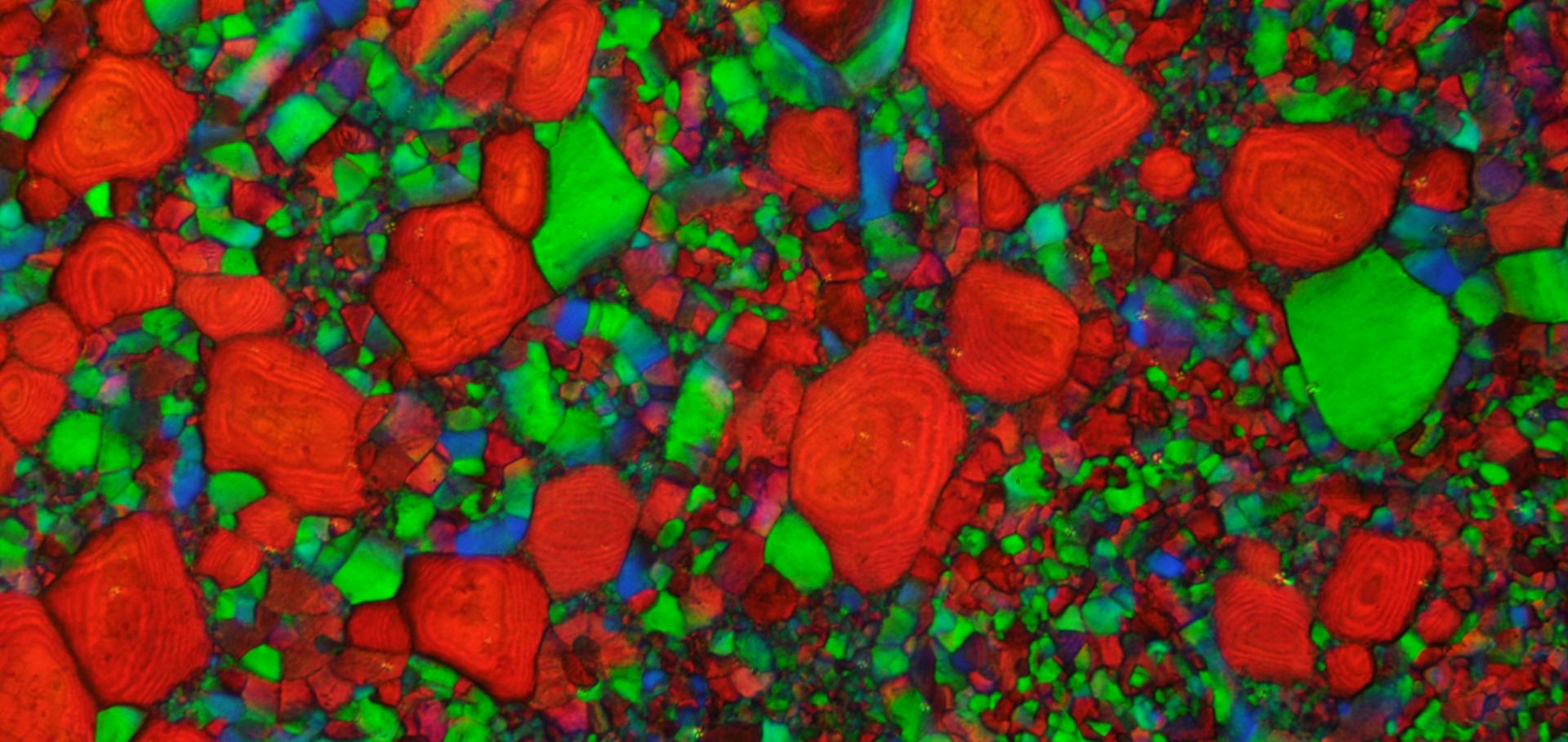
Red blue phase platelets

Banner image: red 'blue phase' platelets I observed under crossed polarisers during an undergraduate summer research project in Cambridge. My first taste of academic research!

Dr Adam Wright

Visitor - Long Term

Sub department

  • Condensed Matter Physics
adam.wright@physics.ox.ac.uk
Google Scholar
ORCiD
Publons/ResearcherID
  • About
  • Publications

Temperature dependent reversal of phase segregation in mixed-halide perovskites

Advanced Materials Wiley 35:19 (2023) 2210834

Authors:

Adam D Wright, Jay B Patel, Michael B Johnston, Laura M Herz

Abstract:

Understanding the mechanism of light-induced halide segregation in mixed-halide perovskites is essential for their application in multijunction solar cells. Here, photoluminescence spectroscopy is used to uncover how both increases in temperature and light intensity can counteract the halide segregation process. It is observed that, with increasing temperature, halide segregation in CH3NH3Pb(Br0.4I0.6)3 first accelerates toward ≈290 K, before slowing down again toward higher temperatures. Such reversal is attributed to the trade-off between the temperature activation of segregation, for example through enhanced ionic migration, and its inhibition by entropic factors. High light intensities meanwhile can also reverse halide segregation; however, this is found to be only a transient process that abates on the time scale of minutes. Overall, these observations pave the way for a more complete model of halide segregation and aid the development of highly efficient and stable perovskite multijunction and concentrator photovoltaics.
More details from the publisher
Details from ORA
More details
More details

Rovibrational Polaritons in Gas-Phase Methane

Journal of the American Chemical Society American Chemical Society (ACS) 145:10 (2023) 5982-5987

Authors:

Adam D Wright, Jane C Nelson, Marissa L Weichman
More details from the publisher
More details
More details

Rovibrational Polaritons in Gas-Phase Methane

ArXiv 2212.13506 (2022)

Authors:

Adam D Wright, Jane C Nelson, Marissa L Weichman
Details from ArXiV

Controlling intrinsic quantum confinement in formamidinium lead triiodide perovskite through Cs substitution

ACS Nano American Chemical Society 16:6 (2022) 9640-9650

Authors:

Karim Elmestekawy, Adam Wright, Kilian Lohmann, Anna Juliane Borchert, Michael Johnston, Laura Herz

Abstract:

Lead halide perovskites are leading candidates for photovoltaic and light-emitting devices, owing to their excellent and widely tunable optoelectronic properties. Nanostructure control has been central to their development, allowing for improvements in efficiency and stability, and changes in electronic dimensionality. Recently, formamidinium lead triiodide (FAPbI3) has been shown to exhibit intrinsic quantum confinement effects in nominally bulk thin films, apparent through above-bandgap absorption peaks. Here, we show that such nanoscale electronic effects can be controlled through partial replacement of the FA cation with Cs. We find that Cs-cation exchange causes a weakening of quantum confinement in the perovskite, arising from changes in the bandstructure, the length scale of confinement, or the presence of δH-phase electronic barriers. We further observe photon emission from quantum-confined regions, highlighting their potential usefulness to light-emitting devices and single-photon sources. Overall, controlling this intriguing quantum phenomenon will allow for its suppression or enhancement according to need.
More details from the publisher
Details from ORA
More details
More details

Optoelectronic Properties of Mixed Iodide-Bromide Perovskites from First-Principles Computational Modeling and Experiment.

The journal of physical chemistry letters (2022) 4184-4192

Authors:

Yinan Chen, Silvia G Motti, Robert DJ Oliver, Adam D Wright, Henry J Snaith, Michael B Johnston, Laura M Herz, Marina R Filip

Abstract:

Halogen mixing in lead-halide perovskites is an effective route for tuning the band gap in light emission and multijunction solar cell applications. Here we report the effect of halogen mixing on the optoelectronic properties of lead-halide perovskites from theory and experiment. We applied the virtual crystal approximation within density functional theory, the GW approximation, and the Bethe-Salpeter equation to calculate structural, vibrational, and optoelectronic properties for a series of mixed halide perovskites. We separately perform spectroscopic measurements of these properties and analyze the impact of halogen mixing on quasiparticle band gaps, effective masses, absorption coefficients, charge-carrier mobilities, and exciton binding energies. Our joint theoretical-experimental study demonstrates that iodide-bromide mixed-halide perovskites can be modeled as homovalent alloys, and local structural distortions do not play a significant role for the properties of these mixed species. Our study outlines a general theoretical-experimental framework for future investigations of novel chemically mixed systems.
More details from the publisher
Details from ORA
More details
More details

Pagination

  • First page First
  • Previous page Prev
  • Page 1
  • Page 2
  • Current page 3
  • Page 4
  • Page 5
  • Page 6
  • Page 7
  • Page 8
  • Next page Next
  • Last page Last

Footer Menu

  • Contact us
  • Giving to the Dept of Physics
  • Work with us
  • Media

User account menu

  • Log in

Follow us

FIND US

Clarendon Laboratory,

Parks Road,

Oxford,

OX1 3PU

CONTACT US

Tel: +44(0)1865272200

University of Oxfrod logo Department Of Physics text logo
IOP Juno Champion logo Athena Swan Silver Award logo

© University of Oxford - Department of Physics

Cookies | Privacy policy | Accessibility statement

Built by: Versantus

  • Home
  • Research
  • Study
  • Engage
  • Our people
  • News & Comment
  • Events
  • Our facilities & services
  • About us
  • Giving to Physics
  • Current students
  • Staff intranet