

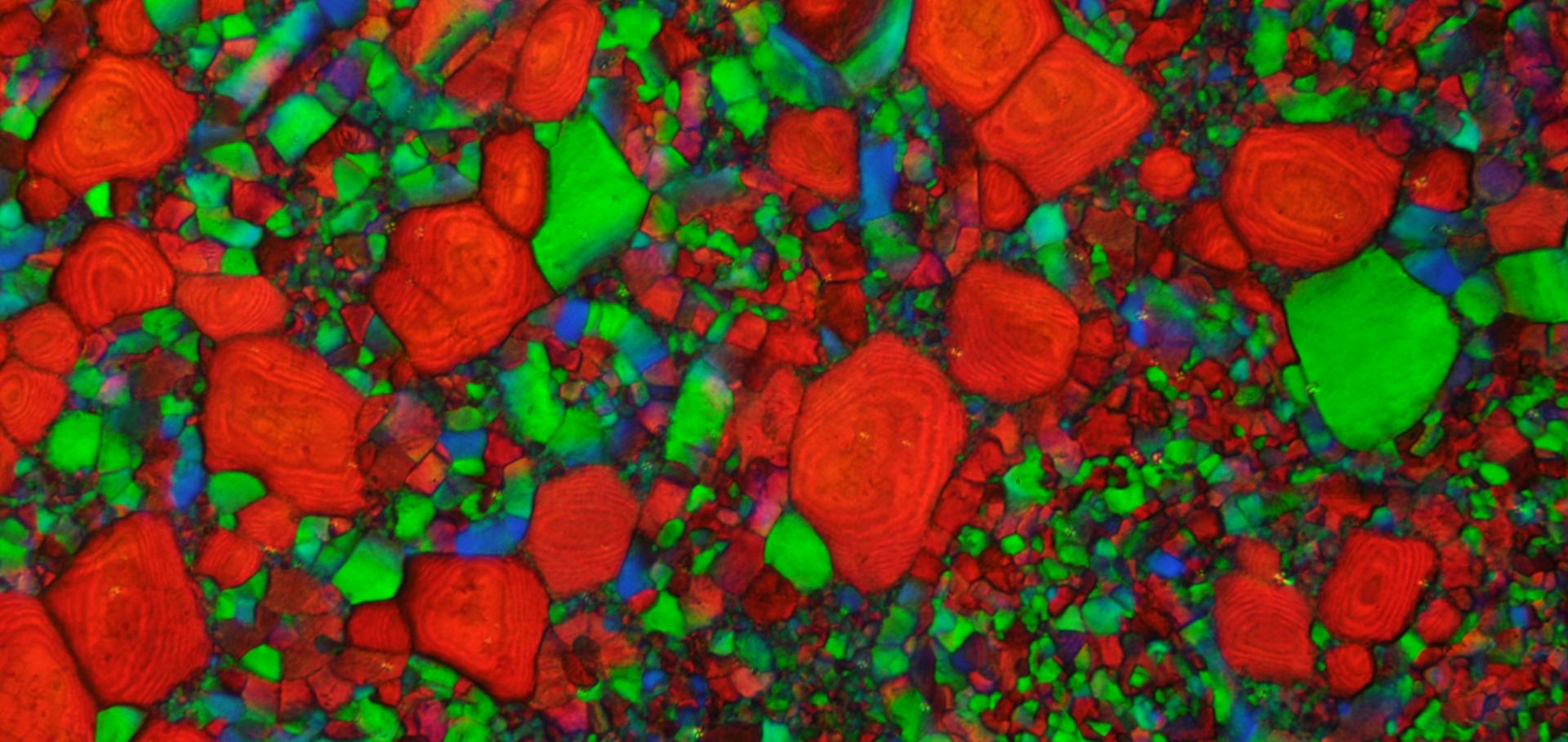

Intrinsic quantum confinement in formamidinium lead triiodide perovskite
University of Oxford (2020)
Abstract:
The data are in .csv format and correspond to the figures in the main manuscript and SI of the corresponding paper. The readme file describes what how each column of data corresponds to the figures.Time-resolved THz spectroscopy of metal-halide perovskite single crystals and polycrystalline thin films
Institute of Electrical and Electronics Engineers (IEEE) 00 (2019) 1-2
Structural and Optical Properties of Cs2AgBiBr6 Double Perovskite
ACS Energy Letters American Chemical Society (ACS) (2018) 299-305
Electronic Traps and Phase Segregation in Lead Mixed-Halide Perovskite
ACS Energy Letters (2018) 75-84
Abstract:
© 2018 American Chemical Society. An understanding of the factors driving halide segregation in lead mixed-halide perovskites is required for their implementation in tandem solar cells with existing silicon technology. Here we report that the halide segregation dynamics observed in the photoluminescence from CH3NH3Pb(Br0.5I0.5)3 is strongly influenced by the atmospheric environment, and that encapsulation of films with a layer of poly(methyl methacrylate) allows for halide segregation dynamics to be fully reversible and repeatable. We further establish an empirical model directly linking the amount of halide segregation observed in the photoluminescence to the fraction of charge carriers recombining through trap-mediated channels, and the photon flux absorbed. From such quantitative analysis we show that under pulsed illumination, the frequency of the modulation alone has no influence on the segregation dynamics. Additionally, we extrapolate that working CH3NH3Pb(Br0.5I0.5)3 perovskite cells would require a reduction of the trap-related charge carrier recombination rate to ≲105s-1 in order for halide segregation to be sufficiently suppressed.Bimolecular recombination in methylammonium lead triiodide perovskite is an inverse absorption process.
Nature communications 9:1 (2018) 293-293