

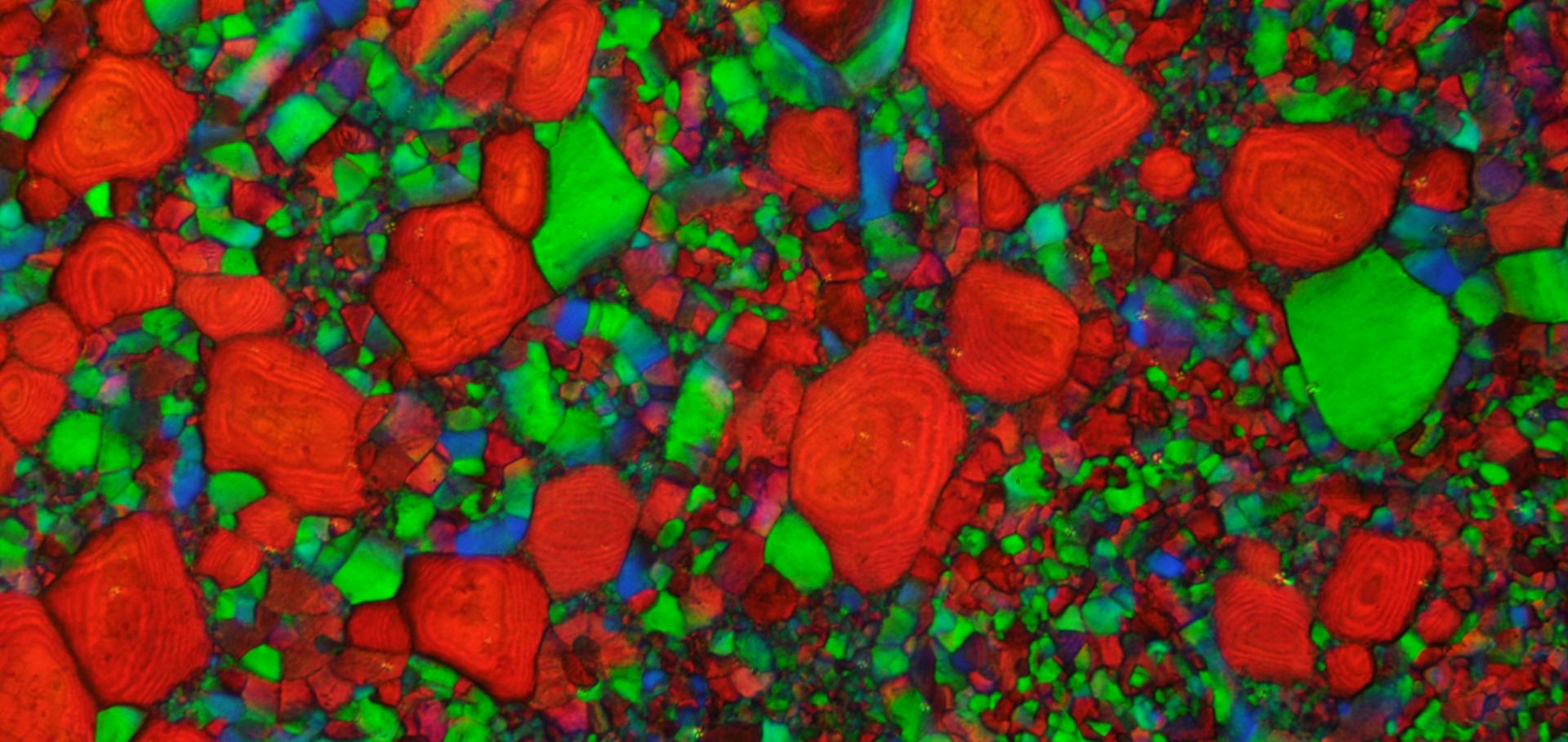

Interplay of structure, charge-carrier localization and dynamics in copper-silver-bismuth-halide semiconductors
Advanced Functional Materials Wiley 32:6 (2021) 2108392
Abstract:
Silver-bismuth based semiconductors represent a promising new class of materials for optoelectronic applications because of their high stability, all-inorganic composition, and advantageous optoelectronic properties. In this study, charge-carrier dynamics and transport properties are investigated across five compositions along the AgBiI4–CuI solid solution line (stoichiometry Cu4x(AgBi)1−xI4). The presence of a close-packed iodide sublattice is found to provide a good backbone for general semiconducting properties across all of these materials, whose optoelectronic properties are found to improve markedly with increasing copper content, which enhances photoluminescence intensity and charge-carrier transport. Photoluminescence and photoexcitation-energy-dependent terahertz photoconductivity measurements reveal that this enhanced charge-carrier transport derives from reduced cation disorder and improved electronic connectivity owing to the presence of Cu+. Further, increased Cu+ content enhances the band curvature around the valence band maximum, resulting in lower charge-carrier effective masses, reduced exciton binding energies, and higher mobilities. Finally, ultrafast charge-carrier localization is observed upon pulsed photoexcitation across all compositions investigated, lowering the charge-carrier mobility and leading to Langevin-like bimolecular recombination. This process is concluded to be intrinsically linked to the presence of silver and bismuth, and strategies to tailor or mitigate the effect are proposed and discussed.Ultrafast photo-induced phonon hardening due to Pauli blocking in MAPbI3 single-crystal and polycrystalline perovskites
Journal of Physics: Materials IOP Publishing 4:4 (2021) 044017
Abstract:
Metal-halide perovskite semiconductors have attracted intensive interest in the last decade, particularly for applications in photovoltaics. Low-energy optical phonons combined with significant crystal anharmonicity play an important role in charge-carrier cooling and scattering in these materials, strongly affecting their optoelectronic properties. We have observed optical phonons associated with Pb—I stretching in both MAPbI3 single crystals and polycrystalline thin films as a function of temperature by measuring their terahertz (THz) conductivity spectra with and without photoexcitation. An anomalous bond hardening was observed under above-bandgap illumination for both single-crystal and polycrystalline MAPbI3. First-principles calculations reproduced this photo-induced bond hardening and identified a related lattice contraction (photostriction), with the mechanism revealed as Pauli blocking. For single-crystal MAPbI3, phonon lifetimes were significantly longer and phonon frequencies shifted less with temperature, compared with polycrystalline MAPbI3. We attribute these differences to increased crystalline disorder, associated with grain boundaries and strain in the polycrystalline MAPbI3. Thus we provide fundamental insight into the photoexcitation and electron–phonon coupling in MAPbI3.Limits to Electrical Mobility in Lead-Halide Perovskite Semiconductors
(2021)
Charge-carrier mobility and localization in semiconducting CU2AGBiI6 for photovoltaic applications
ACS Energy Letters American Chemical Society 6:5 (2021) 1729-1739
Abstract:
Lead-free silver–bismuth semiconductors have become increasingly popular materials for optoelectronic applications, building upon the success of lead halide perovskites. In these materials, charge-lattice couplings fundamentally determine charge transport, critically affecting device performance. In this study, we investigate the optoelectronic properties of the recently discovered lead-free semiconductor Cu2AgBiI6 using temperature-dependent photoluminescence, absorption, and optical-pump terahertz-probe spectroscopy. We report ultrafast charge-carrier localization effects, evident from sharp THz photoconductivity decays occurring within a few picoseconds after excitation and a rise in intensity with decreasing temperature of long-lived, highly Stokes-shifted photoluminescence. We conclude that charge carriers in Cu2AgBiI6 are subject to strong charge-lattice coupling. However, such small polarons still exhibit mobilities in excess of 1 cm2 V–1 s–1 at room temperature because of low energetic barriers to formation and transport. Together with a low exciton binding energy of ∼29 meV and a direct band gap near 2.1 eV, these findings highlight Cu2AgBiI6 as an attractive lead-free material for photovoltaic applications.Limits to electrical mobility in lead-halide perovskite semiconductors
Journal of Physical Chemistry Letters American Chemical Society 12:14 (2021) 3607-3617