The link between obscured accretion and mildly relativistic precessing jets

Monthly Notices of the Royal Astronomical Society Oxford University Press (OUP) (2026) stag1112

Authors:

Rob Fender, Sara Motta

Abstract:

Abstract We have recently shown evidence that the most relativistic jets (with Lorentz factor >2) from stellar-mass black holes in X-ray binary systems may be locked to a fixed axis, likely the spin axis of the black hole. Slower, mildly relativistic jets (with velocities typically ~0.3c) are often seen to precess and can be associated with both neutron stars and black holes. In this paper we demonstrate an additional clear link between highly obscured systems and these lower-velocity, precessing jets. We speculate that this link may be due to mass-loading of the jets close to their launch sites, since these obscured systems are likely to be examples of (sometimes persistent, other times transient) super-Eddington accretion. The fastest relativistic jets are now seen to be both locked to a fixed direction, likely the black hole spin axis, and to be launched in low-density environments, while jets launched in dense environments are generally slower and very likely to precess.

Observational Biases and Improved Modelling of Off-axis Relativistic Jets

Monthly Notices of the Royal Astronomical Society Oxford University Press (OUP) (2026) stag1187

Authors:

AJ Cooper, AP Scott, L Rhodes, F Carotenuto, AK Hughes, JH Matthews, K Savard, FJ Cowie, EL Elley, C Lilje, R Fender

Abstract:

Abstract Relativistic Doppler boosting significantly affects the observed emission of astrophysical jets resulting in observational biases. In this work we investigate the observational biases and modelling opportunities which arise due to relativistic boosting using two X-ray binary case studies. Using the one-sided jet ejecta from MAXI J1535-571, we demonstrate that incorporating non-detections of the receding jet ejecta into kinematic modelling can significantly improve parameter estimation, reducing posterior uncertainties by over $40{{\ \rm per\ cent}}$. For the bipolar jets of MAXI J1820+070, we recover the intrinsic jet rest-frame emission of both approaching and receding jet components, demonstrating that they follow a common powerlaw evolution. Using this rest-frame emission profile as a base model, we show that current observational strategies strongly bias against detecting ejecta with high initial Lorentz factors ≳ 5 and receding ejecta components across a broad region of parameter space. These results highlight the importance of observational strategy selection, particularly early-time and late-time observations, and leveraging non-detections in the modelling of relativistic jets. More generally, quantifying observational biases and maximising modelling capabilities by incorporating the non-detection of receding jets can be employed to enhance interpretation of future gravitational-wave/optically-triggered observations of off-axis, extragalactic jetted transients.

Observational Biases and Improved Modelling of Off-axis Relativistic Jets

(2026)

Authors:

AJ Cooper, AP Scott, L Rhodes, F Carotenuto, AK Hughes, JH Matthews, K Savard, FJ Cowie, EL Elley, C Lilje, R Fender

Towards improved synchrotron self absorption energy estimates: accounting for inhomogeneous and non-spherical emitting regions

Monthly Notices of the Royal Astronomical Society Oxford University Press (OUP) (2026) stag1113

Authors:

FJ Cowie, RP Fender

Abstract:

Abstract Synchrotron self absorption (SSA) is seen across a variety of astrophysical sources, and observation of an SSA peak in the spectrum is a powerful tool for estimating the physical conditions and the minimum energy of the emitting region. We begin with the (re)derivation of the usual SSA parameter estimates, carefully considering dependencies and assumptions, obtaining the most accurate traditional SSA minimum energy equations currently available. Traditional methods rely on the assumption that the emitting region is quasi-spherical and homogeneous. However, many observations of SSA show that the spectral index at frequencies below the peak is less than the expected +2.5 (non-thermal) or +2 (thermal). We argue that an inhomogeneous emitting region is the most likely explanation in many cases. Power law inhomogeneous cylindrical slab and broken power law inhomogeneous sphere models are used to investigate how the presence of inhomogeneity affects parameter estimates using traditional SSA methods. We find that in some cases inhomogeneity can lead to traditional SSA methods underestimating the minimum energy and the size of the emitting region by over an order of magnitude. Quantitative correction factors are found which can be applied to traditional estimates to correct for inhomogeneity, depending on the value of the observed flattened spectral index and the range in frequency over which this value is observed. Furthermore, we derive simple correction factors for non-spherical homogeneous emitting regions. Finally, we explore the effects of inhomogeneity on measurements of polarisation around the spectral peak, and on lightcurves for expanding emitting regions.

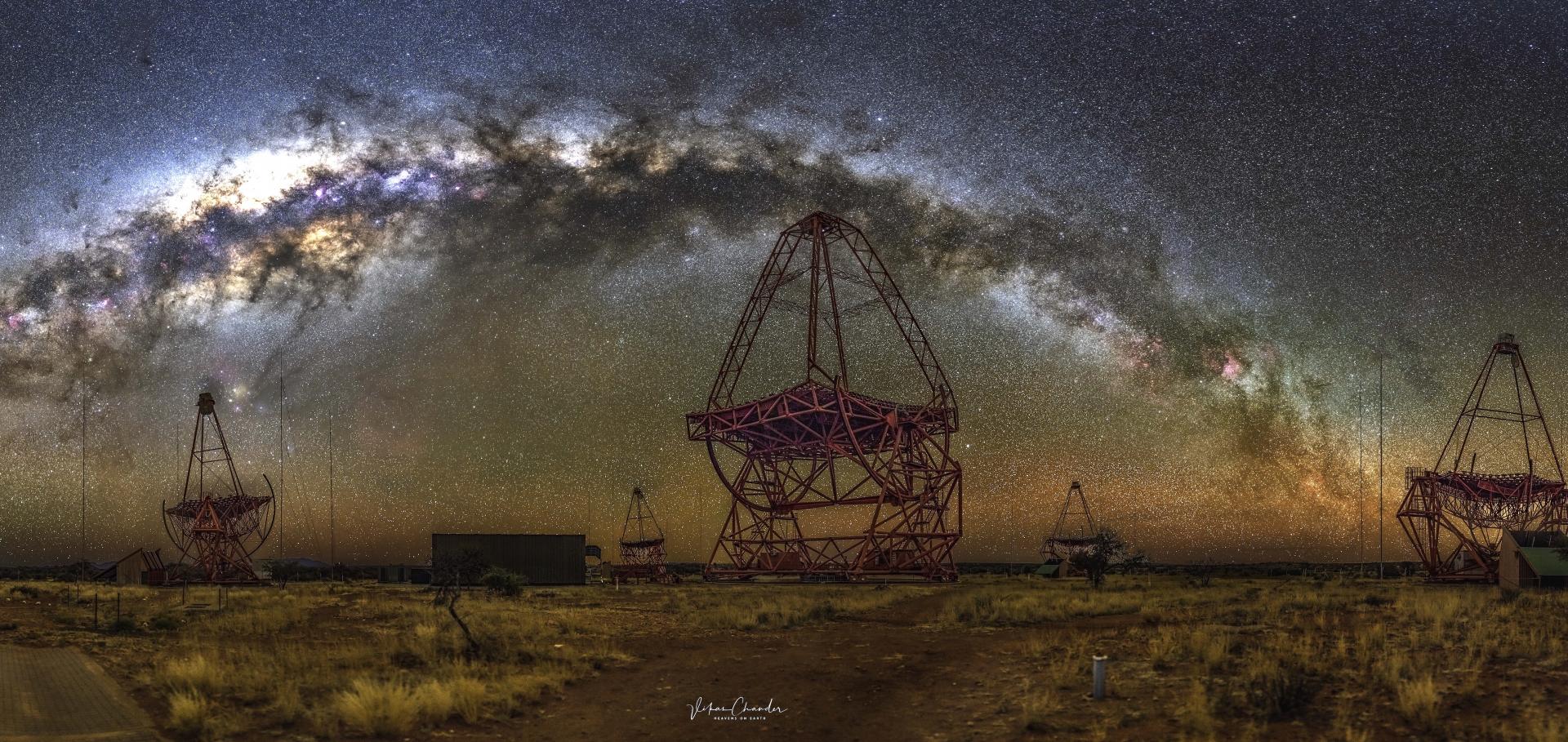
Chasing Gamma-Ray Signals from Binary Neutron Star Coalescences with the Cherenkov Telescope Array: Prospects and Observing Strategies

The Astrophysical Journal American Astronomical Society 1004:1 (2026) 46

Authors:

S Abe, J Abhir, A Abhishek, F Acero, A Acharyya, R Adam, A Aguasca-Cabot, I Agudo, I Albanese, J Alfaro, C Alispach, R Alves Batista, E Amato, G Ambrosi, D Ambrosino, F Ambrosino, L Angel, C Aramo, A Arbet-Engels, C Arcaro, C Arena, TTH Arnesen, K Asano, H Ashkar, C Bakshi, C Balazs, M Balbo, A Baquero Larriva, V Barbosa Martins, JA Barrio, C Bartolini, I Batković, R Batzofin, N Bavdaz, J Becerra González, G Beck, W Benbow, E Bernardini, MG Bernardini, J Bernete, A Berti, B Bertucci, V Beshley, P Bhattacharjee, S Bhattacharyya, C Bigongiari, A Biland, E Bissaldi, M Blaña, O Blanch, J Blazek, C Boisson, G Bonnoli, Z Bosnjak, E Bottacini, M Böttcher, E Bronzini, G Brunelli, J Buces Sáez, A Bulgarelli, T Bulik, L Burmistrov, PG Calisse, A Campoy-Ordaz, BK Cantlay, G Capasso, A Caproni, R Capuzzo-Dolcetta, M Cardillo, S Caroff, A Carosi, E Carquin, S Casanova, E Cascone, F Cassol, G Castignani, F Catalani, D Cerasole, M Cerruti, A Cerviño Cortínez, PM Chadwick, S Chaty, AW Chen, Y Chen, M Chernyakova, A Chiavassa, G Chon, J Chudoba, L Chytka, GM Cicciari, A Cifuentes Santos, CH Coimbra Araujo, JL Contreras, B Cornejo, J Cortina, A Costa, G Cotter, P Cristofari, O Cuevas, Z Curtis-Ginsberg, A D’Aì, G D’Amico, F D’Ammando, P D’Avanzo, P Da Vela, L David, F Dazzi, M de Bony de Lavergne, V De Caprio, EM de Gouveia Dal Pino, B De Lotto, M de Naurois, V de Souza, L del Peral, MV del Valle, C Delgado, D della Volpe, D Depaoli, A Dettlaff, L Di Bella, T Di Girolamo, A Di Piano, F Di Pierro, R Di Tria, L Di Venere, R Dima, A Dinesh, E Do Souto Espiñeira, D Dominis Prester, A Donini, D Dorner, J Dörner, M Doro, L Ducci, VV Dwarkadas, J Ebr, C Eckner, K Egberts, L Eisenberger, D Elsässer, G Emery, C Escañuela Nieves, P Escarate, M Escobar Godoy, J Escudero Pedrosa, P Esposito, D Falceta-Goncalves, E Fedorova, S Fegan, K Feijen, Q Feng, G Ferrand, E Fiandrini, A Fiasson, M Filipovic, V Fioretti, L Foffano, G Fontaine, F Frías García-Lago, Y Fukazawa, Y Fukui, G Galanti, G Galaz, S Gallozzi, V Gammaldi, S García Soto, M Garczarczyk, C Gasbarra, D Gasparrini, M Gaug, G Ghirlanda, JG Giesbrecht Formiga Paiva, N Giglietto, F Giordano, M Giroletti, R Giuffrida, J-F Glicenstein, P Goldoni, JM González, J Goulart Coelho, T Gradetzke, J Granot, R Grau, D Green, JG Green, J Grube, J Hackfeld, D Hadasch, A Hahn, P Hamal, W Hanlon, S Hara, VM Harvey, T Hassan, K Hayashi, B Hess, L Heckmann, N Hiroshima, B Hnatyk, R Hnatyk, D Horan, P Horvath, D Hrupec, S Hussain, M Iarlori, T Inada, F Incardona, S Inoue, F Iocco, A Iuliano, Jahanvi, M Jamrozy, P Janecek, F Jankowsky, C Jarnot, I Jaroschewski, P Jean, V Jilek, I Jiménez Martínez, J Jimenez Quiles, W Jin, E Joshi, J Jurysek, V Karas, H Katagiri, J Kataoka, S Kaufmann, T Keita, D Kerszberg, M Kherlakian, DB Kieda, R Kissmann, T Kleiner, Y Kobayashi, K Kohri, D Kolar, N Komin, A Kong, K Kosack, D Kostunin, G Kowal, H Kubo, J Kushida, A La Barbera, N La Palombara, B Lacave, M Láinez, A Lamastra, J Lapington, S Lazarević, J-P Lenain, F Leone, E Leonora, G Leto, E Lindfors, S Lombardi, F Longo, R López-Coto, M López-Moya, A López-Oramas, J Lozano Bahilo, PL Luque-Escamilla, E Lyard, O Macias, P Majumdar, M Makariev, D Mandat, S Mangano, A Marchetti, M Mariotti, S Markoff, I Márquez, G Marsella, J Martí, D Martín Domínguez, M Martínez, O Martinez, G Maurin, D Mazin, D Melkumyan, S Menon, E Mestre, DM-A Meyer, D Miceli, M Miceli, M Michailidis, T Miener, JM Miranda, R Moderski, M Molero, C Molfese, E Molina, K Morik, A Morselli, E Moulin, AL Müller, K Munari, T Murach, A Muraczewski, H Muraishi, T Nakamori, L Nava, R Nemmen, J Niemiec, D Nieto, M Nievas Rosillo, M Nikołajuk, L Nikolić, K Noda, D Nosek, V Novotny, S Nozaki, A Okumura, RA Ong, R Orito, M Orlandini, E Orlando, S Orlando, J Otero-Santos, I Oya, M Ozlati Moghadam, A Pagliaro, M Palatiello, A Pandey, G Panebianco, D Paneque, FR Pantaleo, JM Paredes, B Patricelli, A Pe’er, M Pech, M Pecimotika, M Peresano, E Peretti, J Pérez-Romero, G Peron, F Perrotta, M Persic, O Petruk, F Pfeifle, E Pietropaolo, M Pihet, L Pinchbeck, F Pintore, G Pirola, C Pittori, F Podobnik, M Pohl, V Pollet, G Ponti, E Prandini, G Principe, M Prouza, E Pueschel, G Pühlhofer, ML Pumo, M Punch, A Quirrenbach, S Rainò, R Rando, S Recchia, A Reimer, O Reimer, I Reis, A Reisenegger, W Rhode, M Ribó, C Ricci, T Richtler, J Rico, L Riitano, V Rizi, E Roache, G Rodriguez Fernandez, JJ Rodríguez-Vázquez, P Romano, G Romeo, J Rosado, A Rosales de Leon, A Roy, I Sadeh, L Saha, T Saito, M Sánchez-Conde, P Sangiorgi, H Sano, R Santos-Lima, V Sapienza, S Sarkar, FG Saturni, A Scherer, F Schiavone, P Schipani, P Schovanek, F Schussler, M Seglar Arroyo, O Sergijenko, H Siejkowski, A Simongini, V Sliusar, A Slowikowska, I Sofia, H Sol, S Spinello, A Stamerra, S Stanič, T Starecki, R Starling, Ł Stawarz, T Stolarczyk, Y Suda, A Sunny, T Suomijarvi, R Takeishi, SJ Tanaka, F Tavecchio, T Tavernier, Y Terada, M Teshima, V Testa, WW Tian, Y Tian, L Tibaldo, O Tibolla, SJ Tingay, CJ Todero Peixoto, F Tombesi, D Tonev, F Torradeflot, DF Torres, N Tothill, G Tovmassian, G Tripodo, A Trois, A Tsiahina, A Tutone, L Vaclavek, M Vacula, C van Eldik, J Vandenbroucke, V Vassiliev, M Vázquez Acosta, M Vecchi, S Vercellone, SD Vergani, I Viale, A Viana, A Vigliano, J Vignatti, CF Vigorito, J Villanueva, E Visentin, V Voitsekhovskyi, S Vorobiov, I Vovk, T Vuillaume, R Walter, M Wechakama, M White, A Wierzcholska, M Will, F Wohlleben, A Wolter, F Xotta, T Yamamoto, R Yamazaki, T Yoshikoshi, M Zacharias, G Zaharijas, R Zanmar Sanchez, D Zavrtanik, M Zavrtanik, A Zech, VI Zhdanov, M Živec, J Zuriaga-Puig, A Colombo

Abstract:

The detection of gravitational waves (GWs) from a binary neutron star (BNS) merger by Advanced LIGO and Advanced Virgo (GW170817), together with its electromagnetic counterpart, the short gamma-ray burst GRB 170817A, heralded the birth of multimessenger astronomy. The detection of TeV emission from GRBs motivates follow-up observations with the Cherenkov Telescope Array Observatory (CTAO), which is ideal for detecting such signals due to its unprecedented sensitivity, rapid response, and wide-field survey capabilities. The aim of this work is to evaluate GeV–TeV GW follow-up strategies for CTAO using a multistep simulation pipeline and to estimate the expected rate of joint GW–GRB detections during observing run O5. Using a simulated sample of BNS systems with corresponding GW detections, gamma-ray emission is simulated through phenomenological prescriptions based on the observed population of short GRBs, including off-axis jet scenarios. CTAO observations are simulated to account for instrument response, sky tiling strategies, integration times, and varying observing conditions. Strategies with variable and constant integration times are investigated. We find that, via an optimized follow-up strategy, about 5% of simulated GW-associated short GRBs produce GeV–TeV radiation detectable by CTAO. Detectability is strongly influenced by the jet opening angle and viewing angle, suggesting that even rough estimates of the viewing angle in GW alerts could enhance targeting. This framework motivates future follow-ups of GW-detectable events, including neutron star–black hole mergers, and further supports the development of advanced strategies incorporating galaxy distributions and synergies with future detectors such as the Einstein Telescope.