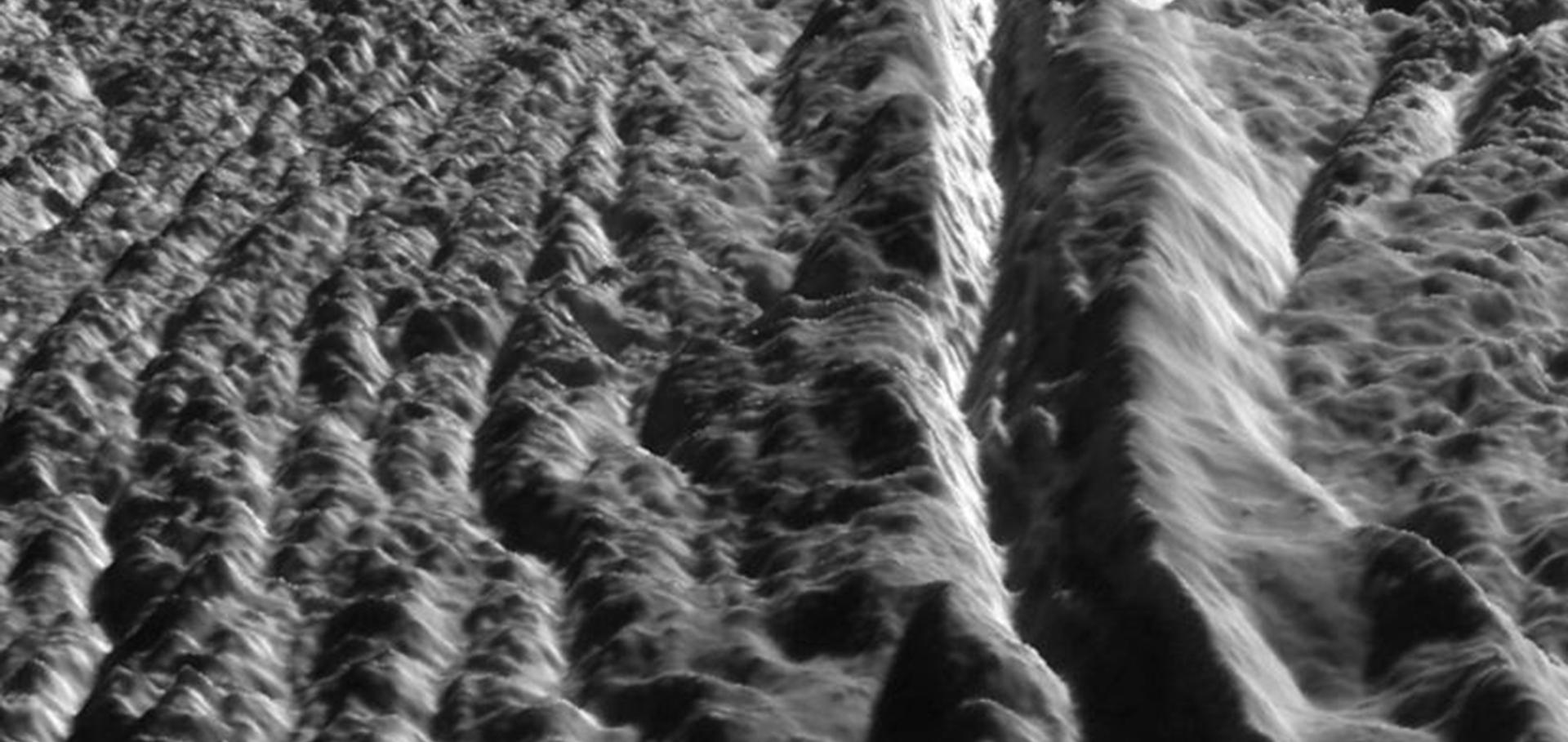
Trident: A Mission to Explore Triton, a Candidate Ocean World

Copernicus Publications (2024)

Authors:

Carly Howett, Louise Procktor, Karl Mitchell, David Bearden, William Smythe

The Mantis Network

Astronomy & Astrophysics EDP Sciences 685 (2024) a139

Authors:

HJ Hoeijmakers, D Kitzmann, BM Morris, B Prinoth, NW Borsato, B Thorsbro, L Pino, EKH Lee, C Akın, JV Seidel, JL Birkby, R Allart, Kevin Heng

The bulk mineralogy, elemental composition, and water content of the Winchcombe CM chondrite fall

Meteoritics and Planetary Science Wiley 59:5 (2024) 1006-1028

Authors:

HC Bates, AJ King, KS Shirley, E Bonsall, C Schröder, F Wombacher, T Fockenberg, RJ Curtis, NE Bowles

Climatology and diurnal variation of ozone column abundances for 2.5 Mars years as measured by the NOMAD‐UVIS spectrometer

Journal of Geophysical Research Planets American Geophysical Union 129:4 (2024) e2023JE008270

Authors:

Jp Mason, Mr Patel, Ja Holmes, Mj Wolff, J Alday, P Streeter, KS Olsen, Maj Brown, G Sellers, C Marriner, Y Willame, I Thomas, B Ristic, F Daerden, Ac Vandaele, J‐J Lopez‐Moreno, G Bellucci

Abstract:

The distribution of Mars ozone (O3) is well established; however, our knowledge on the dayside diurnal variation of O3 is limited. We present measurements of Mars O3 column abundances, spanning Mars Year (MY) 34 to the end of MY 36, by the Ultraviolet and VIsible Spectrometer (UVIS), part of the Nadir and Occultation for MArs Discovery (NOMAD) instrument, aboard the ExoMars Trace Gas Orbiter. UVIS provides the capability to measure dayside diurnal variations of O3 and for the first time, a characterization of the dayside diurnal variations of O3 is attempted. The observed O3 climatology for Mars Years (MY) 34–36 follows the established seasonal trends observed through previous O3 measurements. At aphelion, the equatorial O3 distribution is observed to be strongly correlated with the water ice distribution. We show that the early dust storm in MY 35 resulted in a near-global reduction in O3 during northern spring and the O3 abundances remained 14% lower in northern summer compared to MY36. Strong latitudinal and longitudinal variation was observed in the diurnal behavior of O3 around the northern summer solstice. In areas with a weak O3 upper layer, O3 column abundance peaks in the mid-morning, driven by changes in the near-surface O3 layer. In regions with greater O3 column abundances, O3 is observed to gradually increase throughout the day. This is consistent with the expected diurnal trend of O3 above the hygropause and suggests that in these areas an upper O3 layer persists throughout the Martian day.

Possible Effects of Volcanic Eruptions on the Modern Atmosphere of Venus

Space Science Reviews Springer 220:3 (2024) 31

Authors:

Colin F Wilson, Emmanuel Marcq, Cédric Gillmann, Thomas Widemann, Oleg Korablev, Nils T Mueller, Maxence Lefèvre, Paul B Rimmer, Séverine Robert, Mikhail Y Zolotov

Abstract:

This work reviews possible signatures and potential detectability of present-day volcanically emitted material in the atmosphere of Venus. We first discuss the expected composition of volcanic gases at present time, addressing how this is related to mantle composition and atmospheric pressure. Sulfur dioxide, often used as a marker of volcanic activity in Earth's atmosphere, has been observed since late 1970s to exhibit variability at the Venus' cloud tops at time scales from hours to decades; however, this variability may be associated with solely atmospheric processes. Water vapor is identified as a particularly valuable tracer for volcanic plumes because it can be mapped from orbit at three different tropospheric altitude ranges, and because of its apparent low background variability. We note that volcanic gas plumes could be either enhanced or depleted in water vapor compared to the background atmosphere, depending on magmatic volatile composition. Non-gaseous components of volcanic plumes, such as ash grains and/or cloud aerosol particles, are another investigation target of orbital and in situ measurements. We discuss expectations of in situ and remote measurements of volcanic plumes in the atmosphere with particular focus on the upcoming DAVINCI, EnVision and VERITAS missions, as well as possible future missions.ISSN:1572-9672ISSN:0038-630