Home
Department Of Physics text logo
  • Research
    • Our research
    • Our research groups
    • Our research in action
    • Research funding support
    • Summer internships for undergraduates
  • Study
    • Undergraduates
    • Postgraduates
  • Engage
    • For young people
    • For teachers
    • For the public
    • For alumni
    • For business
  • Support
Menu
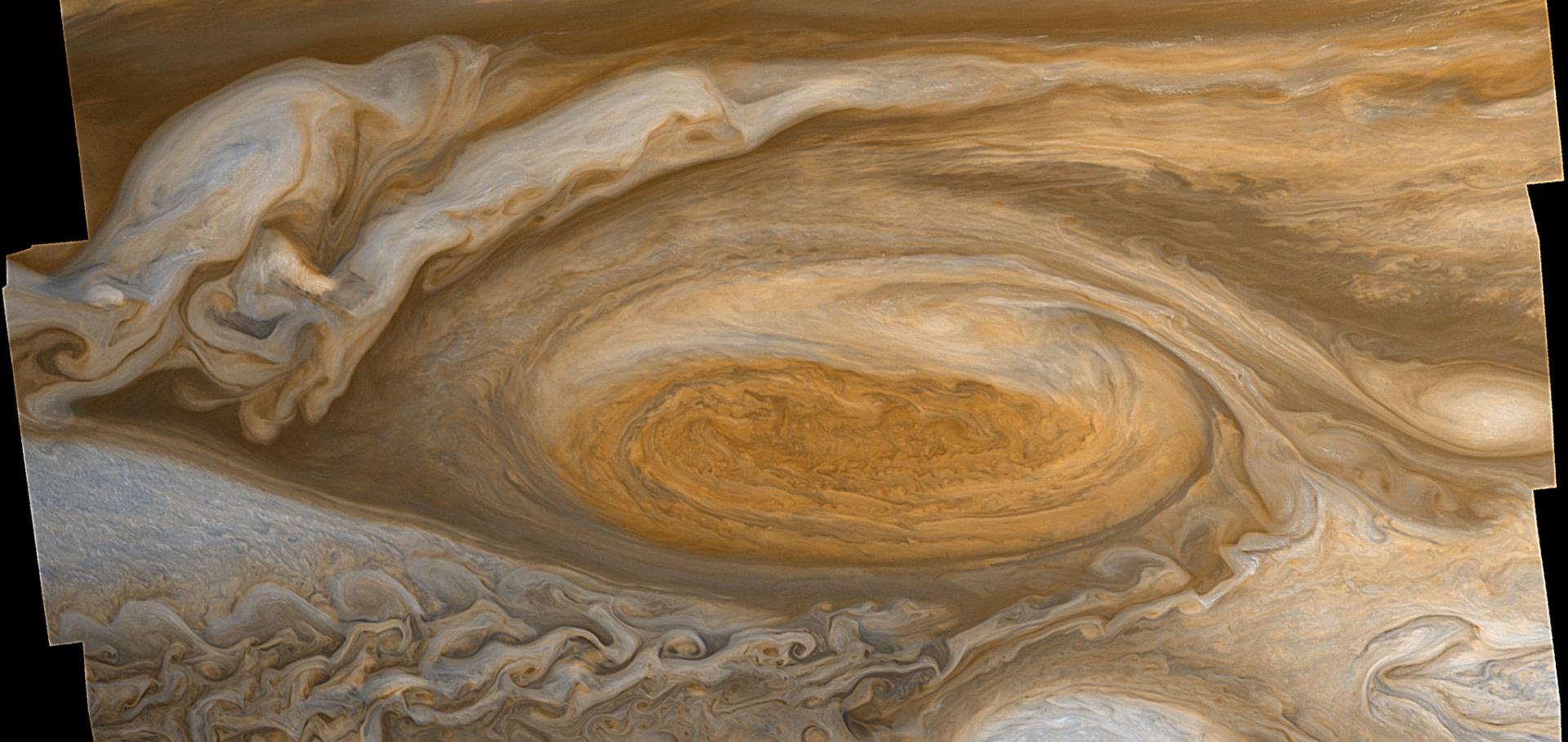
Image of Jupiter's Great Red Spot from Voyager 1

Image of Jupiter's Great Red Spot, obtained during the fly-by of Jupiter by NASA's Voyager 1 spacecraft in 1979.

Credit: NASA/JPL

Prof. Peter Read

Emeritus/researcher

Research theme

  • Climate physics
  • Exoplanets and planetary physics

Sub department

  • Atmospheric, Oceanic and Planetary Physics

Research groups

  • Geophysical and Astrophysical Fluid Dynamics
  • Planetary Climate Dynamics
Peter.Read@physics.ox.ac.uk
Telephone: 01865 (2)72082
Atmospheric Physics Clarendon Laboratory, room 210
  • About
  • Publications

Atmospheric Dynamics of Terrestrial Planets

Chapter in Handbook of Exoplanets, Springer Nature (2018) 1-31

Authors:

Peter L Read, Stephen R Lewis, Geoffrey K Vallis
More details from the publisher

Atmospheric Dynamics of Terrestrial Planets

Chapter in Handbook of Exoplanets, Springer Nature (2018) 285-315

Authors:

Peter L Read, Stephen R Lewis, Geoffrey K Vallis
More details from the publisher

Atmospheric Dynamics of Terrestrial Planets

Chapter in Handbook of Exoplanets, Springer Nature (2018) 1-31

Authors:

Peter L Read, Stephen R Lewis, Geoffrey K Vallis
More details from the publisher

An experimental investigation of blocking by partial barriers in a rotating baroclinic annulus

Geophysical and Astrophysical Fluid Dynamics (2017) 1-33

Authors:

SD Marshall, PL Read

Abstract:

© 2017 Informa UK Limited, trading as Taylor & Francis Group We present a series of experimental investigations in which a differentially-heated annulus was used to investigate the effects of topography on rotating, stratified flows with similarities to the Earth’s atmospheric or oceanic circulation. In particular, we compare and investigate blocking effects via partial mechanical barriers to previous experiments by the authors utilising azimuthally-periodic topography. The mechanical obstacle used was an isolated ridge, forming a partial barrier, employed to study the difference between partially blocked and fully unblocked flow. The topography was found to lead to the formation of bottom-trapped waves, as well as impacting the circulation at a level much higher than the top of the ridge. This produced a unique flow structure when the drifting flow and the topography interacted in the form of an “interference” regime at low Taylor number, but forming an erratic “irregular” regime at higher Taylor number. The results also showed evidence of resonant wave-triads, similar to those noted with periodic wavenumber-3 topography by Marshall and Read (Geophys. Astrophys. Fluid Dyn., 2015, 109), though the component wavenumbers of the wave-triads and their impact on the flow were found to depend on the topography in question. With periodic topography, wave-triads were found to occur between both the baroclinic and barotropic components of the zonal wavenumber-3 mode and the wavenumber-6 baroclinic component, whereas with the partial barrier two nonlinear resonant wave-triads were noted, each sharing a common wavenumber-1 mode.
More details from the publisher
Details from ORA
More details

Phase synchronization of baroclinic waves in a differentially heated rotating annulus experiment subject to periodic forcing with a variable duty cycle

Chaos AIP Publishing 27:12 (2017) 127001

Authors:

PL Read, X Morice-Atkinson, EJ Allen, Alfonso Castrejon Pita

Abstract:

A series of laboratory experiments in a thermally driven, rotating fluid annulus are presented that investigate the onset and characteristics of phase synchronization and frequency entrainment between the intrinsic, chaotic, oscillatory amplitude modulation of travelling baroclinic waves and a periodic modulation of the (axisymmetric) thermal boundary conditions, subject to time-dependent coupling. The time-dependence is in the form of a prescribed duty cycle in which the periodic forcing of the boundary conditions is applied for only a fraction ߜ of each oscillation. For the rest of the oscillation, the boundary conditions are held fixed. Two profiles of forcing were investigated that capture different parts of the sinusoidal variation and ߜ was varied over the range 0.1 ൑ ߜ ൑ 1. Reducing ߜ was found to act in a similar way to a reduction in a constant coupling coefficient in reducing the width of the interval in forcing frequency or period over which complete synchronization was observed (the “Arnol’d tongue”) with respect to the detuning, though for the strongest pulselike forcing profile some degree of synchronization was discernible even at ߜ ൌ 0.1. Complete phase synchronization was obtained within the Arnol’d tongue itself, though the strength of the amplitude modulation of the baroclinic wave was not significantly affected. These experiments demonstrate a possible mechanism for intraseasonal and/or interannual “teleconnections” within the climate system of the Earth and other planets that does not rely upon Rossby wave propagation across the planet along great circles.
More details from the publisher
Details from ORA
More details
More details

Pagination

  • First page First
  • Previous page Prev
  • …
  • Page 12
  • Page 13
  • Page 14
  • Page 15
  • Current page 16
  • Page 17
  • Page 18
  • Page 19
  • Page 20
  • …
  • Next page Next
  • Last page Last

Footer Menu

  • Contact us
  • Giving to the Dept of Physics
  • Work with us
  • Media

User account menu

  • Log in

Follow us

FIND US

Clarendon Laboratory,

Parks Road,

Oxford,

OX1 3PU

CONTACT US

Tel: +44(0)1865272200

University of Oxfrod logo Department Of Physics text logo
IOP Juno Champion logo Athena Swan Silver Award logo

© University of Oxford - Department of Physics

Cookies | Privacy policy | Accessibility statement

Built by: Versantus

  • Home
  • Research
  • Study
  • Engage
  • Our people
  • News & Comment
  • Events
  • Our facilities & services
  • About us
  • Giving to Physics
  • Current students
  • Staff intranet