Home
Department Of Physics text logo
  • Research
    • Our research
    • Our research groups
    • Our research in action
    • Research funding support
    • Summer internships for undergraduates
  • Study
    • Undergraduates
    • Postgraduates
  • Engage
    • For young people
    • For teachers
    • For the public
    • For alumni
    • For business
  • Support
Menu
CMP
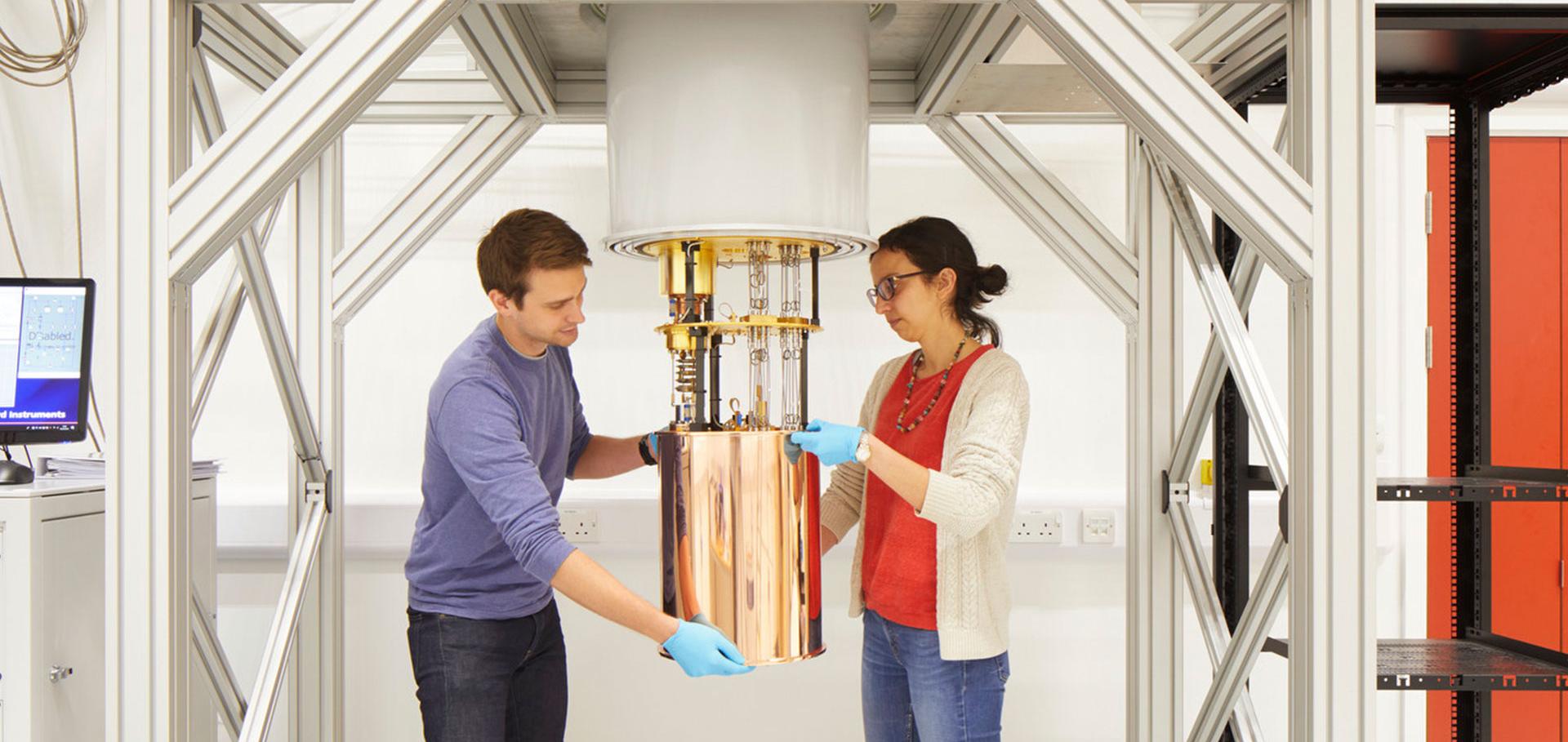
Credit: Jack Hobhouse

Professor Stephen Tucker

Professor of Biophysics

Research theme

  • Biological physics

Sub department

  • Condensed Matter Physics

Research groups

  • Ion channels
Stephen.Tucker@physics.ox.ac.uk
Telephone: 01865 (2)72382
Biochemistry Building, room 00.109,30.097,30.095,30.090 (office)
  • About
  • Publications

Muscarine-gated K+ channel: Subunit stoichiometry and structural domains essential for G protein stimulation

American Journal of Physiology - Heart and Circulatory Physiology 271:1 40-1 (1996)

Authors:

SJ Tucker, M Pessia, JP Adelman

Abstract:

Coexpression in Xenopus oocytes of the cloned cardiac inward rectifier subunits K(ir) 3.1 and K(ir) 3,4 results in G protein-stimulated channel activity closely resembling the muscarinic channel underlying the inwardly rectifying K+ current in atrial myocytes. To determine the stoichiometry and relative subunit positions within the channel, K(ir). 3.1 and K(ir) 3.4 were eoexpressed in varying ratios with cloned Gβ1γ2 subunits and also as tandemly linked tetramers with different relative subunit positions. The results reveal that the most efficient channel comprises two subunits of each type in an alternating array within the tetramer. To localize regions important for subunit coassembly and G protein sensitivity, chimeric subunits containing domains from either K(ir) 3.1, K(ir) 3.4, or the G protein- insensitive subunit K(ir) 4.1 were expressed. The results demonstrate that the transmembrane domains dictate the potentiation of the coassembled channels and that, although the NH4- or COOH-termini of both subunits alone can confer G protein sensitivity, both termini are required for maximal stimulation by Gβ1γ2.
More details from the publisher

Inhibitory interactions between two inward rectifier K+ channel subunits mediated by the transmembrane domains.

BIOPHYSICAL JOURNAL 70:2 (1996) TU274-TU274

Authors:

SJ Tucker, CT Bond, P Herson, M Pessia, JP Adelman
More details

Inward Rectifier Potassium Channels

International Heart Journal International Heart Journal (Japanese Heart Journal) 37:5 (1996) 651

Authors:

Armando A LAGRUTTA, Chris T BOND, Xiao Ming XIA, Mauro PESSIA, Stephen TUCKER, John P ADELMAN
More details from the publisher
More details
More details

Subunit positional effects revealed by novel heteromeric inwardly rectifying K+ channels.

BIOPHYSICAL JOURNAL 70:2 (1996) TU275-TU275

Authors:

M Pessia, SJ Tucker, K Lee, CT Bond, JP Adelman
More details

The muscarinic-gated K+ channel: Subunit stoichiometry and structural domains essential for G protein stimulation

JOURNAL OF PHYSIOLOGY-LONDON 495P (1996) P90-P90

Authors:

SJ Tucker, M Pessia, JP Adelman
More details
More details from the publisher

Pagination

  • First page First
  • Previous page Prev
  • …
  • Page 40
  • Page 41
  • Page 42
  • Page 43
  • Current page 44
  • Page 45
  • Page 46
  • Page 47
  • Page 48
  • Next page Next
  • Last page Last

Footer Menu

  • Contact us
  • Giving to the Dept of Physics
  • Work with us
  • Media

User account menu

  • Log in

Follow us

FIND US

Clarendon Laboratory,

Parks Road,

Oxford,

OX1 3PU

CONTACT US

Tel: +44(0)1865272200

University of Oxfrod logo Department Of Physics text logo
IOP Juno Champion logo Athena Swan Silver Award logo

© University of Oxford - Department of Physics

Cookies | Privacy policy | Accessibility statement

Built by: Versantus

  • Home
  • Research
  • Study
  • Engage
  • Our people
  • News & Comment
  • Events
  • Our facilities & services
  • About us
  • Giving to Physics
  • Current students
  • Staff intranet