

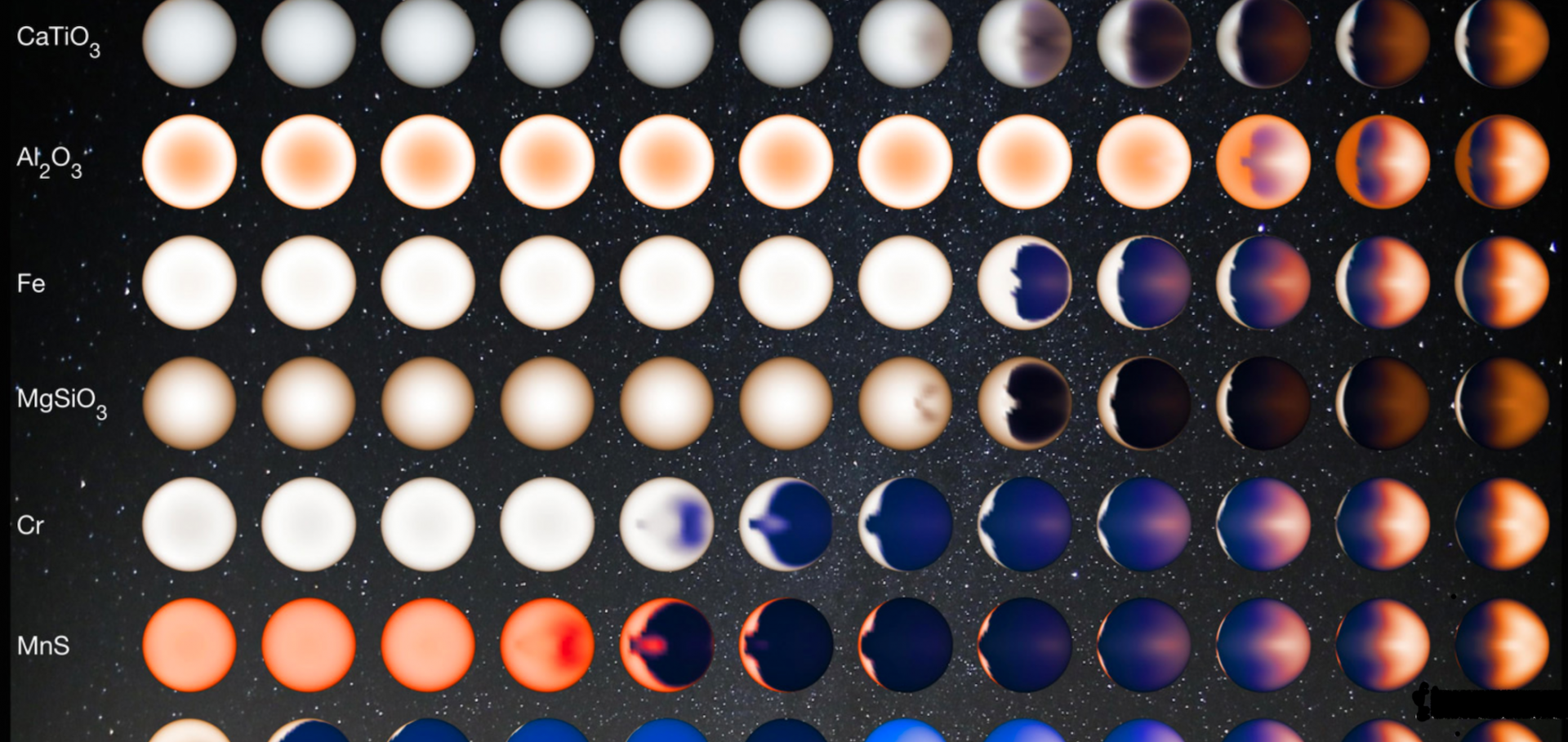
A survey of exoplanet phase curves with Ariel
Experimental Astronomy Springer Nature 53:2 (2022) 417-446
Black Mirror: The impact of rotational broadening on the search for reflected light from 51 Pegasi b with high resolution spectroscopy
Astronomy & Astrophysics EDP Sciences 659 (2022) A121-A121
Abstract:
Abstract In the past decade the study of exoplanet atmospheres at high-spectral resolution, via transmission/emission spectroscopy and cross-correlation techniques for atomic/molecular mapping, has become a powerful and consolidated methodology. The current limitation is the signal-to-noise ratio that one can obtain during a planetary transit, which is in turn ultimately limited by telescope size. This limitation will be overcome by ANDES, an optical and near-infrared high-resolution spectrograph for the Extremely Large Telescope, which is currently in Phase B development. ANDES will be a powerful transformational instrument for exoplanet science. It will enable the study of giant planet atmospheres, allowing not only an exquisite determination of atmospheric composition, but also the study of isotopic compositions, dynamics and weather patterns, mapping the planetary atmospheres and probing atmospheric formation and evolution models. The unprecedented angular resolution of ANDES, will also allow us to explore the initial conditions in which planets form in proto-planetary disks. The main science case of ANDES, however, is the study of small, rocky exoplanet atmospheres, including the potential for biomarker detections, and the ability to reach this science case is driving its instrumental design. Here we discuss our simulations and the observing strategies to achieve this specific science goal. Since ANDES will be operational at the same time as NASA’s JWST and ESA’s ARIEL missions, it will provide enormous synergies in the characterization of planetary atmospheres at high and low spectral resolution. Moreover, ANDES will be able to probe for the first time the atmospheres of several giant and small planets in reflected light. In particular, we show how ANDES will be able to unlock the reflected light atmospheric signal of a golden sample of nearby non-transiting habitable zone earth-sized planets within a few tenths of nights, a scientific objective that no other currently approved astronomical facility will be able to reach.A New Analysis of 8 Spitzer Phase Curves and Hot Jupiter Population Trends: Qatar-1b, Qatar-2b, WASP-52b, WASP-34b, and WASP-140b
(2022)
Mid-Infrared Observations of Neptune and Uranus: Recent Discoveries and Future Opportunities
Copernicus Publications (2022)
Temporal variations in spectral reflectivity and vertical cloud structure of Jupiter’s Great Red Spot and its surroundings
Copernicus Publications (2022)