

Mass measurements and 3D orbital geometry of PSR J1933$-$6211
The Black Hole Candidate Swift J1728.9–3613 and the Supernova Remnant G351.9–0.9
Abstract:
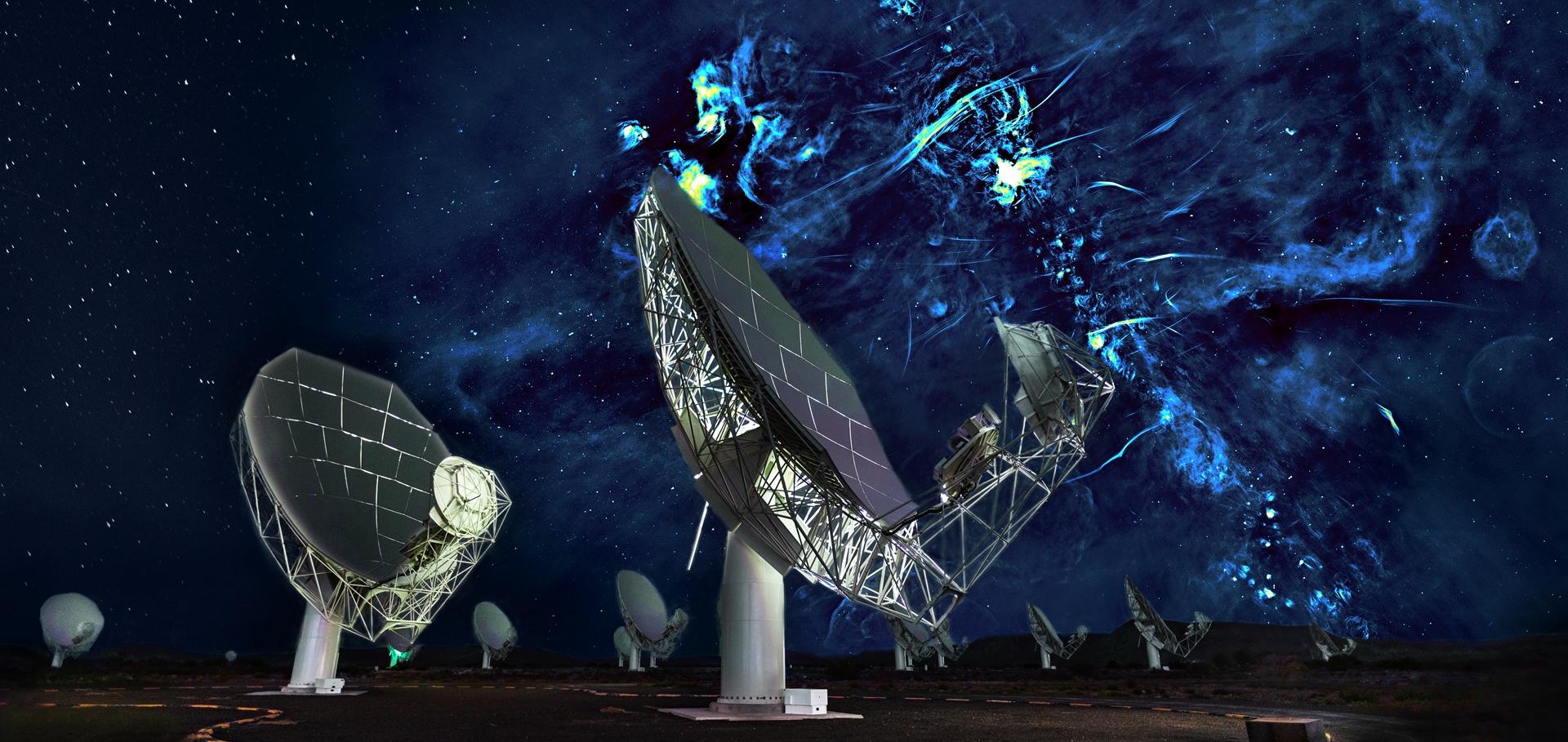
A number of neutron stars have been observed within the remnants of the core-collapse supernova explosions that created them. In contrast, black holes are not yet clearly associated with supernova remnants (SNRs). Indeed, some observations suggest that black holes are “born in the dark,” i.e., without a supernova explosion. Herein, we present a multiwavelength analysis of the X-ray transient Swift J1728.9−3613, based on observations made with Chandra, ESO-VISTA, MeerKAT, NICER, NuSTAR, Swift, and XMM-Newton. Three independent diagnostics indicate that the system likely harbors a black hole primary. Infrared imaging signals a massive companion star that is broadly consistent with an A or B spectral type. Most importantly, the X-ray binary lies within the central region of the cataloged SNR G351.9−0.9. Our deep MeerKAT image at 1.28 GHz signals that the remnant is in the Sedov phase; this fact and the nondetection of the soft X-ray emission expected from such a remnant argue that it lies at a distance that could coincide with the black hole. Utilizing a formal measurement of the distance to Swift J1728.9−3613 ( d = 8.4 ± 0.8 kpc), a lower limit on the distance to G351.9−0.9 ( d ≥ 7.5 kpc), and the number and distribution of black holes and SNRs within the Milky Way, extensive simulations suggest that the probability of a chance superposition is <1.7% (99.7% credible interval). The discovery of a black hole within an SNR would support numerical simulations that produce black holes and remnants, and thus provide clear observational evidence of distinct black hole formation channels. We discuss the robustness of our analysis and some challenges to this interpretationExpectations for fast radio bursts in neutron star–massive star binaries
Abstract:
Recent observations of a small sample of repeating Fast Radio Bursts (FRBs) have revealed a periodicity in their bursting activity that may be suggestive of a binary origin for the modulation. We set out to explore the scenario where a subset of repeating FRBs originates in binary systems hosting a highly energetic neutron star and a massive companion star, akin to $\gamma$-ray binaries and young High-Mass X-ray Binaries. Firstly, we specifically focus on the host galaxy properties and binary formation rates. Subsequently, we investigate the expected evolution of the rotation and dispersion measure in this scenario, the predicted birth-site offsets, and the origin of the persistent radio emission observed in a subset of these systems. The host galaxies for repeating FRBs favour the formation of neutron star-massive star binary systems but any conclusive evidence will require future discoveries and localizations of FRBs. The birth rate of high-mass X-ray binaries, used as a proxy for all considered binaries, significantly exceeds the estimated rate of FRBs, which can be explained if only a small subset of these systems produce FRBs. We show that under simple assumptions, we can reproduce the DM and RM evolution that is seen in a subset of repeating FRBs. We also discuss the possibility of detecting a persistent radio source associated with the FRB due to an intra-binary shock between companion star wind and either the pulsar wind or giant magnetar flares. The observed long-term luminosity stability of the Persistent Radio Sources is most consistent with a giant flare-powered scenario. However, this explanation is highly dependent on the magnetic field properties of the neutron star. With these explorations, we have aimed to provide a framework to discuss future FRB observations in the context of neutron star-massive star binary scenarios.Comment: 15 pages, 7 figures, 2 appendices, accepted for publication in A&A. Abstract truncated to fit the word limit on arXiBright extragalactic ALMA redshift survey (BEARS) III: detailed study of emission lines from 71 Herschel targets
Time-dependent visibility modelling of a relativistic jet in the X-ray binary MAXI J1803-298
Abstract:
ABSTRACT
Tracking the motions of transient jets launched by low-mass X-ray binaries (LMXBs) is critical for determining the moment of jet ejection, and identifying any corresponding signatures in the accretion flow. However, these jets are often highly variable and can travel across the resolution element of an image within a single observation, violating a fundamental assumption of aperture synthesis. We present a novel approach in which we directly fit a single time-dependent model to the full set of interferometer visibilities, where we explicitly parametrize the motion and flux density variability of the emission components, to minimize the number of free parameters in the fit, while leveraging information from the full observation. This technique allows us to detect and characterize faint, fast-moving sources, for which the standard time binning technique is inadequate. We validate our technique with synthetic observations, before applying it to three Very Long Baseline Array (VLBA) observations of the black hole candidate LMXB MAXI J1803−298 during its 2021 outburst. We measured the proper motion of a discrete jet component to be 1.37 ± 0.14 mas h−1, and thus we infer an ejection date of MJD 59348.0+0.05-0.06,which occurs just after the peak of a radio flare observed by the Australia Telescope Compact Array (ATCA) and the Atacama Large Millimeter/Sub-Millimeter Array (ALMA), while MAXI J1803−298 was in the intermediate state. Further development of these new VLBI analysis techniques will lead to more precise measurements of jet ejection dates, which, combined with dense, simultaneous multiwavelength monitoring, will allow for clearer identification of jet ejection signatures in the accretion flow.