Latest news and comment Audience - Any Audience - Alumni Industry Schools, prospective students and community Research Undergraduates Graduates International Year of Quantum Department of Physics (requires login) Research theme - Any Research theme - Accelerator physics Astronomy and astrophysics Biological physics Climate physics Exoplanets and planetary physics Fields, strings, and quantum dynamics Fundamental particles and interactions Instrumentation Lasers and high energy density science Particle astrophysics & cosmology Photovoltaics and nanoscience Plasma physics Quantum information and computation Quantum materials Quantum optics & ultra-cold matter Sub-department - Any Sub-department - Astrophysics Atmospheric, Oceanic and Planetary Physics Atomic and Laser Physics Condensed Matter Physics Particle Physics Professional and support services Rudolf Peierls Centre for Theoretical Physics New analysis of Winchcombe meteorite Researchers from the University of Oxford’s Departments of Physics and Earth Sciences have contributed to a highly detailed analysis of the Winchcombe meteorite which fell to Earth last year. 17 November 2022 Meteorite impacts reveal new insights into Mars Following two large meteorite impacts on Mars, near-surface seismic waves have been recorded for the first time on a planet other than Earth. 28 October 2022 Meet...Caroline Terquem We work among extraordinary people doing extraordinary things; get to know some of them by reading these quick-fire interviews. 6 October 2022 JWST detects carbon dioxide in exoplanet atmosphere NASA’s James Webb Space Telescope has captured the first definitive detection of carbon dioxide in the atmosphere of a planet beyond our solar system. 25 August 2022 Professor Pierrehumbert awarded Rumford Medal Professor Raymond Pierrehumbert has been awarded the Royal Society’s Rumford Medal 2022 for outstanding contributions in the field of physics. 24 August 2022 Commentary: Professor Neil Bowles on Comet Interceptor As the European Space Agency’s Comet Interceptor mission moves from design phase to implementation, Professor Neil Bowles gives an insight into what it’s like to be part of an ambitious, global initiative. 9 June 2022 Comet chaser mission one step closer to launch A new European Space Agency science mission, proposed by the UK, to 3D-map a comet for the first time has reached a major milestone, moving from the design phase to implementation. 8 June 2022 Scientists explain why Uranus and Neptune are different colours New research led by Professor Patrick Irwin from the Department of Physics at Oxford suggests that a layer of haze that exists on both planets is behind the different hues of blue. 31 May 2022 Icy moons simulated in Antarctica Scientists from the University of Oxford are field-testing seismic sensors in the bitter conditions of Antarctica to simulate the solar system’s icy moons. 9 February 2022 Dr Tim Lichtenberg recognised by RAS Dr Tim Lichtenberg has been awarded the Royal Astronomical Society’s Winton Award for Early Achievement in Geophysics for his work on understanding the growth and long-term evolution of rocky planets. 14 January 2022 Simulation accurately predicts oxygen in atmosphere of hottest known exoplanet A team including astrophysicist Dr Mitchell Young from Oxford University has detected the fingerprints of atomic oxygen in the atmosphere of the hottest known exoplanet, KELT-9b. 22 December 2021 Commentary: Pierrehumbert on Manabe and the Nobel Having followed in his footsteps at the Princeton Geophysical Fluid Dynamics Laboratory, Halley Professor of Physics Raymond Pierrehumbert reflects on Syukuro Manabe’s Nobel Prize-winning work 29 November 2021 Load More
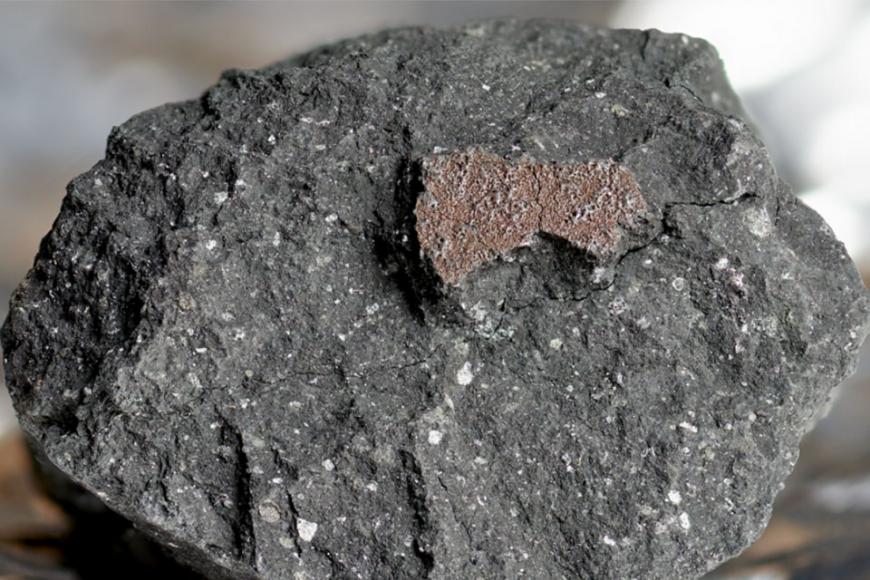
New analysis of Winchcombe meteorite Researchers from the University of Oxford’s Departments of Physics and Earth Sciences have contributed to a highly detailed analysis of the Winchcombe meteorite which fell to Earth last year. 17 November 2022
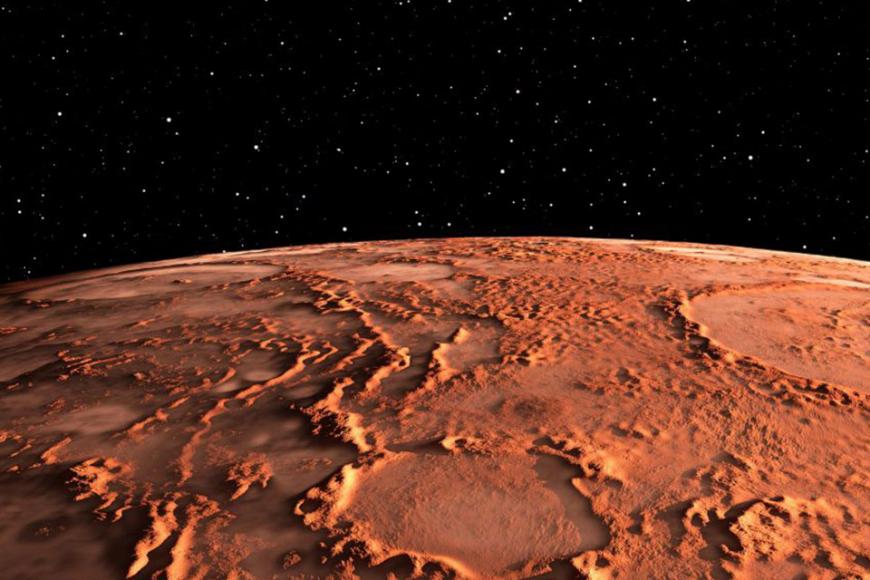
Meteorite impacts reveal new insights into Mars Following two large meteorite impacts on Mars, near-surface seismic waves have been recorded for the first time on a planet other than Earth. 28 October 2022
Meet...Caroline Terquem We work among extraordinary people doing extraordinary things; get to know some of them by reading these quick-fire interviews. 6 October 2022
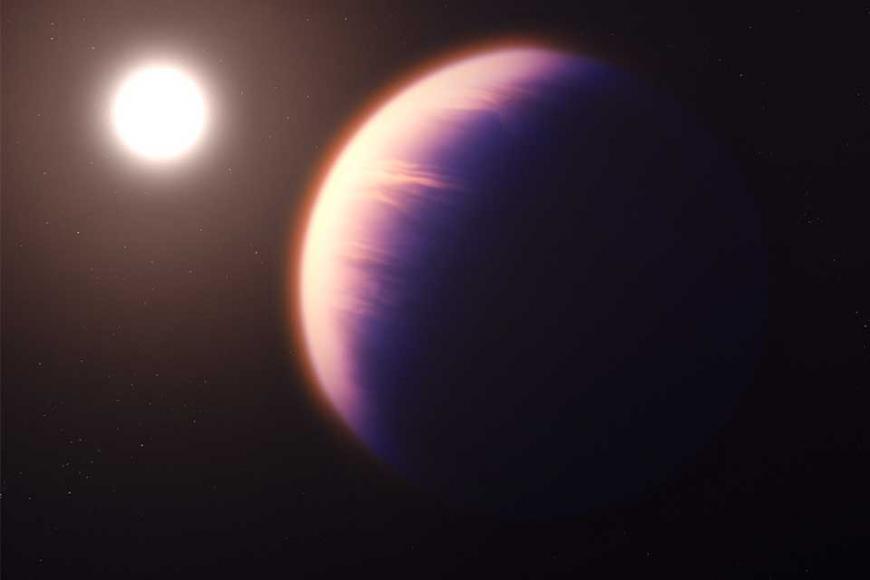
JWST detects carbon dioxide in exoplanet atmosphere NASA’s James Webb Space Telescope has captured the first definitive detection of carbon dioxide in the atmosphere of a planet beyond our solar system. 25 August 2022
Professor Pierrehumbert awarded Rumford Medal Professor Raymond Pierrehumbert has been awarded the Royal Society’s Rumford Medal 2022 for outstanding contributions in the field of physics. 24 August 2022
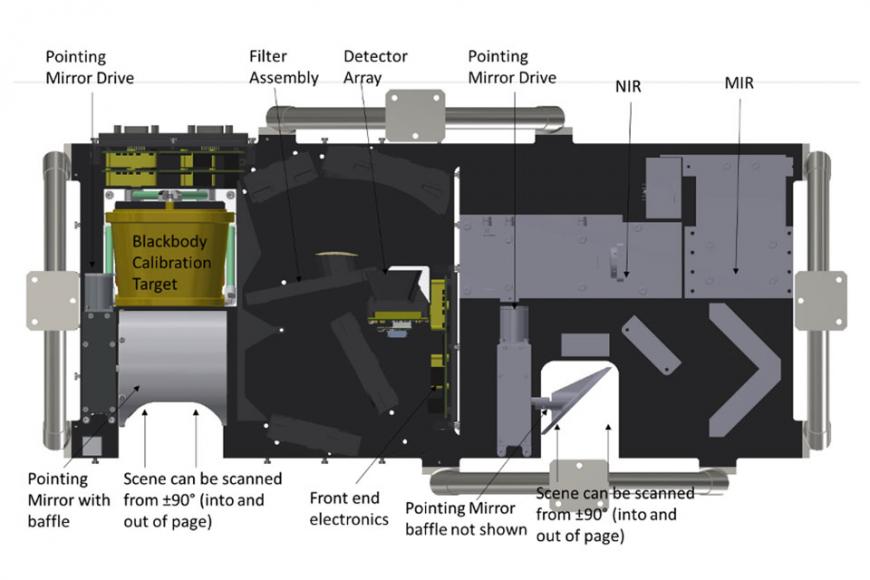
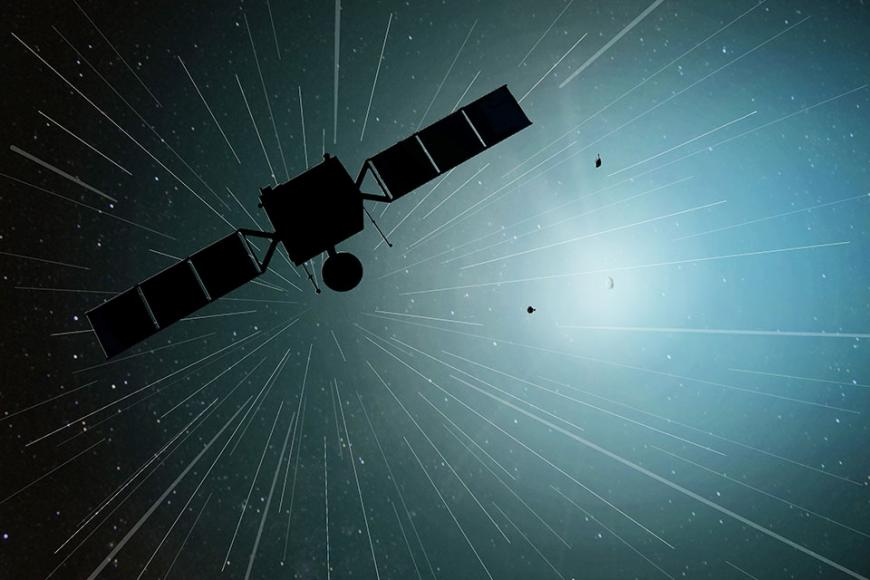
Commentary: Professor Neil Bowles on Comet Interceptor As the European Space Agency’s Comet Interceptor mission moves from design phase to implementation, Professor Neil Bowles gives an insight into what it’s like to be part of an ambitious, global initiative. 9 June 2022
Comet chaser mission one step closer to launch A new European Space Agency science mission, proposed by the UK, to 3D-map a comet for the first time has reached a major milestone, moving from the design phase to implementation. 8 June 2022
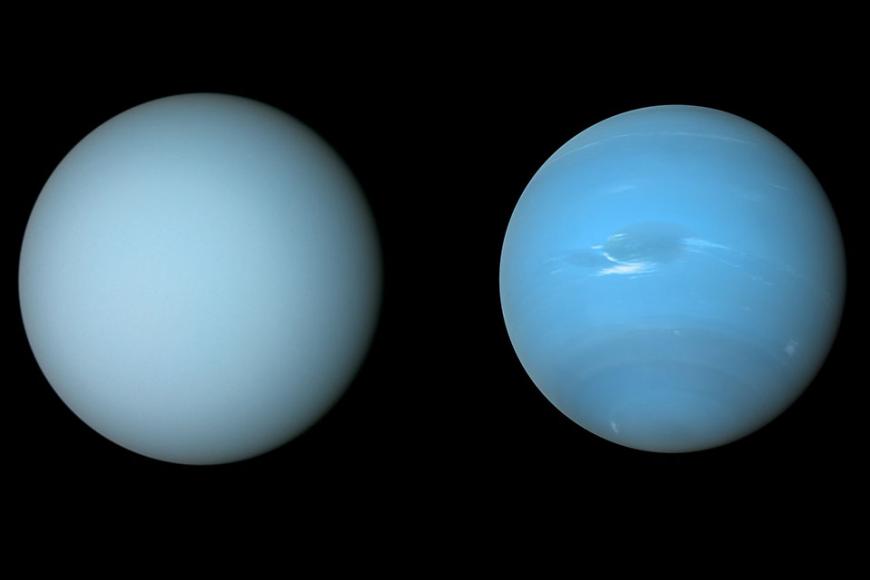
Scientists explain why Uranus and Neptune are different colours New research led by Professor Patrick Irwin from the Department of Physics at Oxford suggests that a layer of haze that exists on both planets is behind the different hues of blue. 31 May 2022
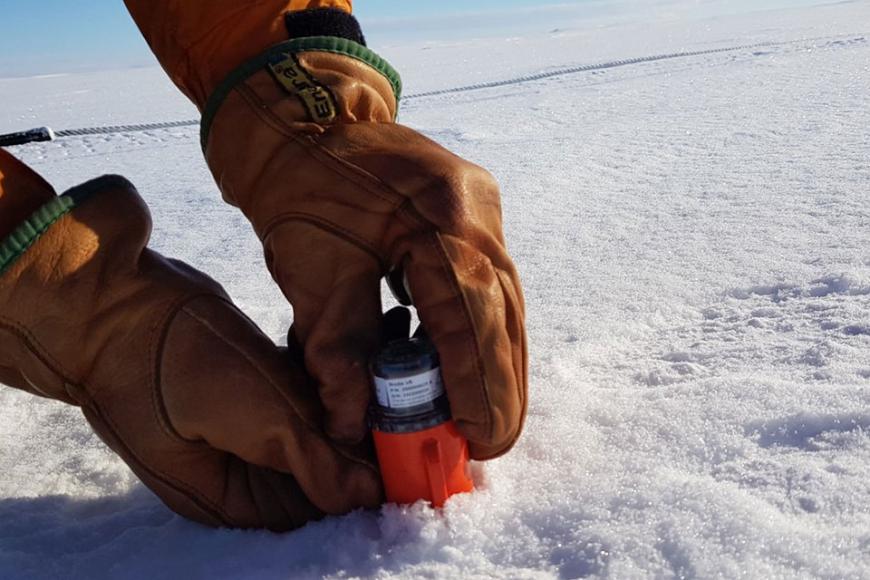
Icy moons simulated in Antarctica Scientists from the University of Oxford are field-testing seismic sensors in the bitter conditions of Antarctica to simulate the solar system’s icy moons. 9 February 2022
Dr Tim Lichtenberg recognised by RAS Dr Tim Lichtenberg has been awarded the Royal Astronomical Society’s Winton Award for Early Achievement in Geophysics for his work on understanding the growth and long-term evolution of rocky planets. 14 January 2022
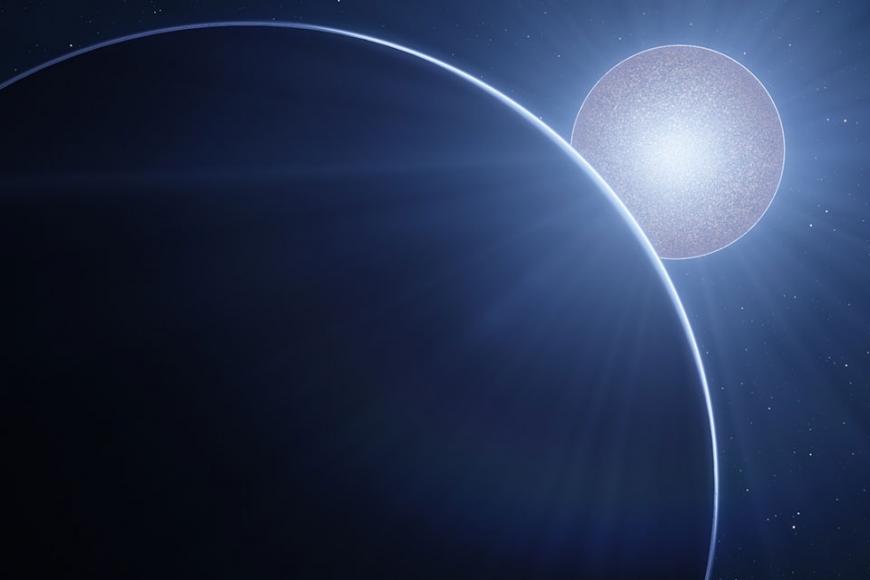
Simulation accurately predicts oxygen in atmosphere of hottest known exoplanet A team including astrophysicist Dr Mitchell Young from Oxford University has detected the fingerprints of atomic oxygen in the atmosphere of the hottest known exoplanet, KELT-9b. 22 December 2021
Commentary: Pierrehumbert on Manabe and the Nobel Having followed in his footsteps at the Princeton Geophysical Fluid Dynamics Laboratory, Halley Professor of Physics Raymond Pierrehumbert reflects on Syukuro Manabe’s Nobel Prize-winning work 29 November 2021