Home
Department Of Physics text logo
  • Research
    • Our research
    • Our research groups
    • Our research in action
    • Research funding support
    • Summer internships for undergraduates
  • Study
    • Undergraduates
    • Postgraduates
  • Engage
    • For alumni
    • For business
    • For schools
    • For the public
  • Support
Menu
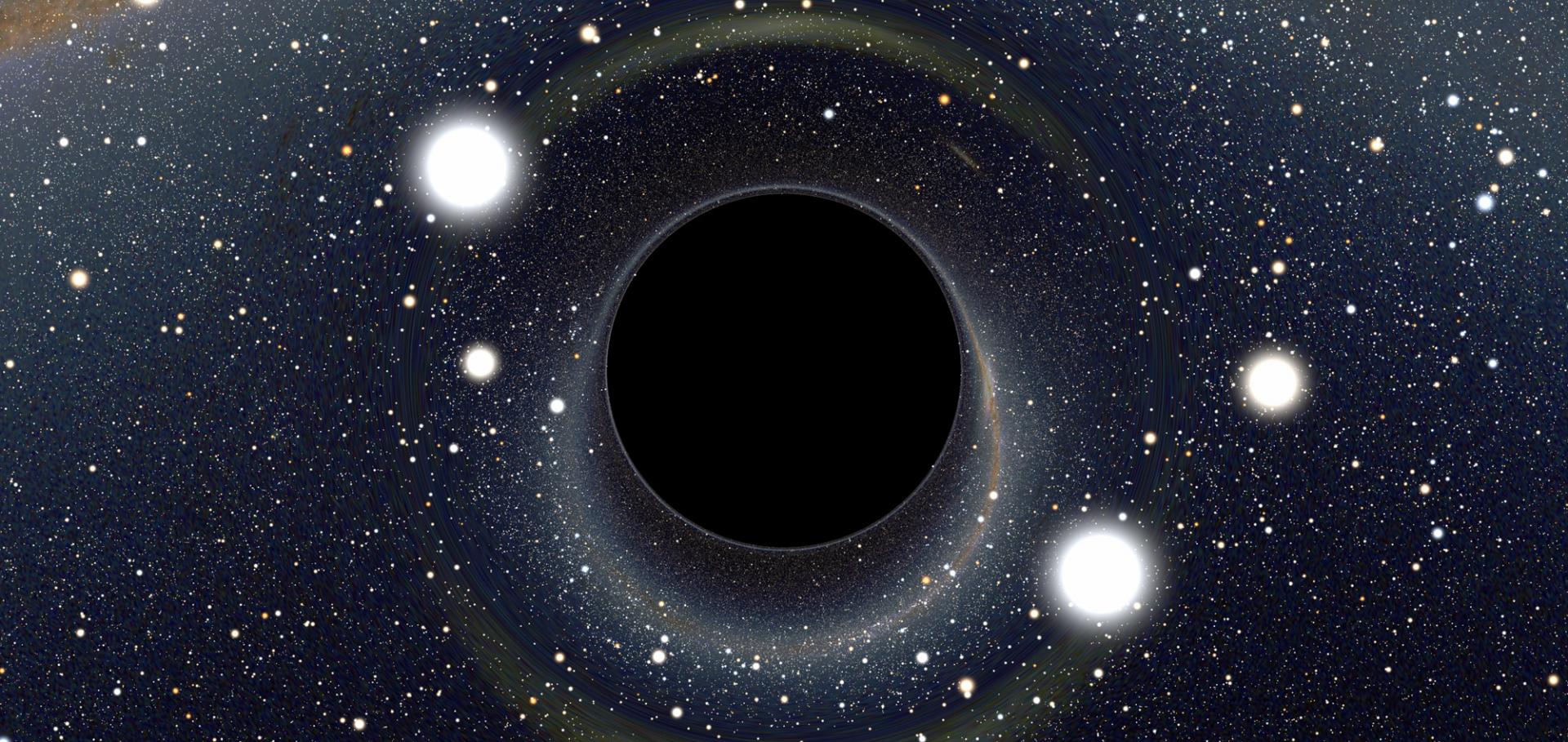
Black Hole

Lensing of space time around a black hole. At Oxford we study black holes observationally and theoretically on all size and time scales - it is some of our core work.

Credit: ALAIN RIAZUELO, IAP/UPMC/CNRS. CLICK HERE TO VIEW MORE IMAGES.

DR Babak Abi

Research Assistant

Research theme

  • Accelerator physics
  • Instrumentation
  • Fundamental particles and interactions

Sub department

  • Astrophysics

Research groups

  • Astronomical instrumentation
  • About
  • Publications

Search for a heavy narrow resonance decaying to e mu, e tau, or mu tau with the ATLAS detector in sqrt(s) = 7 TeV pp collisions at the LHC

ArXiv 1212.1272 (2012)
Details from ArXiV

Search for diphoton events with large missing transverse momentum in 7 TeV proton-proton collision data with the ATLAS detector

Physics Letters, Section B: Nuclear, Elementary Particle and High-Energy Physics 718:2 (2012) 411-430

Authors:

G Aad, T Abajyan, B Abbott, J Abdallah, S Abdel Khalek, AA Abdelalim, O Abdinov, R Aben, B Abi, M Abolins, OS AbouZeid, H Abramowicz, H Abreu, E Acerbi, E Acerbi, BS Acharya, BS Acharya, L Adamczyk, DL Adams, TN Addy, J Adelman, S Adomeit, P Adragna, T Adye, S Aefsky, JA Aguilar-Saavedra, M Agustoni, M Aharrouche, SP Ahlen, F Ahles, A Ahmad, M Ahsan, G Aielli, G Aielli, T Akdogan, TPA Åkesson, G Akimoto, AV Akimov, MS Alam, MA Alam, J Albert, S Albrand, M Aleksa, IN Aleksandrov, F Alessandria, C Alexa, G Alexander, G Alexandre, T Alexopoulos, M Alhroob, M Alhroob, M Aliev, G Alimonti, J Alison, BMM Allbrooke, PP Allport, SE Allwood-Spiers, J Almond, A Aloisio, A Aloisio, R Alon, A Alonso, F Alonso, B Alvarez Gonzalez, MG Alviggi, MG Alviggi, K Amako, C Amelung, VV Ammosov, SP Amor Dos Santos, A Amorim, N Amram, C Anastopoulos, LS Ancu, N Andari, T Andeen, CF Anders, G Anders, KJ Anderson, A Andreazza, A Andreazza, V Andrei, ML Andrieux, XS Anduaga, P Anger, A Angerami, F Anghinolfi, A Anisenkov, N Anjos, A Annovi, A Antonaki, M Antonelli, A Antonov, J Antos, F Anulli, M Aoki, S Aoun, L Aperio Bella, R Apolle, G Arabidze

Abstract:

A search for diphoton events with large missing transverse momentum has been performed using proton-proton collision data at s=7 TeV recorded with the ATLAS detector, corresponding to an integrated luminosity of 4.8 fb-1. No excess of events was observed above the Standard Model prediction and model-dependent 95% confidence level exclusion limits are set. In the context of a generalised model of gauge-mediated supersymmetry breaking with a bino-like lightest neutralino of mass above 50 GeV, gluinos (squarks) below 1.07 TeV (0.87 TeV) are excluded, while a breaking scale Λ below 196 TeV is excluded for a minimal model of gauge-mediated supersymmetry breaking. For a specific model with one universal extra dimension, compactification scales 1/R<1.40 TeV are excluded. These limits provide the most stringent tests of these models to date. © 2012 CERN.
More details from the publisher

Search for diphoton events with large missing transverse momentum in 7 TeV proton-proton collision data with the ATLAS detector

Physics Letters Section B Nuclear Elementary Particle and High Energy Physics 718:2 (2012) 411-430

Authors:

G Aad, T Abajyan, B Abbott, J Abdallah, S Abdel Khalek, AA Abdelalim, O Abdinov, R Aben, B Abi, M Abolins, OS AbouZeid, H Abramowicz, H Abreu, E Acerbi, BS Acharya, L Adamczyk, DL Adams, TN Addy, J Adelman, S Adomeit, P Adragna, T Adye, S Aefsky, JA Aguilar-Saavedra, M Agustoni, M Aharrouche, SP Ahlen, F Ahles, A Ahmad, M Ahsan, G Aielli, T Akdogan, TPA A°kesson, G Akimoto, AV Akimov, MS Alam, MA Alam, J Albert, S Albrand, M Aleksa, IN Aleksandrov, F Alessandria, C Alexa, G Alexander, G Alexandre, T Alexopoulos, M Alhroob, M Aliev, G Alimonti, J Alison, BMM Allbrooke, PP Allport, SE Allwood-Spiers, J Almond, A Aloisio, R Alon, A Alonso, F Alonso, B Alvarez Gonzalez, MG Alviggi, K Amako, C Amelung, VV Ammosov, SP Amor Dos Santos, A Amorim, N Amram, C Anastopoulos, LS Ancu, N Andari, T Andeen, CF Anders, G Anders, KJ Anderson, A Andreazza, V Andrei, ML Andrieux, XS Anduaga, P Anger, A Angerami, F Anghinolfi, A Anisenkov, N Anjos, A Annovi, A Antonaki, M Antonelli, A Antonov, J Antos, F Anulli, M Aoki, S Aoun, L Aperio Bella, R Apolle, G Arabidze, I Aracena, Y Arai, ATH Arce, S Arfaoui, JF Arguin, E Arik, M Arik

Abstract:

A search for diphoton events with large missing transverse momentum has been performed using proton-proton collision data at s=7 TeV recorded with the ATLAS detector, corresponding to an integrated luminosity of 4.8 fb-1. No excess of events was observed above the Standard Model prediction and model-dependent 95% confidence level exclusion limits are set. In the context of a generalised model of gauge-mediated supersymmetry breaking with a bino-like lightest neutralino of mass above 50 GeV, gluinos (squarks) below 1.07 TeV (0.87 TeV) are excluded, while a breaking scale Λ below 196 TeV is excluded for a minimal model of gauge-mediated supersymmetry breaking. For a specific model with one universal extra dimension, compactification scales 1/R<1.40 TeV are excluded. These limits provide the most stringent tests of these models to date. © 2012 CERN.
More details from the publisher

Search for the Higgs boson in the H→WW→ℓνjj decay channel at √s=7 TeV with the ATLAS detector

Physics Letters, Section B: Nuclear, Elementary Particle and High-Energy Physics 718:2 (2012) 391-410

Authors:

G Aad, T Abajyan, B Abbott, J Abdallah, S Abdel Khalek, AA Abdelalim, O Abdinov, R Aben, B Abi, M Abolins, OS AbouZeid, H Abramowicz, H Abreu, E Acerbi, E Acerbi, BS Acharya, BS Acharya, L Adamczyk, DL Adams, TN Addy, J Adelman, S Adomeit, P Adragna, T Adye, S Aefsky, JA Aguilar-Saavedra, M Agustoni, M Aharrouche, SP Ahlen, F Ahles, A Ahmad, M Ahsan, G Aielli, G Aielli, T Akdogan, TPA Åkesson, G Akimoto, AV Akimov, MS Alam, MA Alam, J Albert, S Albrand, M Aleksa, IN Aleksandrov, F Alessandria, C Alexa, G Alexander, G Alexandre, T Alexopoulos, M Alhroob, M Alhroob, M Aliev, G Alimonti, J Alison, BMM Allbrooke, PP Allport, SE Allwood-Spiers, J Almond, A Aloisio, A Aloisio, R Alon, A Alonso, F Alonso, B Alvarez Gonzalez, MG Alviggi, MG Alviggi, K Amako, C Amelung, VV Ammosov, A Amorim, N Amram, C Anastopoulos, LS Ancu, N Andari, T Andeen, CF Anders, G Anders, KJ Anderson, A Andreazza, A Andreazza, V Andrei, XS Anduaga, P Anger, A Angerami, F Anghinolfi, A Anisenkov, N Anjos, A Annovi, A Antonaki, M Antonelli, A Antonov, J Antos, F Anulli, M Aoki, S Aoun, L Aperio Bella, R Apolle, G Arabidze, I Aracena, Y Arai

Abstract:

A search for the Standard Model Higgs boson has been performed in the H→WW→ℓνjj channel using 4.7 fb-1 of pp collision data recorded at a centre-of-mass energy of s=7 TeV with the ATLAS detector at the Large Hadron Collider. Higgs boson candidates produced in association with zero, one or two jets are included in the analysis to maximize the acceptance for both gluon fusion and weak boson fusion Higgs boson production processes. No significant excess of events is observed over the expected background and limits on the Higgs boson production cross section are derived for a Higgs boson mass in the range 300 GeV
More details from the publisher

Search for the Higgs boson in the H→WW→ℓνjj decay channel at √s=7 TeV with the ATLAS detector

Physics Letters, Section B: Nuclear, Elementary Particle and High-Energy Physics 718:2 (2012) 391-410

Authors:

G Aad, T Abajyan, B Abbott, J Abdallah, S Abdel Khalek, AA Abdelalim, O Abdinov, R Aben, B Abi, M Abolins, OS AbouZeid, H Abramowicz, H Abreu, E Acerbi, BS Acharya, L Adamczyk, DL Adams, TN Addy, J Adelman, S Adomeit, P Adragna, T Adye, S Aefsky, JA Aguilar-Saavedra, M Agustoni, M Aharrouche, SP Ahlen, F Ahles, A Ahmad, M Ahsan, G Aielli, T Akdogan, TPA A kesson, G Akimoto, AV Akimov, MS Alam, MA Alam, J Albert, S Albrand, M Aleksa, IN Aleksandrov, F Alessandria, C Alexa, G Alexander, G Alexandre, T Alexopoulos, M Alhroob, M Aliev, G Alimonti, J Alison, BMM Allbrooke, PP Allport, SE Allwood-Spiers, J Almond, A Aloisio, R Alon, A Alonso, F Alonso, B Alvarez Gonzalez, MG Alviggi, K Amako, C Amelung, VV Ammosov, A Amorim, N Amram, C Anastopoulos, LS Ancu, N Andari, T Andeen, CF Anders, G Anders, KJ Anderson, A Andreazza, V Andrei, XS Anduaga, P Anger, A Angerami, F Anghinolfi, A Anisenkov, N Anjos, A Annovi, A Antonaki, M Antonelli, A Antonov, J Antos, F Anulli, M Aoki, S Aoun, L Aperio Bella, R Apolle

Abstract:

A search for the Standard Model Higgs boson has been performed in the H→WW→ℓνjj channel using 4.7 fb -1 of pp collision data recorded at a centre-of-mass energy of s=7 TeV with the ATLAS detector at the Large Hadron Collider. Higgs boson candidates produced in association with zero, one or two jets are included in the analysis to maximize the acceptance for both gluon fusion and weak boson fusion Higgs boson production processes. No significant excess of events is observed over the expected background and limits on the Higgs boson production cross section are derived for a Higgs boson mass in the range 300 GeV < m H < 600 GeV. The best sensitivity is reached for m H =400 GeV, where the observed (expected) 95% confidence level upper bound on the cross section for H→WW produced in association with zero or one jet is 2.2 pb (1.9 pb), corresponding to 1.9 (1.6) times the Standard Model prediction. In the Higgs boson plus two jets channel, which is more sensitive to the weak boson fusion process, the observed (expected) 95% confidence level upper bound on the cross section for H→WW production with m H =400 GeV is 0.7 pb (0.6 pb), corresponding to 7.9 (6.5) times the Standard Model prediction. © 2012 CERN.
More details from the publisher

Pagination

  • First page First
  • Previous page Prev
  • …
  • Page 77
  • Page 78
  • Page 79
  • Page 80
  • Current page 81
  • Page 82
  • Page 83
  • Page 84
  • Page 85
  • …
  • Next page Next
  • Last page Last

Footer Menu

  • Contact us
  • Giving to the Dept of Physics
  • Work with us
  • Media

User account menu

  • Log in

Follow us

FIND US

Clarendon Laboratory,

Parks Road,

Oxford,

OX1 3PU

CONTACT US

Tel: +44(0)1865272200

University of Oxfrod logo Department Of Physics text logo
IOP Juno Champion logo Athena Swan Silver Award logo

© University of Oxford - Department of Physics

Cookies | Privacy policy | Accessibility statement

Built by: Versantus

  • Home
  • Research
  • Study
  • Engage
  • Our people
  • News & Comment
  • Events
  • Our facilities & services
  • About us
  • Giving to Physics
  • Current students
  • Staff intranet