Home
Department Of Physics text logo
  • Research
    • Our research
    • Our research groups
    • Our research in action
    • Research funding support
    • Summer internships for undergraduates
  • Study
    • Undergraduates
    • Postgraduates
  • Engage
    • For young people
    • For teachers
    • For the public
    • For alumni
    • For business
  • Support
Menu
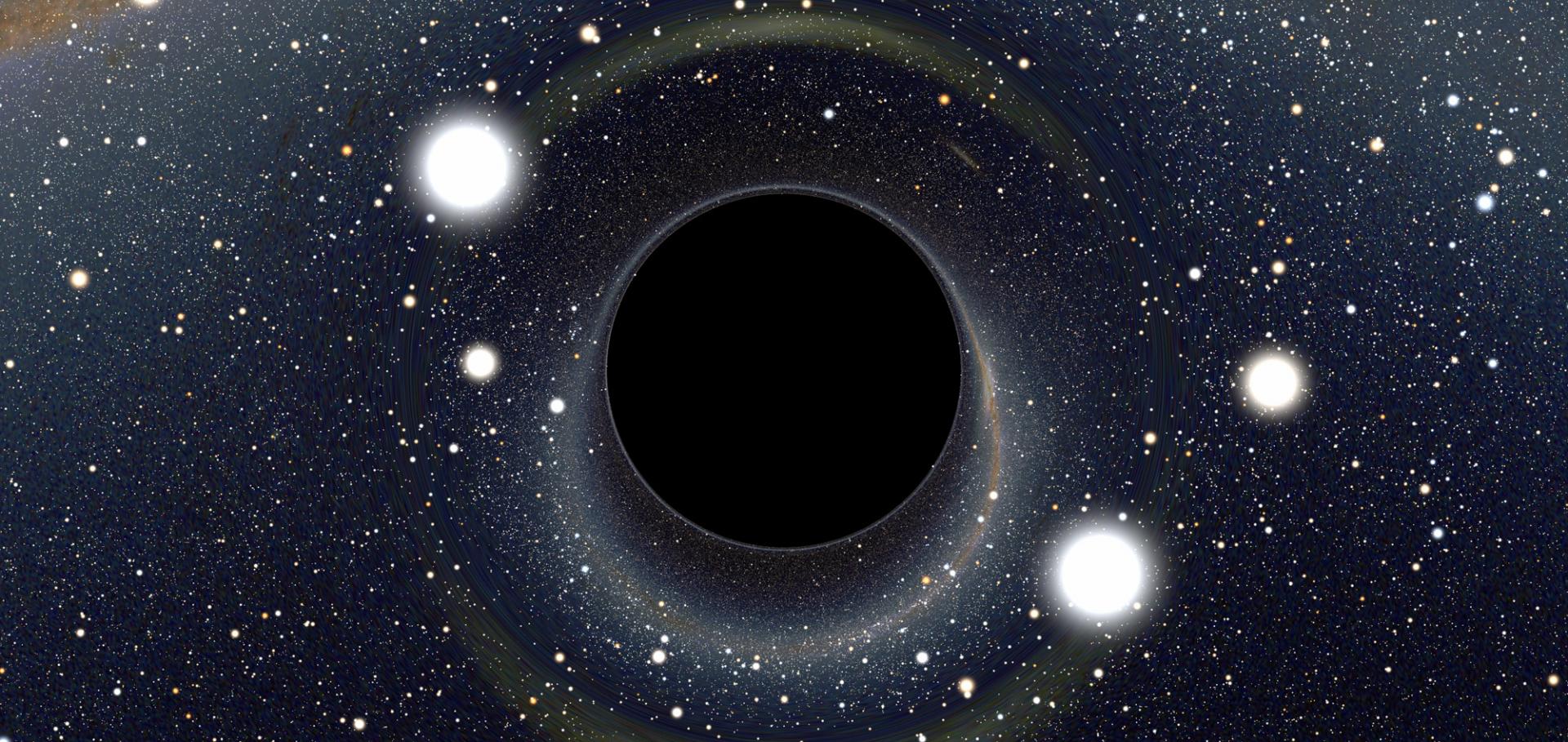
Black Hole

Lensing of space time around a black hole. At Oxford we study black holes observationally and theoretically on all size and time scales - it is some of our core work.

Credit: ALAIN RIAZUELO, IAP/UPMC/CNRS. CLICK HERE TO VIEW MORE IMAGES.

Dr Chang Liu

Hintze Fellow

Research theme

  • Astronomy and astrophysics

Sub department

  • Astrophysics

Research groups

  • ATLAS
  • Hintze Centre for Astrophysical Surveys
  • Rubin-LSST
chang.liu@physics.ox.ac.uk
Personal website
ORCID
GitHub
  • About
  • Publications

Photometry and Spectroscopy of SN 2024pxl: A Luminosity Link among Type Iax Supernovae

The Astrophysical Journal American Astronomical Society 999:2 (2026) 227

Authors:

Mridweeka Singh, Lindsey A Kwok, Saurabh W Jha, R Dastidar, Conor Larison, Alexei V Filippenko, Jennifer E Andrews, Moira Andrews, GC Anupama, Prasiddha Arunachalam, Katie Auchettl, Dominik Bánhidi, Barnabas Barna, K Azalee Bostroem, Thomas G Brink, Régis Cartier, Ping Chen, Collin T Christy, David A Coulter, Sofia Covarrubias, Kyle W Davis, Connor B Dickinson, Yize Dong, Joseph Farah

Abstract:

We present extensive ultraviolet to optical photometric and optical to near-infrared (NIR) spectroscopic follow-up observations of the nearby intermediate-luminosity (MV = −16.81 ± 0.19 mag) Type Iax supernovae (SNe Iax) 2024pxl in NGC 6384. SN 2024pxl exhibits a faster light curve than the high-luminosity members of this class, and slower than low-luminosity events. The observationally well-constrained rise time of ∼11 days and an estimated synthesized 56Ni mass of 0.03 M⊙, based on analytical modeling of the integrated spectral energy distribution light curve, are consistent with models of the weak deflagration of a carbon-oxygen white dwarf. Our optical spectral sequence of SN 2024pxl shows weak Si ii lines and spectral evolution similar to other high-luminosity SNe Iax, but also a prominent early-time C ii line, like lower-luminosity SNe Iax. The late-time optical spectrum of SN 2024pxl closely matches that of SN 2014dt, and its NIR spectral evolution aligns with that of other well-studied, high-luminosity SNe Iax. The spectral-line expansion velocities of SN 2024pxl are at the lower end of the SNe Iax velocity distribution, and the velocity distribution of iron-group elements compared to intermediate-mass elements suggests that the ejecta are mixed on large scales, as expected in pure deflagration models. SN 2024pxl exhibits characteristics intermediate between those of high-luminosity and low-luminosity SNe Iax, further establishing a link across this diverse class.
More details from the publisher
Details from ORA
More details

GOTO identification and broadband modelling of the counterpart to the SVOM GRB 250818B

(2026)

Authors:

S Belkin, GP Lamb, K Ackley, ME Wortley, S McGee, G Schroeder, M Shrestha, BP Gompertz, DK Galloway, R Starling, W-F Fong, T Laskar, C Liu, AC Gordon, N Pankov, AE Volvach, LN Volvach, A Shein, A Pozanenko, MJ Dyer, J Lyman, K Ulaczyk, D Steeghs, VS Dhillon, P O'Brien, G Ramsay, K Noysena, R Kotak, RP Breton, LK Nuttall, D Pollacco, S Awiphan, J Casares, P Chote, A Chrimes, R Eyles-Ferris, B Godson, P Irawati, D Jarvis, Y Julakanti, L Kelsey, MR Kennedy, T Killestein, A Kumar, A Levan, S Littlefair, M Magee, S Mandhai, D Mata S'anchez, S Mattila, J McCormac, D Mkrtichian, S Moran, J Mullaney, D O'Neill, M Patel, K Pu, M Pursiainen, A Sahu, U Sawangwit, E Stanway, Y Sun, B Warwick, K Wiersema
More details from the publisher
Details from ArXiV

$\texttt{HostSub_GP}$: Precise Galaxy Background Subtraction in Transient Long-slit Spectroscopy with Gaussian Processes

(2026)

Authors:

Chang Liu, Adam A Miller
More details from the publisher
Details from ArXiV

HostSub_GP: Precise Galaxy Background Subtraction in Transient Long-slit Spectroscopy with Gaussian Processes

Publications of the Astronomical Society of the Pacific IOP Publishing 138:2 (2026) 024503

Authors:

Chang Liu, Adam A Miller

Abstract:

We present a novel host galaxy subtraction technique in long-slit spectroscopy for extragalactic transients. Unlike classic methods which generally estimate the background using simple interpolation of local galaxy flux in the 2D spectrum, our approach leverages multi-band archival images of the host galaxies to model the background emission from the galaxy in the 2D spectrum. Such imaging encodes the wavelength-dependent galaxy profile along the slit, and is readily accessible through wide-field imaging surveys. We construct a smooth prior for the 2D galaxy profile with a Gaussian process (GP) based on these reference images, and use another GP to model the correlated deviations from the prior in the observed spectrum. This enables accurate inference of the galaxy flux blended with the transient. On synthetic long-slit data of a spiral galaxy extracted from a Multi Unit Spectroscopic Explorer hyper-spectral cube, the GP method remains robust as long as the host galaxy is spatially resolved and consistently outperforms classic methods. We apply the method to archival Keck spectra of two real transients, SN 2019eix and AT 2019qiz, to further demonstrate how the method uniquely recovers weak spectral features amid strong galaxy contamination, enabling refined constraints on the properties of both transients. We have released the software implementation, HostSub_GP, a scalable toolkit that leverages JAX, with an MIT license.
More details from the publisher
More details

Multiwavelength Analysis of Six Luminous Fast Blue Optical Transients

ArXiv 2601.18926 (2026)

Authors:

Cassie Sevilla, Anna YQ Ho, AJ Nayana, Steve Schulze, Daniel A Perley, Michael Bremer, Igor Andreoni, Ivan Altunin, Thomas G Brink, Michael Camilo, Poonam Chandra, Ping Chen, Ashley A Chrimes, Michael W Coughlin, Kaustav K Das, Andrew Drake, Alexei V Filippenko, Christoffer Fremling, James Freeburn, Avishay Gal Yam, Mary Gerhart, Matthew J Graham, George Helou, K-Ryan Hinds, Natalya Johnson, Mansi M Kasliwal, Harsh Kumar, Russ R Laher, Natalie LeBaron, Maggie L Li, Chang Liu, Ben Margalit, Gokul P Srinivasaragavan, Yu-Jing Qin, Nabeel Rehemtulla, Sophia Risin, Sam Rose, Rupak Roy, Ben Rusholme, Genevieve Schroeder, Jesper Sollerman, Kailai Wang, Jacob L Wise, Yi Yang, Yuhan Yao, WeiKang Zheng
Details from ArXiV

Pagination

  • First page First
  • Previous page Prev
  • Page 1
  • Page 2
  • Page 3
  • Page 4
  • Current page 5
  • Page 6
  • Page 7
  • Page 8
  • Page 9
  • …
  • Next page Next
  • Last page Last

Footer Menu

  • Contact us
  • Giving to the Dept of Physics
  • Work with us
  • Media

User account menu

  • Log in

Follow us

FIND US

Clarendon Laboratory,

Parks Road,

Oxford,

OX1 3PU

CONTACT US

Tel: +44(0)1865272200

University of Oxfrod logo Department Of Physics text logo
IOP Juno Champion logo Athena Swan Silver Award logo

© University of Oxford - Department of Physics

Cookies | Privacy policy | Accessibility statement

Built by: Versantus

  • Home
  • Research
  • Study
  • Engage
  • Our people
  • News & Comment
  • Events
  • Our facilities & services
  • About us
  • Giving to Physics
  • Current students
  • Staff intranet