Home
Department Of Physics text logo
  • Research
    • Our research
    • Our research groups
    • Our research in action
    • Research funding support
    • Summer internships for undergraduates
  • Study
    • Undergraduates
    • Postgraduates
  • Engage
    • For alumni
    • For business
    • For schools
    • For the public
  • Support
Menu
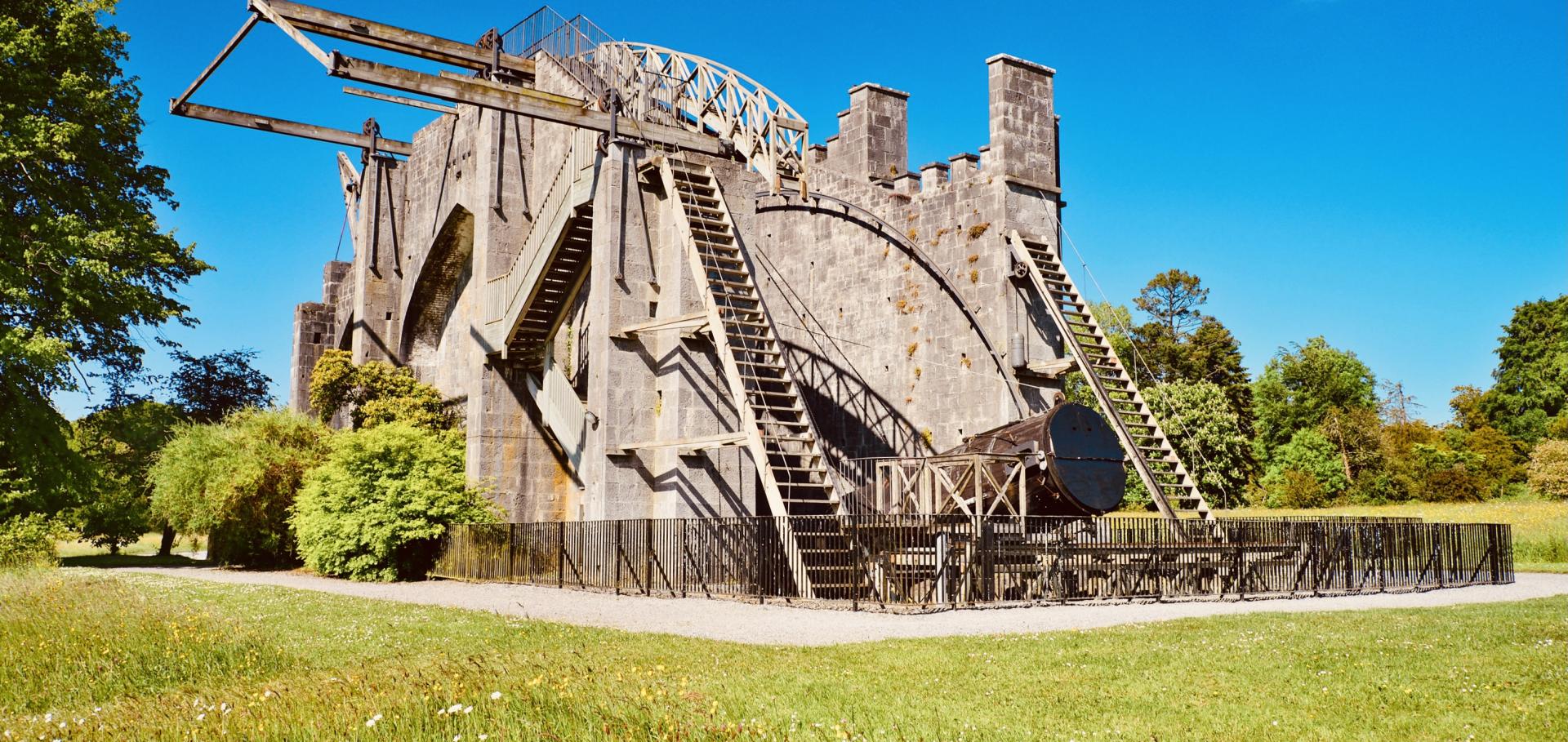
Rosse Telescope

Garret Cotter

Professor of Physics

Research theme

  • Astronomy and astrophysics
  • Particle astrophysics & cosmology

Sub department

  • Astrophysics

Research groups

  • Pulsars, transients and relativistic astrophysics
  • The Square Kilometre Array (SKA)
  • Gamma-ray astronomy
Garret.Cotter@physics.ox.ac.uk
Telephone: 01865 (2)73604
Denys Wilkinson Building, room Dalitz 4
  • About
  • Publications

Synchrotron and inverse-Compton emission from blazar jets - I. A uniform conical jet model

Monthly Notices of the Royal Astronomical Society (2012)

Authors:

WJ Potter, G Cotter
More details from the publisher
More details

Blazars in the Fermi era: The ovro 40 m telescope monitoring program

Astrophysical Journal, Supplement Series 194:2 (2011)

Authors:

JL Richards, W Max-Moerbeck, V Pavlidou, OG King, TJ Pearson, ACS Readhead, R Reeves, MC Shepherd, MA Stevenson, LC Weintraub, L Fuhrmann, E Angelakis, J Anton Zensus, SE Healey, RW Romani, MS Shaw, K Grainge, M Birkinshaw, K Lancaster, DM Worrall, GB Taylor, G Cotter, R Bustos

Abstract:

The Large Area Telescope (LAT) aboard the Fermi Gamma-ray Space Telescope provides an unprecedented opportunity to study gamma-ray blazars. To capitalize on this opportunity, beginning in late 2007, about a year before the start of LAT science operations, we began a large-scale, fast-cadence 15GHz radio monitoring program with the 40 m telescope at the Owens Valley Radio Observatory. This program began with the 1158 northern (δ > -20°) sources from the Candidate Gamma-ray Blazar Survey and now encompasses over 1500 sources, each observed twice per week with about 4mJy (minimum) and 3% (typical) uncertainty. Here, we describe this monitoring program and our methods, and present radio light curves from the first two years (2008 and 2009). As a first application, we combine these data with a novel measure of light curve variability amplitude, the intrinsic modulation index, through a likelihood analysis to examine the variability properties of subpopulations of our sample. We demonstrate that, with high significance (6σ), gamma-ray-loud blazars detected by the LAT during its first 11 months of operation vary with almost a factor of two greater amplitude than do the gamma-ray-quiet blazars in our sample. We also find a significant (3σ) difference between variability amplitude in BL Lacertae objects and flat-spectrum radio quasars (FSRQs), with the former exhibiting larger variability amplitudes. Finally, low-redshift (z < 1) FSRQs are found to vary more strongly than high-redshift FSRQs, with 3σ significance. These findings represent an important step toward understanding why some blazars emit gamma-rays while others, with apparently similar properties, remain silent. © 2011. The American Astronomical Society. All rights reserved..
More details from the publisher
More details

Characteristics of Gamma-ray loud blazars in the VLBA Imaging and Polarimetry Survey

Astrophysical Journal Letters 726:1 (2011)

Authors:

JD Linford, GB Taylor, RW Romani, SE Healey, JF Helmboldt, ACS Readhead, R Reeves, JL Richards, G Cotter

Abstract:

The radio properties of blazars detected by the Large Area Telescope (LAT) on board the Fermi Gamma-ray Space Telescope have been observed as part of the VLBA Imaging and Polarimetry Survey. This large, flux-limited sample of active galactic nuclei (AGNs) provides insights into the mechanism that produces strong γ-ray emission. At lower flux levels, radio flux density does not directly correlate with γ-ray flux. We find that the LAT-detected BL Lac objects tend to be similar to the non-LAT BL Lac objects, but that the LAT-detected FSRQs are often significantly different from the non-LAT FSRQs. The differences between the γ-ray loud and quiet FSRQs can be explained by Doppler boosting; these objects appear to require larger Doppler factors than those of the BL Lac objects. It is possible that the γ-ray loud FSRQs are fundamentally different from the γ-ray quiet FSRQs. Strong polarization at the base of the jet appears to be a signature for γ-ray loud AGNs. © 2011. The American Astronomical Society. All rights reserved. Printedin the U.S.A.
More details from the publisher

Characteristics of Gamma-ray loud blazars in the VLBA Imaging and Polarimetry Survey

Astrophysical Journal 726:1 (2011)

Authors:

JD Linford, GB Taylor, RW Romani, SE Healey, JF Helmboldt, ACS Readhead, R Reeves, JL Richards, G Cotter

Abstract:

The radio properties of blazars detected by the Large Area Telescope (LAT) on board the Fermi Gamma-ray Space Telescope have been observed as part of the VLBA Imaging and Polarimetry Survey. This large, flux-limited sample of active galactic nuclei (AGNs) provides insights into the mechanism that produces strong γ-ray emission. At lower flux levels, radio flux density does not directly correlate with γ-ray flux. We find that the LAT-detected BL Lac objects tend to be similar to the non-LAT BL Lac objects, but that the LAT-detected FSRQs are often significantly different from the non-LAT FSRQs. The differences between the γ-ray loud and quiet FSRQs can be explained by Doppler boosting; these objects appear to require larger Doppler factors than those of the BL Lac objects. It is possible that the γ-ray loud FSRQs are fundamentally different from the γ-ray quiet FSRQs. Strong polarization at the base of the jet appears to be a signature for γ-ray loud AGNs. © 2011. The American Astronomical Society. All rights reserved. Printedin the U.S.A.
More details from the publisher

Design concepts for the Cherenkov Telescope Array CTA: An advanced facility for ground-based high-energy gamma-ray astronomy

Experimental Astronomy 32:3 (2011) 193-316

Authors:

M Actis, G Agnetta, F Aharonian, A Akhperjanian, J Aleksić, E Aliu, D Allan, I Allekotte, F Antico, LA Antonelli, P Antoranz, A Aravantinos, T Arlen, H Arnaldi, S Artmann, K Asano, H Asorey, J Bähr, A Bais, C Baixeras, S Bajtlik, D Balis, A Bamba, C Barbier, M Barceló, A Barnacka, J Barnstedt, UB de Almeida, JA Barrio, S Basso, D Bastieri, C Bauer, J Becerra, Y Becherini, K Bechtol, J Becker, V Beckmann, W Bednarek, B Behera, M Beilicke, M Belluso, M Benallou, W Benbow, J Berdugo, K Berger, T Bernardino, K Bernlöhr, A Biland, S Billotta, T Bird, E Birsin, E Bissaldi, S Blake, O Blanch, AA Bobkov, L Bogacz, M Bogdan, C Boisson, J Boix, J Bolmont, G Bonanno, A Bonardi, T Bonev, J Borkowski, O Botner, A Bottani, M Bourgeat, C Boutonnet, A Bouvier, S Brau-Nogué, I Braun, T Bretz, MS Briggs, P Brun, L Brunetti, JH Buckley, V Bugaev, R Bühler, T Bulik, G Busetto, S Buson, K Byrum, M Cailles, R Cameron, R Canestrari, S Cantu, E Carmona, A Carosi, J Carr, PH Carton, M Casiraghi, H Castarede, O Catalano, S Cavazzani, S Cazaux, B Cerruti, M Cerruti, PM Chadwick, J Chiang, M Chikawa

Abstract:

Ground-based gamma-ray astronomy has had a major breakthrough with the impressive results obtained using systems of imaging atmospheric Cherenkov telescopes. Ground-based gamma-ray astronomy has a huge potential in astrophysics, particle physics and cosmology. CTA is an international initiative to build the next generation instrument, with a factor of 5-10 improvement in sensitivity in the 100 GeV-10 TeV range and the extension to energies well below 100 GeV and above 100 TeV. CTA will consist of two arrays (one in the north, one in the south) for full sky coverage and will be operated as open observatory. The design of CTA is based on currently available technology. This document reports on the status and presents the major design concepts of CTA. © 2011 The Author(s).
More details from the publisher
More details
Details from ArXiV

Pagination

  • First page First
  • Previous page Prev
  • …
  • Page 35
  • Page 36
  • Page 37
  • Page 38
  • Current page 39
  • Page 40
  • Page 41
  • Page 42
  • Page 43
  • …
  • Next page Next
  • Last page Last

Footer Menu

  • Contact us
  • Giving to the Dept of Physics
  • Work with us
  • Media

User account menu

  • Log in

Follow us

FIND US

Clarendon Laboratory,

Parks Road,

Oxford,

OX1 3PU

CONTACT US

Tel: +44(0)1865272200

University of Oxfrod logo Department Of Physics text logo
IOP Juno Champion logo Athena Swan Silver Award logo

© University of Oxford - Department of Physics

Cookies | Privacy policy | Accessibility statement

Built by: Versantus

  • Home
  • Research
  • Study
  • Engage
  • Our people
  • News & Comment
  • Events
  • Our facilities & services
  • About us
  • Giving to Physics
  • Current students
  • Staff intranet