Home
Department Of Physics text logo
  • Research
    • Our research
    • Our research groups
    • Our research in action
    • Research funding support
    • Summer internships for undergraduates
  • Study
    • Undergraduates
    • Postgraduates
  • Engage
    • For alumni
    • For business
    • For schools
    • For the public
  • Support
Menu
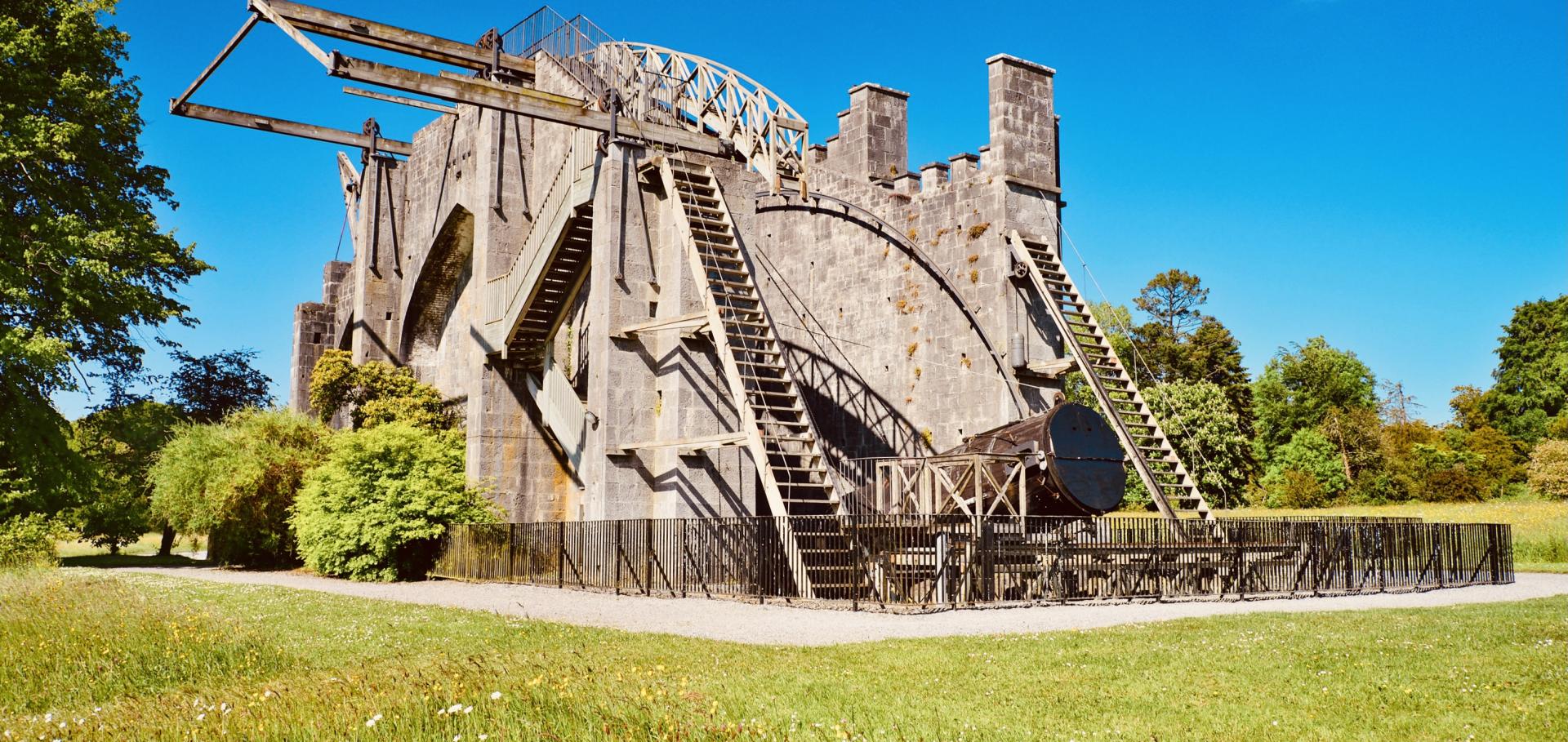
Rosse Telescope

Garret Cotter

Professor of Physics

Research theme

  • Astronomy and astrophysics
  • Particle astrophysics & cosmology

Sub department

  • Astrophysics

Research groups

  • Pulsars, transients and relativistic astrophysics
  • The Square Kilometre Array (SKA)
  • Gamma-ray astronomy
Garret.Cotter@physics.ox.ac.uk
Telephone: 01865 (2)73604
Denys Wilkinson Building, room Dalitz 4
  • About
  • Publications

Searching for Clusters with SUMSS

New Astronomy Reviews 47:4-5 (2003) 329-332

Authors:

HJ Buttery, G Cotter, RW Hunstead, EM Sadler

Abstract:

Statistical overdensities of radio sources in the Sydney University Molonglo Sky Survey (SUMSS) are used as signposts to identify high-redshift clusters of galaxies. These potential clusters have been observed at 20 and 13 cm at the Australia Telescope Compact Array (ATCA) to obtain better positional accuracy for the sources. A subsample have been imaged in V, R and I at the 2.3-m telescope at Siding Spring and in J and K at the Anglo Australian Telescope (AAT) and the New Technology Telescope (NTT) at La Silla, Chile. The colours obtained from these observations will be used to estimate redshifts for the potential cluster members. © 2003 Elsevier B.V. All rights reserved.
More details from the publisher
More details

Follow-up of the 9C survey: initial results

NEW ASTRONOMY REVIEWS 47:4-5 (2003) 367-371

Authors:

RC Bolton, G Cotter, TJ Pearson, GG Pooley, ACS Readhead, JA Riley, EM Waldram
More details from the publisher

Ground-Based Mid Infra-Red Observations of Nearby Starburst and AGN Galaxies

Chapter in The Evolution of Galaxies, Springer Nature (2003) 279-282

Authors:

Bojan Nikolic, Paul Alexander, Garret Cotter, Malcolm Longair, Marcel Clemens
More details from the publisher

Ground-based mid infra-red observations of nearby starburst and AGN galaxies

ASTROPHYSICS AND SPACE SCIENCE 284:2 (2003) 573-576

Authors:

B Nikolic, P Alexander, G Cotter, M Longair, M Clemens
More details from the publisher

Deep spectroscopy of z ∼ 1 6C radio galaxies - II. Breaking the redshift-radio power degeneracy

Monthly Notices of the Royal Astronomical Society 337:4 (2002) 1407-1416

Authors:

KJ Inskip, PN Best, HJA Röttgering, S Rawlings, G Cotter, MS Longair

Abstract:

The results of a spectroscopic analysis of 3CR and 6C radio galaxies at redshift z ∼ 1 are contrasted with the properties of lower-redshift radio galaxies, chosen to be matched in radio luminosity to the 6C sources studied at z ∼ 1, thus enabling the redshift-radio power degeneracy to be broken. Partial rank correlations and principal component analysis have been used to determine which of redshift and radio power are the critical parameters underlying the observed variation of the ionization state and kinematics of the emission-line gas. [O II]/Hβ is shown to be a useful ionization mechanism diagnostic. Statistical analysis of the data shows that the ionization state of the emission-line gas is strongly correlated with radio power, once the effects of other parameters are removed. No dependence of ionization state on cosmic epoch is observed, implying that the ionization state of the emission-line gas is solely a function of the properties of the active galactic nucleus rather than the host galaxy and/or environment. Statistical analysis of the kinematic properties of the emission-line gas shows that these are strongly correlated independently with both redshift and radio power. The correlation with redshift is the stronger of the two, suggesting that host-galaxy composition or environment may play a role in producing the less extreme gas kinematics observed in the emission-line regions of low-redshift galaxies. For both the ionization and kinematic properties of the galaxies, the independent correlations observed with radio size are stronger than with either radio power or redshift. Radio source age is clearly a determining factor for the kinematics and ionization state of the extended emission-line regions.
More details from the publisher
More details
Details from ArXiV

Pagination

  • First page First
  • Previous page Prev
  • …
  • Page 44
  • Page 45
  • Page 46
  • Page 47
  • Current page 48
  • Page 49
  • Page 50
  • Page 51
  • Page 52
  • …
  • Next page Next
  • Last page Last

Footer Menu

  • Contact us
  • Giving to the Dept of Physics
  • Work with us
  • Media

User account menu

  • Log in

Follow us

FIND US

Clarendon Laboratory,

Parks Road,

Oxford,

OX1 3PU

CONTACT US

Tel: +44(0)1865272200

University of Oxfrod logo Department Of Physics text logo
IOP Juno Champion logo Athena Swan Silver Award logo

© University of Oxford - Department of Physics

Cookies | Privacy policy | Accessibility statement

Built by: Versantus

  • Home
  • Research
  • Study
  • Engage
  • Our people
  • News & Comment
  • Events
  • Our facilities & services
  • About us
  • Giving to Physics
  • Current students
  • Staff intranet