Home
Department Of Physics text logo
  • Research
    • Our research
    • Our research groups
    • Our research in action
    • Research funding support
    • Summer internships for undergraduates
  • Study
    • Undergraduates
    • Postgraduates
  • Engage
    • For alumni
    • For business
    • For schools
    • For the public
  • Support
Menu
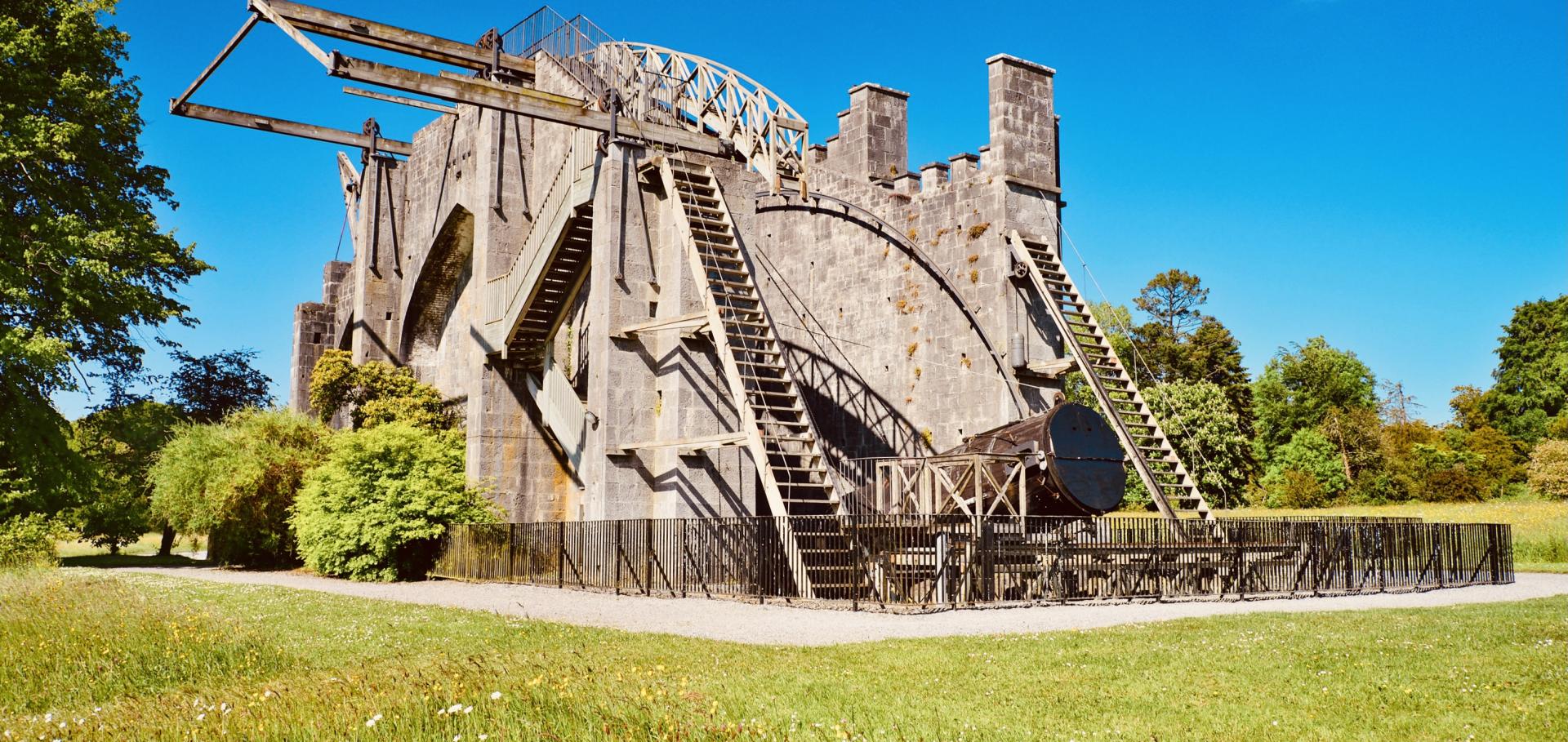
Rosse Telescope

Garret Cotter

Professor of Physics

Research theme

  • Astronomy and astrophysics
  • Particle astrophysics & cosmology

Sub department

  • Astrophysics

Research groups

  • Pulsars, transients and relativistic astrophysics
  • The Square Kilometre Array (SKA)
  • Gamma-ray astronomy
Garret.Cotter@physics.ox.ac.uk
Telephone: 01865 (2)73604
Denys Wilkinson Building, room Dalitz 4
  • About
  • Publications

Surveying the sky with the Arcminute Microkelvin Imager: Expected constraints on galaxy cluster evolution and cosmology

Monthly Notices of the Royal Astronomical Society 328:3 (2001) 783-794

Authors:

R Kneissl, ME Jones, R Saunders, VR Eke, AN Lasenby, K Grainge, G Cotter

Abstract:

We discuss prospects for cluster detection via the Sunyaev-Zel'dovich (SZ) effect in a blank field survey with the interferometer array, the Arcminute MicroKelvin Imager (AMI). Clusters of galaxies selected in the SZ effect probe cosmology and structure formation with little observational bias, because the effect measures integrated gas pressure directly, and does so independently of cluster redshift. We use hydrodynamical simulations in combination with the Press-Schechter expression to simulate SZ cluster sky maps. These are used with simulations of the observation process to gauge the expected SZ cluster counts. Even with a very conservative choice of parameters we find that AMI will discover at least several tens of clusters every year with Mtot ≥ 1014M⊙; the numbers depend on factors such as the mean matter density, the density fluctuation power spectrum and cluster gas evolution. The AMI survey itself can distinguish between these to some degree, and parameter degeneracies are largely eliminated given optical and X-ray follow-up of these clusters; this will also permit direct investigation of cluster physics and what drives the evolution.
More details from the publisher
More details

Searching for Clusters of Galaxies with SUMSS

(2001)

Authors:

HJ Buttery, G Cotter, RW Hunstead, EM Sadler
More details from the publisher

Surveying the sky with the Arcminute MicroKelvin Imager: expected constraints on galaxy cluster evolution and cosmology

Monthly Notices of the Royal Astronomical Society 328 (2001) 783-794

Authors:

ME Jones, Kneissl, Rüdiger, Saunders, R, Grainge, Keith
More details from the publisher

Detection of a CMB decrement towards a cluster of mJy radiosources

(2001)

Authors:

Garret Cotter, Helen J Buttery, Steve Rawlings, Steve Croft, Gary J Hill, Pamela Gay, Rhiju Das, Niv Drory, Keith Grainge, William F Grainger, Michael E Jones, GG Pooley, Richard Saunders
More details from the publisher

Stellar populations in the nuclear regions of nearby radio galaxies

Monthly Notices of the Royal Astronomical Society 325:2 (2001) 636-648

Authors:

I Aretxaga, E Terlevich, RJ Terlevich, G Cotter, AI Díaz

Abstract:

We present optical spectra of the nuclei of seven luminous (P178MHz ≳ 1025 W Hz-1 Sr-1 ) nearby (z < 0.08) radio galaxies, which mostly correspond to the FR II class. In two cases, Hydra A and 3C 285, the Balmer and λ4000-Å break indices constrain the spectral types and luminosity classes of the stars involved, revealing that the blue spectra are dominated by blue supergiant and/or giant stars. The ages derived for the last burst of star formation in Hydra A are between 7 and 40Myr, and in 3C 285 about 10 Myr. The rest of the narrow-line radio galaxies (four) have a λ4000-Å break and metallic indices consistent with those of elliptical galaxies. The only broad-line radio galaxy in our sample, 3C 382, has a strong featureless blue continuum and broad emission lines that dilute the underlying blue stellar spectra. We are able to detect the Ca II triplet in absorption in the seven objects, with good quality data for only four of them. The strengths of the absorptions are similar to those found in normal elliptical galaxies, but these values are consistent both with stellar populations of roughly similar ages (as derived from the Balmer absorption and break strengths) and with mixed young+old populations.
More details from the publisher
More details

Pagination

  • First page First
  • Previous page Prev
  • …
  • Page 47
  • Page 48
  • Page 49
  • Page 50
  • Current page 51
  • Page 52
  • Page 53
  • Page 54
  • Page 55
  • Next page Next
  • Last page Last

Footer Menu

  • Contact us
  • Giving to the Dept of Physics
  • Work with us
  • Media

User account menu

  • Log in

Follow us

FIND US

Clarendon Laboratory,

Parks Road,

Oxford,

OX1 3PU

CONTACT US

Tel: +44(0)1865272200

University of Oxfrod logo Department Of Physics text logo
IOP Juno Champion logo Athena Swan Silver Award logo

© University of Oxford - Department of Physics

Cookies | Privacy policy | Accessibility statement

Built by: Versantus

  • Home
  • Research
  • Study
  • Engage
  • Our people
  • News & Comment
  • Events
  • Our facilities & services
  • About us
  • Giving to Physics
  • Current students
  • Staff intranet