Home
Department Of Physics text logo
  • Research
    • Our research
    • Our research groups
    • Our research in action
    • Research funding support
    • Summer internships for undergraduates
  • Study
    • Undergraduates
    • Postgraduates
  • Engage
    • For alumni
    • For business
    • For schools
    • For the public
  • Support
Menu
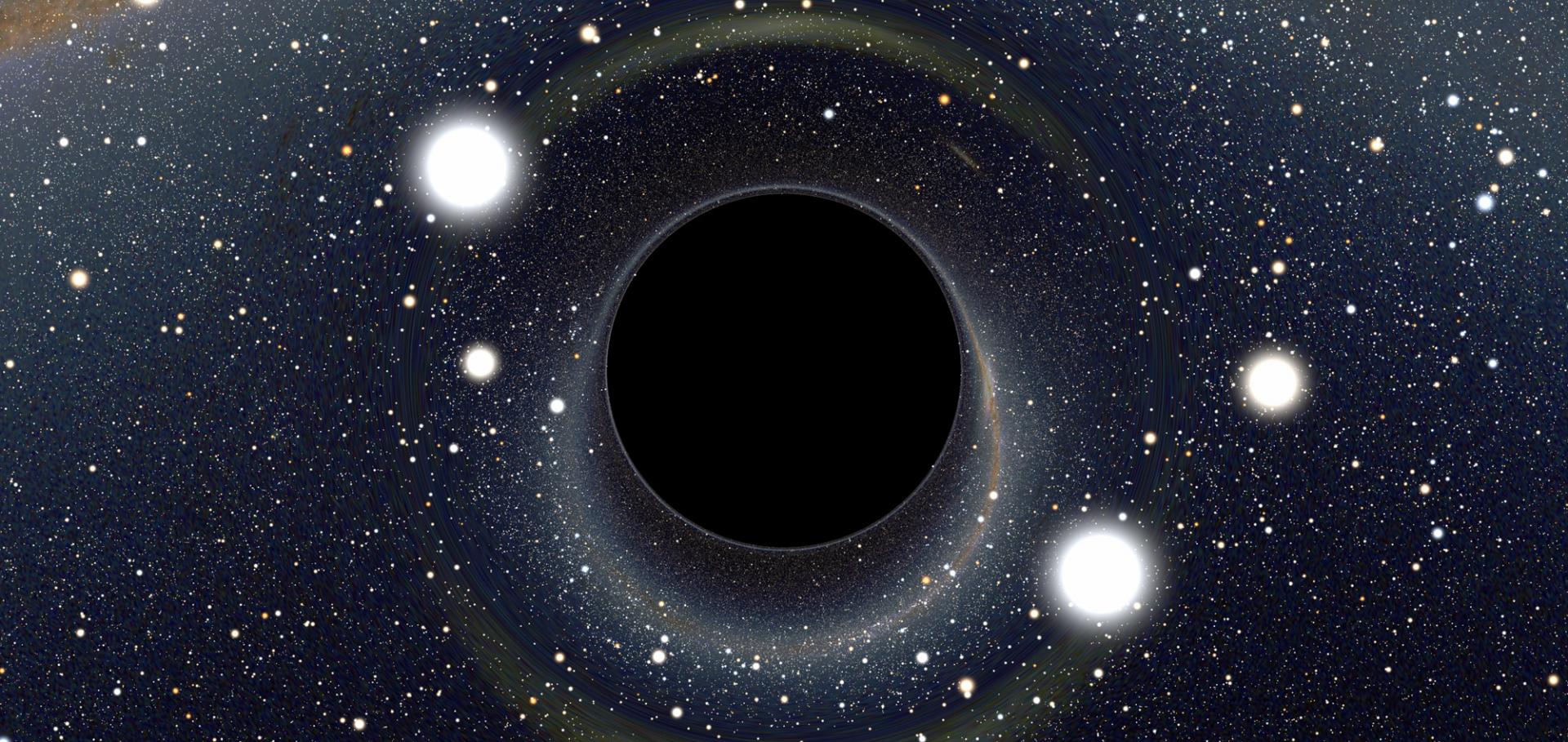
Black Hole

Lensing of space time around a black hole. At Oxford we study black holes observationally and theoretically on all size and time scales - it is some of our core work.

Credit: ALAIN RIAZUELO, IAP/UPMC/CNRS. CLICK HERE TO VIEW MORE IMAGES.

Dr Gareth Dorrian

Postdoctoral Research Assistant

Research theme

  • Astronomy and astrophysics

Sub department

  • Astrophysics

Research groups

  • Breakthrough Listen
gareth.dorrian@physics.ox.ac.uk
Denys Wilkinson Building, room 460
  • About
  • Publications

LOFAR observations of refractive scattering from substructure within a traveling ionospheric disturbance at mid-latitude.

(2022)

Authors:

Gareth Dorrian, Richard Andrew Fallows, Alan George Wood, David R Themens, Ben Boyde, Andrzej Krankowski, Mario Mark Bisi, Bartosz Dabrowski, Christian Vocks
More details from the publisher

Lensing from small-scale travelling ionospheric disturbances observed using LOFAR

Journal of Space Weather and Space Climate EDP Sciences 12 (2022) 34-34

Authors:

Ben Boyde, Alan Wood, Gareth Dorrian, Richard A Fallows, David Themens, Jens Mielich, Sean Elvidge, Maaijke Mevius, Pietro Zucca, Bartosz Dabrowski, Andrzej Krankowski, Christian Vocks, Mario Bisi

Abstract:

Observations made using the LOw-Frequency ARray (LOFAR) between 10:15 and 11:48 UT on the 15th of September 2018 over a bandwidth of approximately 25–65 MHz contain discrete pseudo-periodic features of ionospheric origin. These features occur within a period of approximately 10 min and collectively last roughly an hour. They are strongly frequency dependent, broadening significantly in time towards the lower frequencies, and show an overlaid pattern of diffraction fringes. By modelling the ionosphere as a thin phase screen containing a wave-like disturbance, we are able to replicate the observations, suggesting that they are associated with small-scale travelling ionospheric disturbances (TIDs). This modelling indicates that the features observed here require a compact radio source at a low elevation and that the TID or TIDs in question have a wavelength <~30 km. Several features suggest the presence of deviations from an idealised sinusoidal wave form. These results demonstrate LOFAR’s capability to identify and characterise small-scale ionospheric structures.
More details from the publisher

Plasma density gradients at the edge of polar ionospheric holes: the absence of phase scintillation

Annales Geophysicae Copernicus GmbH 38:2 (2020) 575-590

Authors:

Luke A Jenner, Alan G Wood, Gareth D Dorrian, Kjellmar Oksavik, Timothy K Yeoman, Alexandra R Fogg, Anthea J Coster

Abstract:

Abstract. Polar holes were observed in the high-latitude ionosphere during a series of multi-instrument case studies close to the Northern Hemisphere winter solstice in 2014 and 2015. These holes were observed during geomagnetically quiet conditions and under a range of solar activities using the European Incoherent Scatter (EISCAT) Svalbard Radar (ESR) and measurements from Global Navigation Satellite System (GNSS) receivers. Steep electron density gradients have been associated with phase scintillation in previous studies; however, no enhanced scintillation was detected within the electron density gradients at these boundaries. It is suggested that the lack of phase scintillation may be due to low plasma density levels and a lack of intense particle precipitation. It is concluded that both significant electron density gradients and plasma density levels above a certain threshold are required for scintillation to occur.
More details from the publisher

An unusual observation of a plasma structure in the mid-latitude ionosphere

(2020)

Authors:

Alan Wood, Gareth Dorrian, Richard Fallows

Abstract:

&lt;p&gt;The LOFAR (Low Frequency Array) is one of the world&amp;#8217;s leading radio telescopes, operating across the frequency band 10-250 MHz. As radio waves from astronomical sources pass through the ionosphere, they can undergo refraction and/or diffraction. The variations in the intensity of the received signal are caused by irregularities with a spatial scale size ranging from the Fresnel dimension to an order of magnitude below this value. The received signal can therefore be used to infer information on plasma structures in the ionosphere. As the frequencies used are significantly lower than the 1.4 GHz typically associated with Global Navigation Satellite Systems (GNSS), the plasma structures that affect the signals received by LOFAR are significantly larger, typically of the order of kilometres.&lt;/p&gt;&lt;p&gt;On 14&lt;sup&gt;th&lt;/sup&gt; July 2018 the Dutch stations of LOFAR observed the strong natural radio sources Cassiopeia A and Cygnus A between 17:00 UT and 18:05 UT at a frequency range of 20-80 MHz. During the observation, the signal intensity received by many of the stations underwent a substantial reduction across all frequencies, lasting approximately 10 minutes. Immediately before and after this, periodic enhancements in the signal strength were observed. These enhancements showed a noticeable frequency dependence, with longer period oscillations at lower frequencies. The feature was not observed simultaneously by the stations and evolved during the observations. Such a feature is most likely to be the result of a large-scale density structure in the ionosphere, which appears to move west and north over the northern Netherlands.&lt;/p&gt;&lt;p&gt;The deep fading of the received signal may be due to the presence of sporadic-E, which is a consequence of variations in the neutral wind speed with altitude in the presence of the geomagnetic field, resulting in plasma accumulating in a thin layer. This can cause incident radio waves to be strongly refracted, affecting the strength of the received signal. The wave-like structure immediately before and after the deep fade is a likely consequence of scattering of the observed signal.&lt;/p&gt;
More details from the publisher

Break up of a polar cap patch in the nightside ionosphere due to a flow channel event

(2020)

Authors:

Elizabeth Donegan-Lawley, Alan Wood, Gareth Dorrian, Alexandra Fogg, Timothy Yeoman, Sean Elvidge

Abstract:

&lt;p&gt;Flow channel events have previously been observed breaking up polar cap patches on the dayside ionosphere but, to the best of our knowledge, have not been observed on the nightside. We report observations of a flow channel event in the evening of the 9th January 2019 under quiet geomagnetic conditions. This multi-instrument study was undertaken using a combination of multiple EISCAT (European Incoherent Scatter) radars, SuperDARN (Super Dual Auroral Radar Network), MSP (Meridian Scanning Photometer) and GNSS (Global Navigation Satellite System) scintillation data. These data were used to build a picture of the evening&amp;#8217;s observations from 1800 to 2359 UT. The flow channel event lasted a total of 13 minutes and was responsible for segmenting a polar cap patch. A decrease in electron density was observed, from a patch value of 1.4x10&lt;sup&gt;11&lt;/sup&gt; m&lt;sup&gt;3&lt;/sup&gt; to a minimum value of 5x10&lt;sup&gt;10&lt;/sup&gt; m&lt;sup&gt;3&lt;/sup&gt;. In addition, ion velocities in excess of 1000 ms&lt;sup&gt;-1&lt;/sup&gt; and ion temperatures of greater than 2000 K were also observed.&amp;#160;&lt;/p&gt;
More details from the publisher

Pagination

  • First page First
  • Previous page Prev
  • Page 1
  • Page 2
  • Page 3
  • Page 4
  • Current page 5
  • Page 6
  • Page 7
  • Page 8
  • Page 9
  • Next page Next
  • Last page Last

Footer Menu

  • Contact us
  • Giving to the Dept of Physics
  • Work with us
  • Media

User account menu

  • Log in

Follow us

FIND US

Clarendon Laboratory,

Parks Road,

Oxford,

OX1 3PU

CONTACT US

Tel: +44(0)1865272200

University of Oxfrod logo Department Of Physics text logo
IOP Juno Champion logo Athena Swan Silver Award logo

© University of Oxford - Department of Physics

Cookies | Privacy policy | Accessibility statement

Built by: Versantus

  • Home
  • Research
  • Study
  • Engage
  • Our people
  • News & Comment
  • Events
  • Our facilities & services
  • About us
  • Giving to Physics
  • Current students
  • Staff intranet