Home
Department Of Physics text logo
  • Research
    • Our research
    • Our research groups
    • Our research in action
    • Research funding support
    • Summer internships for undergraduates
  • Study
    • Undergraduates
    • Postgraduates
  • Engage
    • For young people
    • For teachers
    • For the public
    • For alumni
    • For business
  • Support
Menu
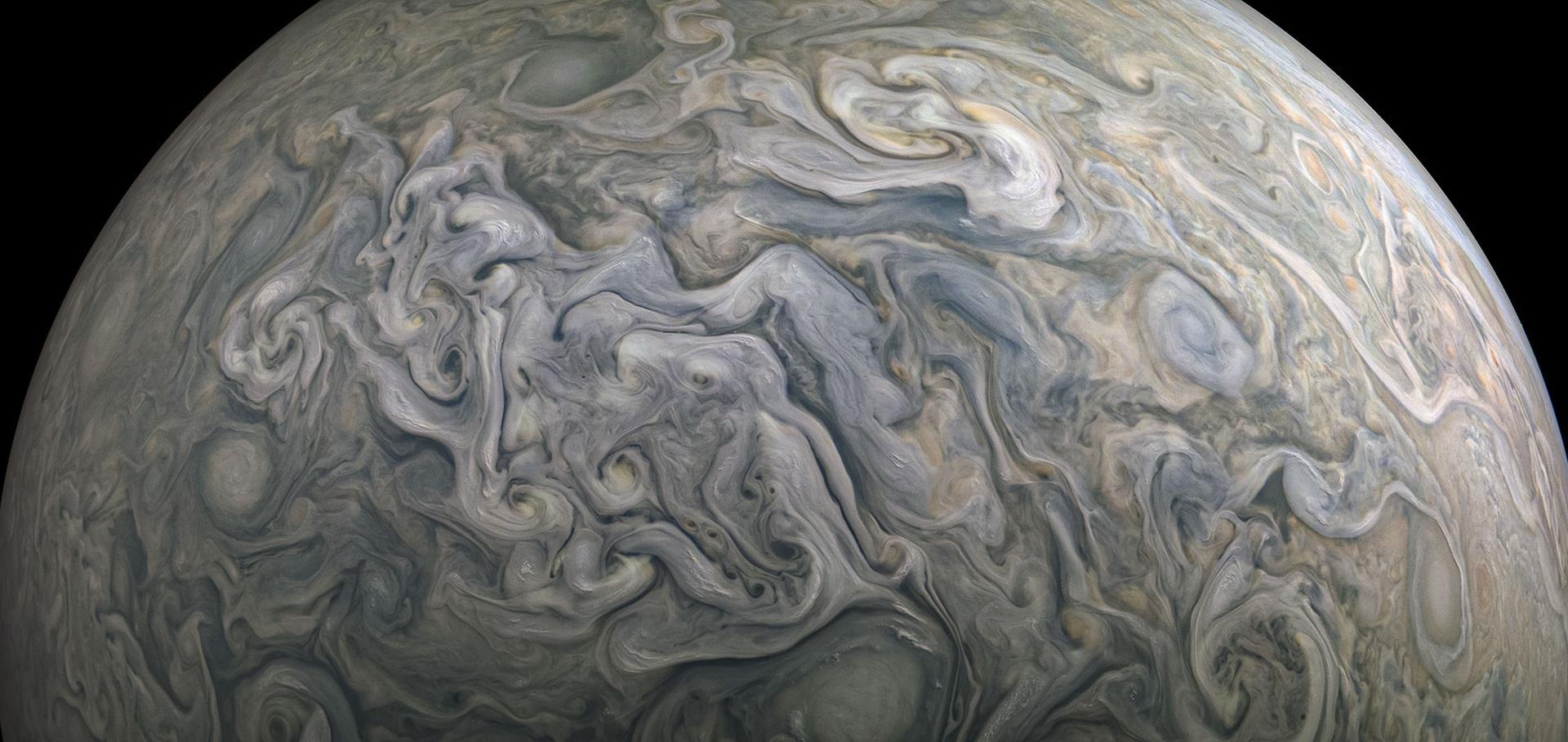
Juno Jupiter image

Professor Roy Grainger

Reader in Atmospheric Physics

Research theme

  • Climate physics

Sub department

  • Atmospheric, Oceanic and Planetary Physics

Research groups

  • Earth Observation Data Group
Don.Grainger@physics.ox.ac.uk
Telephone: 01865 (2)72888
Robert Hooke Building, room S47
  • About
  • Publications

Some implications of sampling choices on comparisons between satellite and model aerosol optical depth fields

Authors:

AM Sayer, GE Thomas, PI Palmer, RG Grainger
More details from the publisher

The 2019 Raikoke volcanic eruption: Part 1 Dispersion model simulations and satellite retrievals of volcanic sulfur dioxide

Authors:

Johannes de Leeuw, Anja Schmidt, Claire S Witham, Nicolas Theys, Isabelle A Taylor, Roy G Grainger, Richard J Pope, Jim Haywood, Martin Osborne, Nina I Kristiansen
More details from the publisher

The GRAPE aerosol retrieval algorithm

Authors:

GE Thomas, CA Poulsen, AM Sayer, SH Marsh, SM Dean, E Carboni, R Siddans, RG Grainger, BN Lawrence
More details from the publisher

The inter-comparison of major satellite aerosol retrieval algorithms using simulated intensity and polarization characteristics of reflected light

Authors:

AA Kokhanovsky, JL Deuzé, DJ Diner, O Dubovik, F Ducos, C Emde, MJ Garay, RG Grainger, A Heckel, M Herman, IL Katsev, J Keller, R Levy, PRJ North, AS Prikhach, VV Rozanov, AM Sayer, Y Ota, D Tanré, GE Thomas, EP Zege
More details from the publisher

Threefold land-use forcing intensifies twofold warming of urban Europe

Journal of Geophysical Research: Atmospheres American Geophysical Union

Authors:

Roy Grainger, Rui Song, Basudev Swain, Marco Vountas

Abstract:

Europe is warming much faster than the global average, yet the relative contributions of individual anthropogenic drivers to its urban warming remain uncertain. Using CMIP5 single-forcing simulations and observations from HadCRUT5 dataset, we determine the influence of greenhouse gases (GHGs), aerosols from anthropogenic sources (Aaer), together with change in land-use (LU) forcing on urban Europe’s rising surface air temperature (SAT) since 1850. The local Europe Amplification Factor (EAF), the ratio of regional to global SAT trends, reveals that LU forcing has intensified nearly threefold relative to the global mean since the industrial era, driving urban European warming almost twice the global rate. LU forcing exhibits the strongest amplification (EAF ≈ 3.0) compared with GHG forcing (EAF ≈ 2.0), highlighting the critical role of surface modifications in accelerating regional urban warming. Future projections under RCP6.0 and RCP8.5 indicate persistent EAF values exceeding 2.0 over densely populated regions, underscoring the need for integrated emission- and land-management strategies to mitigate urban Europe’s amplified warming.
Details from ORA
More details from the publisher
More details

Pagination

  • First page First
  • Previous page Prev
  • …
  • Page 44
  • Page 45
  • Page 46
  • Page 47
  • Page 48
  • Page 49
  • Page 50
  • Current page 51
  • Page 52
  • Next page Next
  • Last page Last

Footer Menu

  • Contact us
  • Giving to the Dept of Physics
  • Work with us
  • Media

User account menu

  • Log in

Follow us

FIND US

Clarendon Laboratory,

Parks Road,

Oxford,

OX1 3PU

CONTACT US

Tel: +44(0)1865272200

University of Oxfrod logo Department Of Physics text logo
IOP Juno Champion logo Athena Swan Silver Award logo

© University of Oxford - Department of Physics

Cookies | Privacy policy | Accessibility statement

Built by: Versantus

  • Home
  • Research
  • Study
  • Engage
  • Our people
  • News & Comment
  • Events
  • Our facilities & services
  • About us
  • Giving to Physics
  • Current students
  • Staff intranet