

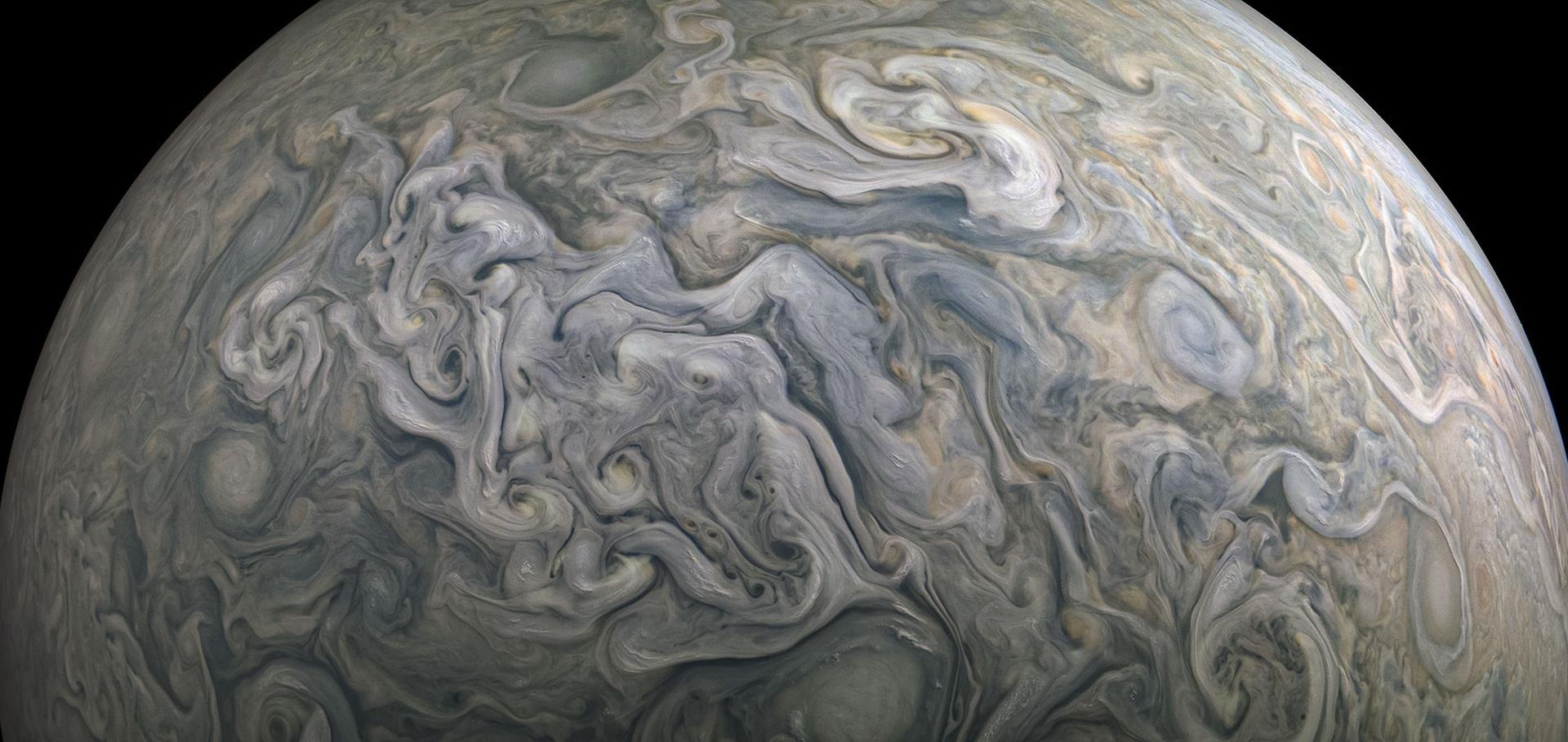

Three direct imaging epochs could constrain the orbit of Earth 2.0 inside the habitable zone
ArXiv 1903.06184 (2019)
The direct imaging search for Earth 2.0: Quantifying biases and planetary false positives
The Astronomical Journal 155:6 (2018)
Abstract:
Direct imaging is likely the best way to characterize the atmospheres of Earth-sized exoplanets in the habitable zone of Sun-like stars. Previously, Stark et al. (2014, 2015, 2016) estimated the Earth twin yield of future direct imaging missions, such as LUVOIR and HabEx. We extend this analysis to other types of planets, which will act as false positives for Earth twins. We define an Earth twin as any exoplanet within half an e-folding of 1 AU in semi-major axis and 1 R⊕ in planetary radius, orbiting a G-dwarf. Using Monte Carlo analyses, we quantify the biases and planetary false positive rates of Earth searches. That is, given a pale dot at the correct projected separation and brightness to be a candidate Earth, what are the odds that it is, in fact, an Earth twin? Our notional telescope has a diameter of 10 m, an inner working angle of 3{\lambda}/D, and an outer working angle of 10{\lambda}/D (62 mas and 206 mas at 1.0 {\mu}m). With no precursor knowledge and one visit per star, 77% of detected candidate Earths are actually un-Earths; their mean radius is 2.3 R⊕, a sub-Neptune. The odds improve if we image every planet at its optimal orbital phase, either by relying on precursor knowledge, or by performing multi-epoch direct imaging. In such a targeted search, 47% of detected Earth twin candidates are false positives, and they have a mean radius of 1.7 R⊕. The false positive rate is insensitive to stellar spectral type and the assumption of circular orbits.
The direct imaging search for Earth 2.0: Quantifying biases and planetary false positives
ArXiv 1804.00699 (2018)