Home
Department Of Physics text logo
  • Research
    • Our research
    • Our research groups
    • Our research in action
    • Research funding support
    • Summer internships for undergraduates
  • Study
    • Undergraduates
    • Postgraduates
  • Engage
    • For alumni
    • For business
    • For schools
    • For the public
  • Support
Menu
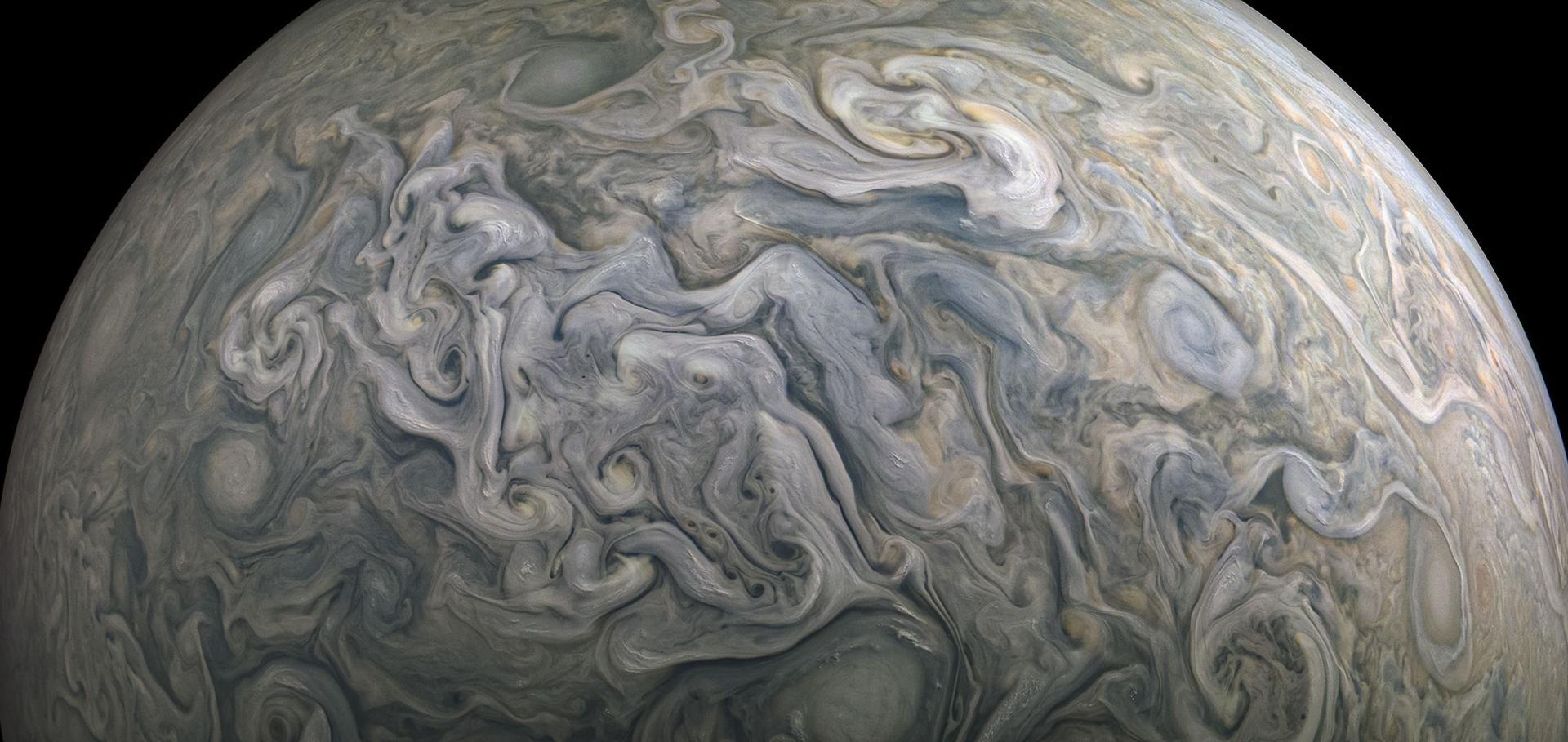
Juno Jupiter image

Dr Lei Gu

Senior Postdoctoral Research Assistant

Research theme

  • Climate physics

Sub department

  • Atmospheric, Oceanic and Planetary Physics

Research groups

  • Predictability of weather and climate
lei.gu@physics.ox.ac.uk
Telephone: +447851302065
Robert Hooke Building, room S40
  • About
  • Publications

Future socio-ecosystem productivity threatened by compound drought-heatwave events

Copernicus Publications (2023)

Authors:

Jiabo Yin, Pierre Gentine, Louise Slater, Lei Gu, Yadu Pokhrel, Shenglian Guo
More details from the publisher

Intensification of Global Hydrological Droughts Under Anthropogenic Climate Warming

Copernicus Publications (2023)

Authors:

Lei Gu, Jiabo Yin, Louise Slater, Hong Xuan Do
More details from the publisher

Impacts of climate warming on global floods and their implication to current flood defense standards

Journal of Hydrology 618 (2023)

Authors:

J Chen, X Shi, L Gu, G Wu, T Su, HM Wang, JS Kim, L Zhang, L Xiong

Abstract:

Floods usually threaten human lives and cause serious economic losses, which can be more severe with global warming. Therefore, it is a salient challenge to find out how global flood characteristic changes and whether current flood protection standards will face more pressures. This study aims to characterize changes in global floods and explicit flood defense pressures in warming climates of 1.5–3.0 °C above pre-industrial levels by running four well-calibrated lumped hydrological models using bias-corrected Global Climate Model (GCM) simulations for 9045 watersheds worldwide. The results show that global warming from 1.5 to 3.0 °C has increasingly dominated all continents, with amplification effects on changes of flood frequency and magnitude. Southeast Eurasia, Africa, and South America are hotspots of changes for significant proportions of watersheds with larger flood patterns and greater changing extents than others. For example, for the 3.0 °C warming period under the combination of shared socioeconomic pathway 2 and representative concentration pathway 4.5 (SSP245) scenario, the regionally averaged 50-year flood magnitude will increase by 25.6 %, 30.6 %, and 16.4 % for these regions, respectively. The increases in occurrence and magnitude indicate that current flood protection standards will face increasing pressures in future warming climates. The design-level flood frequency is projected to increase for about 47 %, 55 %, 70 %, and 74 % of watersheds in 1.5, 2.0, 2.5, and 3.0 °C warming periods under the SSP245 scenario. However, large uncertainty are observed for the change of flood characteristics dominated by GCMs and their interactions with SSP scenarios and hydrological models. This study implies that the current flood defense standards should be enhanced and climate adaptation and mitigation strategies should be proposed to cope the change of future flood. Plain language summary: Floods usually threaten human lives and cause serious economic losses, which can be more severe in the context of global warming. It is a salient challenge to find out how global flood risk changes and whether current flood protection standards will face more pressures. This study aims to characterize changes in global floods and explicit flood defense pressures in warming climates of 1.5, 2.0, 2.5, and 3.0 °C above pre-industrial levels. Here we show that amplification effects of higher air temperature on the range of changes in flood frequency and magnitude are projected. Southeast Eurasia, Africa, and South America are hotspots of changes for significant proportions of watersheds with larger flood patterns and greater changing extents than others. Most watersheds worldwide is likely to face increasing flood defense pressures in warming climates. Our findings could improve the understanding of future flood conditions under the warming climates and provide information to mitigation and adaptation policymaking.
More details from the publisher
More details

Severe Socioeconomic Exposures Due to Enhanced Future Compound Flood-Heat Extreme Hazards in China

Atmosphere 13:12 (2022)

Authors:

H Li, Z Gu, J Chen, J Yin, L Gu

Abstract:

As the climate warms, a new hazard, compound flood-heat extreme (CFH) events, characterized by the rapid succession of devastating floods and deadly heat (or vice-versa), are becoming increasingly frequent, threatening infrastructure and ecosystems. However, how this CFH hazard will change under future anthropogenic warming in China and their potential population and economic exposures remains unexamined. Here, we systematically quantify the projected changes in bivariate CHF hazards for 187 catchments in China during the 2071–2100 period relative to the 1985–2014 period and investigate the potential population and gross domestic product (GDP) exposure, by developing a climatic-hydrological-socioeconomic modelling chain. We find that there is a nationwide increase in CFH hazards and the historical 30-year CFH episodes are projected to increase by 10 times in southern catchments. Under the synergistic impacts of changing CFH episodes and population (GDP), a mass of people in southern (0.79–2.13 thousand/km2) and eastern (1.68 thousand/km2) catchments and an enormous sum of GDP in eastern catchments (400–912 million/km2) will be exposed to increasing CFH hazards. Our results highlight the necessity of improving both societal resilience and mitigation solutions to address such weather-related hazards.
More details from the publisher
More details

Can Satellite and Atmospheric Reanalysis Products Capture Compound Moist Heat Stress-Floods?

Remote Sensing 14:18 (2022)

Authors:

L Gu, Z Gu, Q Guo, W Fang, Q Zhang, H Sun, J Yin, J Zhou

Abstract:

Satellite-retrieved and model-based reanalysis precipitation products with high resolution have received increasing attention in recent decades. Their hydrological performance has been widely evaluated. However, whether they can be applied in characterizing the novel category of extreme events, such as compound moist heat-flood (CMHF) events, has not been fully investigated to date. The CMHF refers to the rapid transition from moist heat stress to devastating floods and has occurred increasingly frequently under the current warming climate. This study focuses on the applicability of the Integrated Multi-satellite Retrievals for Global Precipitation Measurement (IMERG) and the fifth generation of European Reanalysis (ERA5-Land) in simulating CMHF events over 120 catchments in China. Firstly, the precipitation accuracy of IMERG and ERA5-Land products is appraised for each catchment, using the gridded in situ meteorological dataset (CN05.1) as a baseline. Then, the ability of IMERG and ERA5-Land datasets in simulating the fraction, magnitude, and decade change of floods and CMHFs is comprehensively evaluated by forcing the XAJ and GR4J hydrological models. The results show that: (a) the IMERG and ERA5-Land perform similarly in terms of precipitation occurrences and intensity; (b) the IMERG yields discernably better performance than the ERA5-Land in streamflow simulation, with 71.7% and 50.8% of catchments showing the Kling–Gupta efficiency (KGE) higher than 0.5, respectively; (c) both datasets can roughly capture the frequency, magnitude, and their changes of floods and CMHFs in recent decades, with the IMERG exhibiting more satisfactory accuracy. Our results indicate that satellite remote sensing and atmospheric reanalysis precipitation can not only simulate individual hydrological extremes in most regions, but monitor compound events such as CMHF episodes, and especially, the IMERG satellite can yield better performance than the ERA5-Land reanalysis.
More details from the publisher
More details

Pagination

  • First page First
  • Previous page Prev
  • Page 1
  • Current page 2
  • Page 3
  • Next page Next
  • Last page Last

Footer Menu

  • Contact us
  • Giving to the Dept of Physics
  • Work with us
  • Media

User account menu

  • Log in

Follow us

FIND US

Clarendon Laboratory,

Parks Road,

Oxford,

OX1 3PU

CONTACT US

Tel: +44(0)1865272200

University of Oxfrod logo Department Of Physics text logo
IOP Juno Champion logo Athena Swan Silver Award logo

© University of Oxford - Department of Physics

Cookies | Privacy policy | Accessibility statement

Built by: Versantus

  • Home
  • Research
  • Study
  • Engage
  • Our people
  • News & Comment
  • Events
  • Our facilities & services
  • About us
  • Giving to Physics
  • Current students
  • Staff intranet