Home
Department Of Physics text logo
  • Research
    • Our research
    • Our research groups
    • Our research in action
    • Research funding support
    • Summer internships for undergraduates
  • Study
    • Undergraduates
    • Postgraduates
  • Engage
    • For alumni
    • For business
    • For schools
    • For the public
  • Support
Menu
CMP
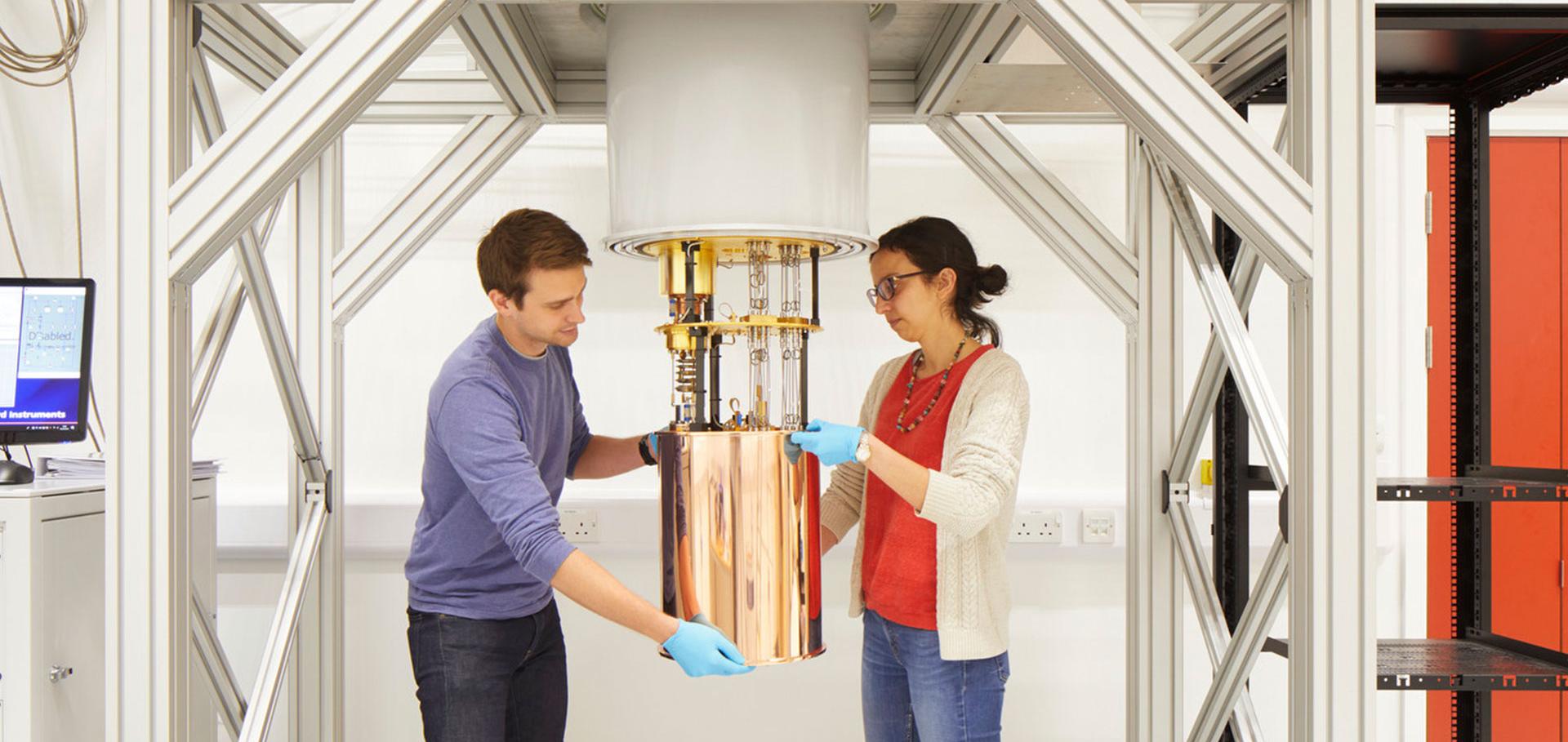
Credit: Jack Hobhouse

Shaoni Kar

Graduate Student

Research theme

  • Photovoltaics and nanoscience

Sub department

  • Condensed Matter Physics

Research groups

  • Photovoltaic & Optoelectronic Device Group
shaoni.kar@physics.ox.ac.uk
Robert Hooke Building
Google scholar
  • About
  • Publications

Halide perovskite-based indoor photovoltaics: recent development and challenges

Materials Today Energy Elsevier BV 23 (2022) 100907

Authors:

Bening Tirta Muhammad, Shaoni Kar, Meera Stephen, Wei Lin Leong
More details from the publisher

An open-access database and analysis tool for perovskite solar cells based on the FAIR data principles

Nature Energy Springer Nature 7:1 (2021) 107-115

Authors:

T Jesper Jacobsson, Adam Hultqvist, Alberto Garcia-Fernandez, Aman Anand, Amran Al-Ashouri, Anders Hagfeldt, Andrea Crovetto, Antonio Abate, Antonio Gaetano Ricciardulli, Anuja Vijayan, Ashish Kulkarni, Assaf Y Anderson, Barbara Primera Darwich, Bowen Yang, Brendan L Coles, Carlo AR Perini, Carolin Rehermann, Daniel Ramirez, David Fairen-Jimenez, Diego Di Girolamo, Donglin Jia, Elena Avila, Emilio J Juarez-Perez, Fanny Baumann, Florian Mathies, GS Anaya Gonzalez, Gerrit Boschloo, Giuseppe Nasti, Gopinath Paramasivam, Guillermo Martinez-Denegri, Hampus Nasstrom, Hannes Michaels, Hans Kobler, Hua Wu, Iacopo Benesperi, M Ibrahim Dar, Ilknur Bayrak Pehlivan, Isaac E Gould, Jacob N Vagott, Janardan Dagar, Jeff Kettle, Jie Yang, Jinzhao Li, Joel A Smith, Jorge Pascual, Jose J Jeronimo-Rendon, Juan Felipe Montoya, Juan-Pablo Correa-Baena, Junming Qiu, Junxin Wang

Abstract:

Large datasets are now ubiquitous as technology enables higher-throughput experiments, but rarely can a research field truly benefit from the research data generated due to inconsistent formatting, undocumented storage or improper dissemination. Here we extract all the meaningful device data from peer-reviewed papers on metal-halide perovskite solar cells published so far and make them available in a database. We collect data from over 42,400 photovoltaic devices with up to 100 parameters per device. We then develop open-source and accessible procedures to analyse the data, providing examples of insights that can be gleaned from the analysis of a large dataset. The database, graphics and analysis tools are made available to the community and will continue to evolve as an open-source initiative. This approach of extensively capturing the progress of an entire field, including sorting, interactive exploration and graphical representation of the data, will be applicable to many fields in materials science, engineering and biosciences.
More details from the publisher
Details from ORA
More details

Advances in Lead-Free Perovskite Single Crystals: Fundamentals and Applications

ACS Materials Letters American Chemical Society (ACS) 3:7 (2021) 1025-1080

Authors:

Naveen Kumar Tailor, Shaoni Kar, Pranjal Mishra, Albert These, Christian Kupfer, Hanlin Hu, Muhammad Awais, Makhsud Saidaminov, M Ibrahim Dar, Christoph Brabec, Soumitra Satapathi
More details from the publisher

Recent advancements and perspectives on light management and high performance in perovskite light‐emitting diodes

Nanophotonics Wiley 10:8 (2021) 2103-2143

Authors:

Shaoni Kar, Nur Fadilah Jamaludin, Natalia Yantara, Subodh G Mhaisalkar, Wei Lin Leong

Abstract:

Light emitting diode (LED) is a one type of p/n junction semiconductor device which is used in less energy consumption for numerous lighting functions. Because of their high performance and long existence, their eye-catching application is getting increasing numbers in recent times. LEDs are nowadays defined as using the “ultimate light bulb”. In a previous couple of years, its efficiency has been multiplied through converting it to nano size. This new light-emitting has a nano-pixel structure and it affords high-resolution performance and the geometry of the pixel is cylindrical or conical form. Due to the fact that the previous few years, a few impurity-doped nanocrystal LEDs are varying a good deal in trend. Its performance is very excessive and consumes a smaller amount of voltage. Its monochromatic behavior and indicator excellent are shown publicly demanded in the market and in this work, it’s covered evaluations of the fundamental’s standards of LEDs and the specific mixed metallic and nanocrystal shape of emitters. In addition, it covers the upcoming challenges that the current trend is working to resolve to get efficient materials to fulfill the future energy crisis
More details from the publisher
Details from ORA

Pagination

  • First page First
  • Previous page Prev
  • Page 1
  • Current page 2

Footer Menu

  • Contact us
  • Giving to the Dept of Physics
  • Work with us
  • Media

User account menu

  • Log in

Follow us

FIND US

Clarendon Laboratory,

Parks Road,

Oxford,

OX1 3PU

CONTACT US

Tel: +44(0)1865272200

University of Oxfrod logo Department Of Physics text logo
IOP Juno Champion logo Athena Swan Silver Award logo

© University of Oxford - Department of Physics

Cookies | Privacy policy | Accessibility statement

Built by: Versantus

  • Home
  • Research
  • Study
  • Engage
  • Our people
  • News & Comment
  • Events
  • Our facilities & services
  • About us
  • Giving to Physics
  • Current students
  • Staff intranet