Home
Department Of Physics text logo
  • Research
    • Our research
    • Our research groups
    • Our research in action
    • Research funding support
    • Summer internships for undergraduates
  • Study
    • Undergraduates
    • Postgraduates
  • Engage
    • For alumni
    • For business
    • For schools
    • For the public
  • Support
Menu
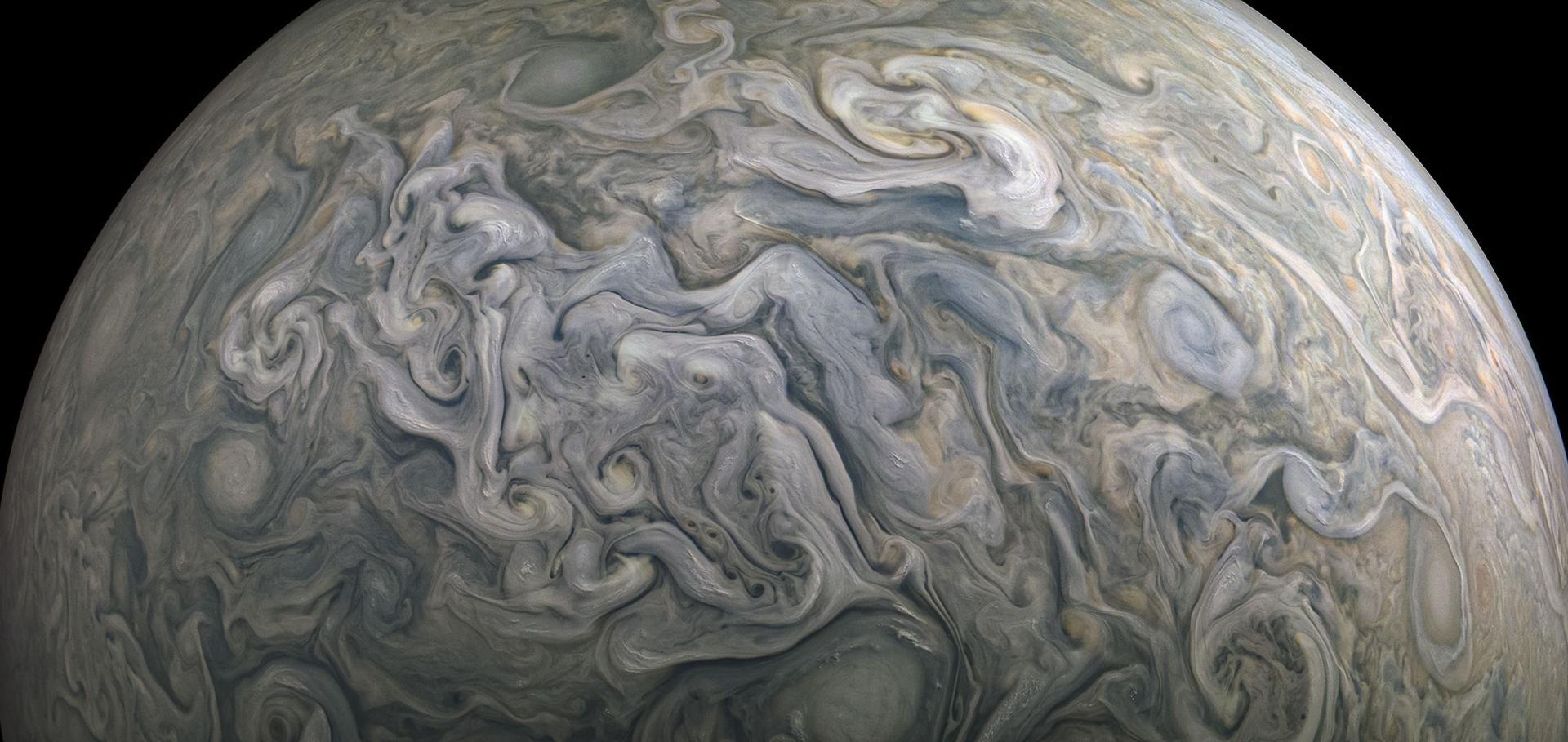
Juno Jupiter image

Dr Antonin Knizek

Postdoctoral Research Assistant

Research theme

  • Climate physics

Sub department

  • Atmospheric, Oceanic and Planetary Physics

Research groups

  • Earth Observation Data Group
antonin.knizek@physics.ox.ac.uk
Robert Hooke Building, room S46
  • About
  • Publications

Report for Mission Assessment: Earth Explorer 12 Candidate Mission Keystone

European Space Agency (2026)

Authors:

Patrick Espy, Maya García-Comas, Daniel Gerber, Gumbel Jörg, Heinz-Wilhelm Hübers, Daniel Marsh, John Plane, Luca Spogli, Claudia Stephan, Christian von Savigny, Wiliam Ward, Corwin Wright, Peder Bagge Hansen, Antonin KNIZEK, Elisabetta Iorfida, Ben Veihelmann, Jonas von Bismarck, Neil BOWLES, Anu DUDHIA, Jonathan Dodd, Felix Sainsbury-Martinez, Tom Dörffel, Felix Wrana, Adam Bourassa, Kyle Palmer, Petronilo Martin-Iglesias, Tibor Agocs, Alba Eva Pelaez Santos, Anio Bequiri, Sven van Berkel, Luc Boucher, Moritz Branco, Danny Deibele, Pierre Henriot, Simone D'Imperio, Ronan Le Letty, Elena Saenz, Beatriz Sanchez de la Villa, Thomas Bertrand
More details from the publisher

A full-atmosphere model of Jupiter

Icarus Elsevier BV 444 (2026) 116806

Authors:

Antonín Knížek, Paul B Rimmer, Martin Ferus
More details from the publisher
More details

Generation of Ammonia in a Pulsed Hollow Cathode Discharge Operated in an Ar/H2/N2 Gas Mixture Detected by Fourier Transform Infrared

ACS Sustainable Chemistry and Engineering 12:48 (2024) 17443-17449

Authors:

R Hippler, M Cada, A Knizek, M Ferus, Z Hubicka

Abstract:

A hollow cathode discharge with a copper nickel cathode (Cu50Ni50) was operated in an Ar/H2/N2 gas mixture. Optical emission spectroscopy revealed the formation of NH radicals, which serve as precursors for NH3 formation. Ion mass spectrometry showed the formation of NH3+ and NH4+ ions indicating NH3 formation. Gas samples taken at the exhaust of the vacuum system were analyzed by Fourier transform infrared spectroscopy. Clear evidence for NH3 formation was obtained from these measurements.
More details from the publisher

Stellar Wind Contribution to the Origin of Water on the Surface of Oxygen-containing Minerals

The Astrophysical Journal American Astronomical Society 975:1 (2024) 25-25

Authors:

Svatopluk Civiš, Jiří Kubišta, Jan Plšek, Antonín Knížek

Abstract:

Abstract The origin of water and volatile compounds on planets including Earth is a hotly debated topic in planetary science. For example, many dynamic models suggest that the majority of Earth’s water and volatile elements were added from an external source. The stellar wind irradiation of rocky oxygen-containing minerals results in a reaction between H+ ions and silicate minerals to produce water and OH, which could explain the presence of water in the regoliths of airless worlds such as the Moon, as well as the water abundances in asteroids. Here, we used the method of high-resolution infrared spectrometry and temperature-programmed desorption (TPD) with mass detection to observe and for the first time quantify water formation on the surfaces of oxygen-bearing minerals. We tested 14 different mineral and natural samples and observed the formation of water on their surfaces upon exposure to H+ or D+ irradiation. The samples, including two meteorite samples (RAS 445 and SAU 567), were shown to have a water adsorption capacity between 0.09 and 0.7 wt%. The adsorbed water (likely dissociatively adsorbed) remains on the surface at pressures as low as 10−9 mbar (in the TPD experiment) and temperatures as high as 600 K, which suggests a possible transfer over long distances and timescales. Our article has a general character and demonstrates that any interaction of oxygen-containing minerals with stellar radiation (H+ ions) leads to the generation of water adsorbed on the surface of the minerals. The case of the origin of water on Earth is taken as a prime example.
More details from the publisher

Data availability and requirements relevant for the Ariel space mission and other exoplanet atmosphere applications

RAS Techniques and Instruments Oxford University Press 3:1 (2024) 636-690

Authors:

Katy L Chubb, Séverine Robert, Clara Sousa-Silva, Sergei N Yurchenko, Nicole F Allard, Vincent Boudon, Jeanna Buldyreva, Benjamin Bultel, Athena Coustenis, Aleksandra Foltynowicz, Iouli E Gordon, Robert J Hargreaves, Christiane Helling, Christian Hill, Helgi Rafn Hrodmarsson, Tijs Karman, Helena Lecoq-Molinos, Alessandra Migliorini, Michaël Rey, Cyril Richard, Ibrahim Sadiek, Frédéric Schmidt, Andrei Sokolov, Stefania Stefani, Patrick Gerard Joseph Irwin

Abstract:

The goal of this white paper is to provide a snapshot of the data availability and data needs primarily for the Ariel space mission, but also for related atmospheric studies of exoplanets and cool stars. It covers the following data-related topics: molecular and atomic line lists, line profiles, computed cross-sections and opacities, collision-induced absorption and other continuum data, optical properties of aerosols and surfaces, atmospheric chemistry, UV photodissociation and photoabsorption cross-sections, and standards in the description and format of such data. These data aspects are discussed by addressing the following questions for each topic, based on the experience of the ‘data-provider’ and ‘data-user’ communities: (1) what are the types and sources of currently available data, (2) what work is currently in progress, and (3) what are the current and anticipated data needs. We present a GitHub platform for Ariel-related data, with the goal to provide a go-to place for both data-users and data-providers, for the users to make requests for their data needs and for the data-providers to link to their available data. Our aim throughout the paper is to provide practical information on existing sources of data whether in data bases, theoretical, or literature sources.
More details from the publisher
Details from ORA
More details

Pagination

  • Current page 1
  • Page 2
  • Page 3
  • Page 4
  • Page 5
  • Page 6
  • Page 7
  • Page 8
  • Page 9
  • …
  • Next page Next
  • Last page Last

Footer Menu

  • Contact us
  • Giving to the Dept of Physics
  • Work with us
  • Media

User account menu

  • Log in

Follow us

FIND US

Clarendon Laboratory,

Parks Road,

Oxford,

OX1 3PU

CONTACT US

Tel: +44(0)1865272200

University of Oxfrod logo Department Of Physics text logo
IOP Juno Champion logo Athena Swan Silver Award logo

© University of Oxford - Department of Physics

Cookies | Privacy policy | Accessibility statement

Built by: Versantus

  • Home
  • Research
  • Study
  • Engage
  • Our people
  • News & Comment
  • Events
  • Our facilities & services
  • About us
  • Giving to Physics
  • Current students
  • Staff intranet