Home
Department Of Physics text logo
  • Research
    • Our research
    • Our research groups
    • Our research in action
    • Research funding support
    • Summer internships for undergraduates
  • Study
    • Undergraduates
    • Postgraduates
  • Engage
    • For alumni
    • For business
    • For schools
    • For the public
  • Support
Menu
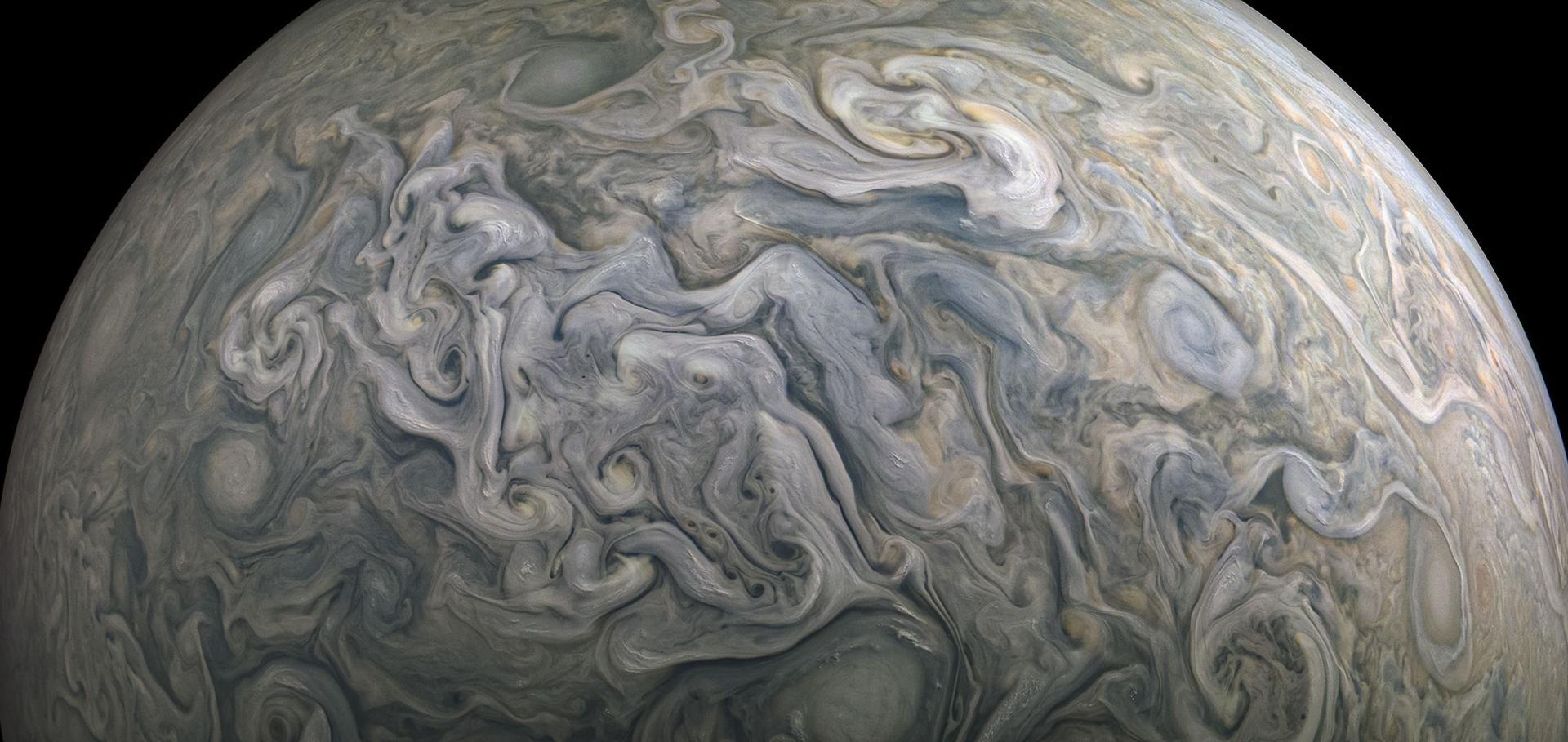
Juno Jupiter image

Dr Antonin Knizek

Postdoctoral Research Assistant

Research theme

  • Climate physics

Sub department

  • Atmospheric, Oceanic and Planetary Physics

Research groups

  • Earth Observation Data Group
antonin.knizek@physics.ox.ac.uk
Robert Hooke Building, room S46
  • About
  • Publications

The Chemistry of CO2 and TiO2

Springer International Publishing, 2019

Authors:

Svatopluk Civiš, Martin Ferus, Antonín Knížek
More details from the publisher

HNCO-based synthesis of formamide in planetary atmospheres

Astronomy and Astrophysics 616 (2018)

Authors:

M Ferus, V Laitl, A Knizek, P Kubelík, J Sponer, J Kára, JE Sponer, B Lefloch, G Cassone, S Civiš

Abstract:

Time-resolved Fourier transform infrared emission spectroscopy, Fourier transform absorption infrared spectroscopy, and high-resolution UV-ViS emission spectroscopy have been used to characterize the chemistry of isocyanic acid (HNCO) under glow discharge conditions in planetary atmospheres. HNCO mixtures (i.e., composed of di-hydrogen or ammonia) have been investigated in order to unveil the possible reaction pathways leading to the synthesis of the key prebiotic molecule formamide (HCONH2), upon planetary atmospheres containing isocyanic acid in presence of di-hydrogen and, separately, of ammonia. In addition, ab initio molecular dynamics simulations coupled with a modern metadynamics technique have been performed in order to identify the most likely chemical pathways connecting HNCO to formamide. It turned out that the direct hydrogenation of HNCO is thermodynamically favored. Incidentally, the experimental results - supplied by a simplified kinetic model - also proved the favorability of the reaction HNCO + H2 → HCONH2 which, moreover, spontaneously takes place in unbiased ab initio molecular dynamics simulations carried out under the effect of intense electric fields.
More details from the publisher

Comparative SIFT-MS, GC–MS and FTIR analysis of methane fuel produced in biogas stations and in artificial photosynthesis over acidic anatase TiO2 and montmorillonite

Journal of Molecular Spectroscopy Elsevier BV 348 (2018) 152-160

Authors:

Antonín Knížek, Ksenyia Dryahina, Patrik Španěl, Petr Kubelík, Ladislav Kavan, Markéta Zukalová, Martin Ferus, Svatopluk Civiš
More details from the publisher

The origin of methane and biomolecules from a CO2 cycle on terrestrial planets

Nature Astronomy Springer Science and Business Media LLC 1:10 (2017) 721-726

Authors:

Svatopluk Civiš, Antonín Knížek, Ondřej Ivanek, Petr Kubelík, Markéta Zukalová, Ladislav Kavan, Martin Ferus
More details from the publisher

High Energy Radical Chemistry Formation of HCN-rich Atmospheres on early Earth.

Scientific reports 7:1 (2017) 6275

Authors:

Martin Ferus, Petr Kubelík, Antonín Knížek, Adam Pastorek, John Sutherland, Svatopluk Civiš

Abstract:

Recent results in prebiotic chemistry implicate hydrogen cyanide (HCN) as the source of carbon and nitrogen for the synthesis of nucleotide, amino acid and lipid building blocks. HCN can be produced during impact events by reprocessing of carbonaceous and nitrogenous materials from both the impactor and the atmosphere; it can also be produced from these materials by electrical discharge. Here we investigate the effect of high energy events on a range of starting mixtures representative of various atmosphere-impactor volatile combinations. Using continuously scanning time-resolved spectrometry, we have detected ·CN radical and excited CO as the initially most abundant products. Cyano radicals and excited carbon monoxide molecules in particular are reactive, energy-rich species, but are resilient owing to favourable Franck-Condon factors. The subsequent reactions of these first formed excited species lead to the production of ground-state prebiotic building blocks, principally HCN.
More details from the publisher

Pagination

  • First page First
  • Previous page Prev
  • …
  • Page 2
  • Page 3
  • Page 4
  • Page 5
  • Page 6
  • Current page 7
  • Page 8
  • Page 9
  • Page 10
  • Next page Next
  • Last page Last

Footer Menu

  • Contact us
  • Giving to the Dept of Physics
  • Work with us
  • Media

User account menu

  • Log in

Follow us

FIND US

Clarendon Laboratory,

Parks Road,

Oxford,

OX1 3PU

CONTACT US

Tel: +44(0)1865272200

University of Oxfrod logo Department Of Physics text logo
IOP Juno Champion logo Athena Swan Silver Award logo

© University of Oxford - Department of Physics

Cookies | Privacy policy | Accessibility statement

Built by: Versantus

  • Home
  • Research
  • Study
  • Engage
  • Our people
  • News & Comment
  • Events
  • Our facilities & services
  • About us
  • Giving to Physics
  • Current students
  • Staff intranet