Home
Department Of Physics text logo
  • Research
    • Our research
    • Our research groups
    • Our research in action
    • Research funding support
    • Summer internships for undergraduates
  • Study
    • Undergraduates
    • Postgraduates
  • Engage
    • For alumni
    • For business
    • For schools
    • For the public
  • Support
Menu
CMP
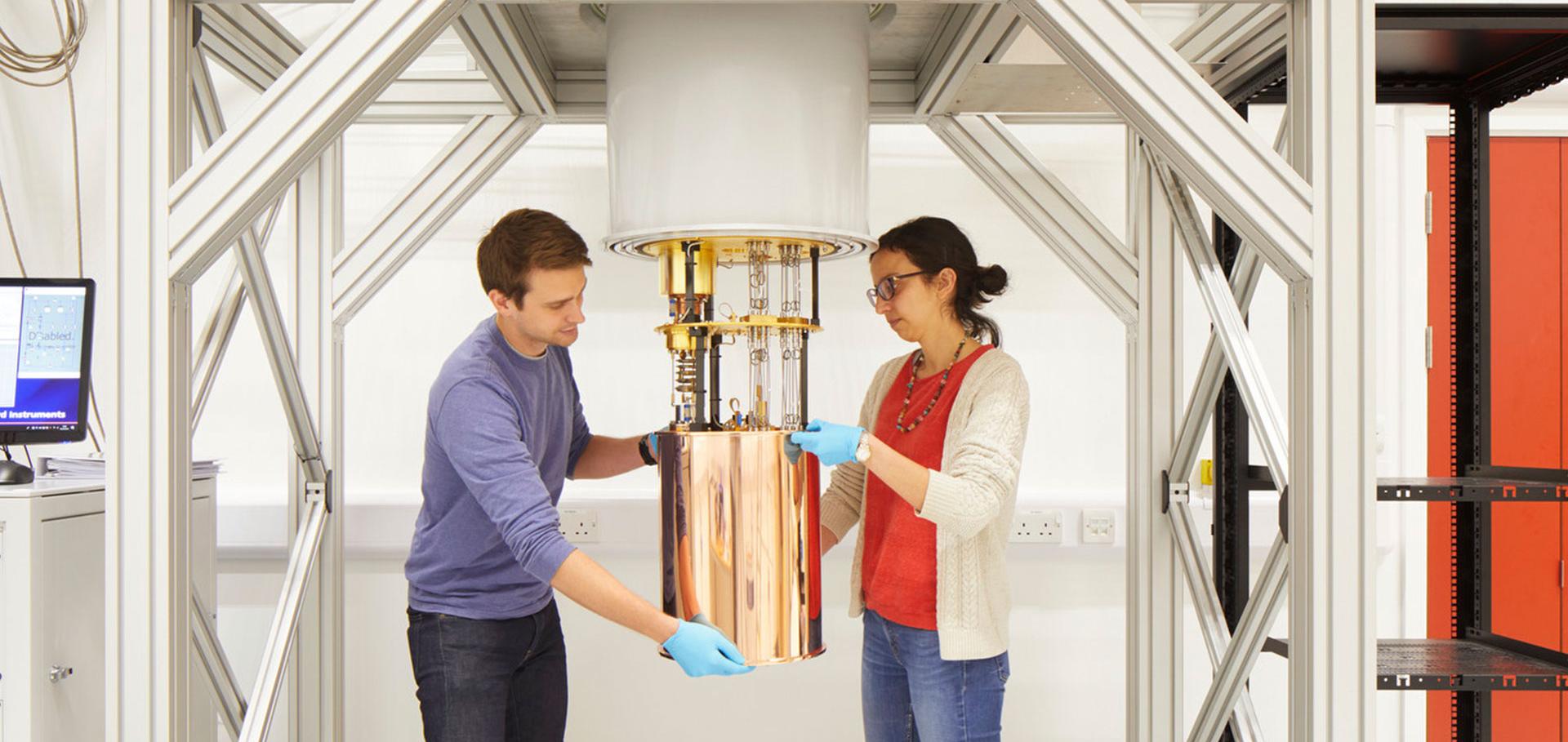
Credit: Jack Hobhouse

Dr Minfei Liang

Postdoctoral researcher in AI-enhanced zero-emission buildings

Sub department

  • Condensed Matter Physics
minfei.liang@physics.ox.ac.uk
Clarendon Laboratory
  • About
  • Publications

Deep active sequential learning of stress evolution in early-age concrete informed by thermo-chemo-mechanical modelling

Engineering Applications of Artificial Intelligence 177 (2026) 114985

Authors:

Minfei Liang, Yong Fang, Wenqi Guo, Chuan He, Erik Schlangen, Branko Šavija, Sonia Contera

Abstract:

This study presents an integrated finite-element–machine-learning framework for predicting early-age stress evolution in concrete materials/structures by combining an enhanced thermo-chemo-mechanical (TCM) model, deep sequential learning (DSL), and active learning (AL). The proposed TCM model incorporates experimentally informed viscoelasticity, a stable exponential creep–relaxation conversion, and an efficient exponential algorithm for the Maxwell-chain formulation in finite element analysis, which is further validated by a temperature stress testing machine. This model generates high-fidelity stress–time data across diverse mixtures, temperatures, and structural configurations. These simulations are used to train a Gated Recurrent Unit with Monte Carlo Dropout (GRU-MCD) model, whose predictive performance surpasses conventional point-wise approaches such as Light Gradient Boosting Machine and Gaussian Process Regression, yielding higher accuracy with reduced overfitting. The AL strategy further enhances efficiency by enabling the GRU-MCD model to achieve the accuracy of ∼900 Latin Hypercube samples using only ∼200 samples selected by active learning. Although demonstrated on a wall–base structure, the proposed framework is general and applicable to other cementitious material or structural systems, providing an effective tool for cracking-risk evaluation, reliability analysis, and the design of low-carbon concrete structures.
More details from the publisher
More details

Conditional generative AI for high-fidelity synthesis of hydrating cementitious microstructures

Materials & Design Elsevier BV 256 (2025) 114251

Authors:

Minfei Liang, Kun Feng, Jinbao Xie, Yuyang Wei, Sonia Contera, Erik Schlangen, Branko Šavija
More details from the publisher
More details

Generation of cement paste microstructure using machine learning models

Developments in the Built Environment Elsevier 21 (2025) 100624

Authors:

Minfei Liang, Kun Feng, Shan He, Yidong Gan, Yu Zhang, Erik Schlangen, Branko Šavija
More details from the publisher
More details

Real-time monitoring of static elastic modulus evolution in hardening concrete through longitudinal-wave velocity changes retrieved by the stretching technique

Construction and Building Materials Elsevier 453 (2024) 139086

Authors:

Hao Cheng, Minfei Liang
More details from the publisher
More details

Efficiently assessing the early-age cracking risk of cementitious materials with a mini temperature stress testing machine

Cement and Concrete Composites 153 (2024)

Authors:

M Liang, Z Chang, P Holthuizen, Y Chen, S He, E Schlangen, B Šavija

Abstract:

Temperature Stress Testing Machine (TSTM) is a universal testing tool for many properties relevant to early-age cracking of cementitious materials. However, the complexity of TSTMs require heavy lab work and thus hinders a more thorough parametric study on a range of cementitious materials. This study presents the development and validation of a Mini-TSTM for efficiently testing the autogenous deformation (AD), viscoelastic properties, and their combined results, the early-age stress (EAS). The setup was validated through systematic tests of EAS, AD, elastic modulus, and creep. Besides, the heating/cooling capability of the setup was examined by tests of coefficient of thermal expansion by temperature cycles. The results of EAS correspond well to that of AD, which qualitatively validates the developed setup. To quantitatively validate the setup, a classical viscoelastic model was built, based on the scenario of a 1-D uniaxial restraint test, to predict the EAS results with the tested AD, elastic modulus, and creep of the same cementitious material as the input. The predicted EAS matched the testing results of Mini-TSTM with good accuracy in 6 different cases. The viscoelastic model also provided quantitative explanations for why variations in early AD do not influence the EAS results. The testing and modelling results together validate the developed Mini-TSTM setup as an efficient tool for studying early-age cracking of cementitious materials. At the end, the potential limitations of the Mini-TSTM are discussed and its applicability for concrete with aggregate size up to 22 mm is demonstrated.
More details from the publisher
More details

Pagination

  • Current page 1
  • Page 2
  • Page 3
  • Next page Next
  • Last page Last

Footer Menu

  • Contact us
  • Giving to the Dept of Physics
  • Work with us
  • Media

User account menu

  • Log in

Follow us

FIND US

Clarendon Laboratory,

Parks Road,

Oxford,

OX1 3PU

CONTACT US

Tel: +44(0)1865272200

University of Oxfrod logo Department Of Physics text logo
IOP Juno Champion logo Athena Swan Silver Award logo

© University of Oxford - Department of Physics

Cookies | Privacy policy | Accessibility statement

Built by: Versantus

  • Home
  • Research
  • Study
  • Engage
  • Our people
  • News & Comment
  • Events
  • Our facilities & services
  • About us
  • Giving to Physics
  • Current students
  • Staff intranet