Home
Department Of Physics text logo
  • Research
    • Our research
    • Our research groups
    • Our research in action
    • Research funding support
    • Summer internships for undergraduates
  • Study
    • Undergraduates
    • Postgraduates
  • Engage
    • For young people
    • For teachers
    • For the public
    • For alumni
    • For business
  • Support
Menu
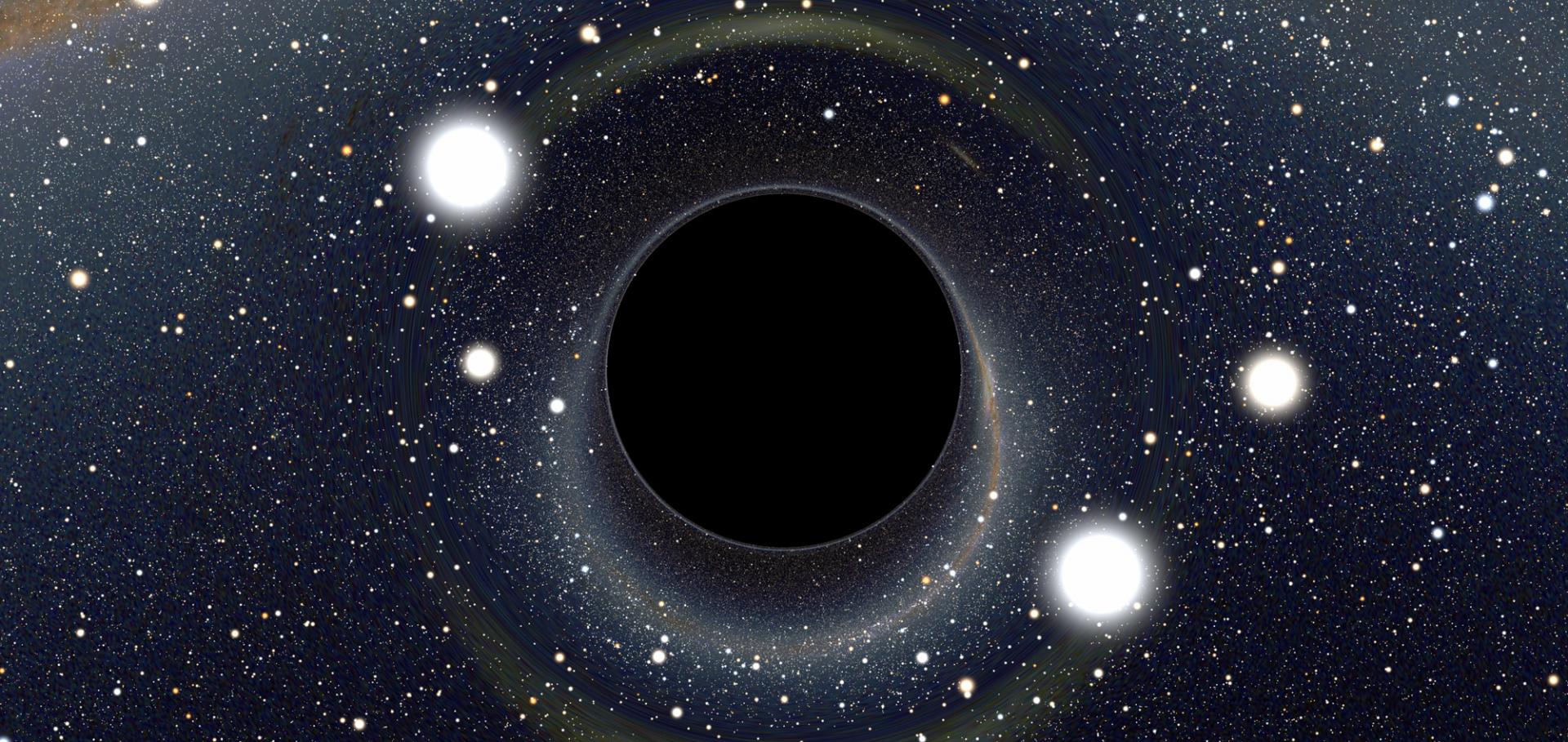
Black Hole

Lensing of space time around a black hole. At Oxford we study black holes observationally and theoretically on all size and time scales - it is some of our core work.

Credit: ALAIN RIAZUELO, IAP/UPMC/CNRS. CLICK HERE TO VIEW MORE IMAGES.

Dr Kaustubh Rajwade

Senior Researcher / Principal RSE-Physics

Research theme

  • Astronomy and astrophysics

Sub department

  • Astrophysics

Research groups

  • MeerKAT
  • Pulsars, transients and relativistic astrophysics
  • The Square Kilometre Array (SKA)
kaustubh.rajwade@physics.ox.ac.uk
Denys Wilkinson Building, room 603
  • About
  • Publications

A candidate coherent radio flash following a neutron star merger

Monthly Notices of the Royal Astronomical Society Oxford University Press (OUP) 534:3 (2024) 2592-2608

Authors:

A Rowlinson, I de Ruiter, RLC Starling, KM Rajwade, A Hennessy, RAMJ Wijers, GE Anderson, M Mevius, D Ruhe, K Gourdji, AJ van der Horst, S ter Veen, K Wiersema
More details from the publisher
More details

Detection and localization of the highly active FRB 20240114A with MeerKAT

Monthly Notices of the Royal Astronomical Society Oxford University Press (OUP) 533:3 (2024) 3174-3193

Authors:

J Tian, KM Rajwade, I Pastor-Marazuela, BW Stappers, MC Bezuidenhout, M Caleb, F Jankowski, ED Barr, M Kramer
More details from the publisher
More details

A study of two FRBs with low polarization fractions localized with the MeerTRAP transient buffer system

Monthly Notices of the Royal Astronomical Society Oxford University Press (OUP) 532:4 (2024) 3881-3892

Authors:

KM Rajwade, LN Driessen, ED Barr, I Pastor-Marazuela, M Berezina, F Jankowski, A Muller, L Kahinga, BW Stappers, MC Bezuidenhout, M Caleb, A Deller, W Fong, A Gordon, M Kramer, M Malenta, V Morello, JX Prochaska, S Sanidas, M Surnis, N Tejos, S Wagner
More details from the publisher
More details

An emission-state-switching radio transient with a 54-minute period

Nature Astronomy Nature Research 8:9 (2024) 1159-1168

Authors:

M Caleb, E Lenc, DL Kaplan, T Murphy, YP Men, RM Shannon, L Ferrario, KM Rajwade, TE Clarke, S Giacintucci, N Hurley-Walker, SD Hyman, ME Lower, Sam McSweeney, V Ravi, ED Barr, S Buchner, CML Flynn, JWT Hessels, M Kramer, J Pritchard, BW Stappers

Abstract:

Long-period radio transients are an emerging class of extreme astrophysical events of which only three are known. These objects emit highly polarized, coherent pulses of typically a few tens of seconds duration, and minutes to approximately hour-long periods. Although magnetic white dwarfs and magnetars, either isolated or in binary systems, have been invoked to explain these objects, a consensus has not emerged. Here we report on the discovery of ASKAP J193505.1+214841.0 (henceforth ASKAP J1935+2148) with a period of 53.8 minutes showing 3 distinct emission states—a bright pulse state with highly linearly polarized pulses with widths of 10–50 seconds; a weak pulse state that is about 26 times fainter than the bright state with highly circularly polarized pulses of widths of approximately 370 milliseconds; and a quiescent or quenched state with no pulses. The first two states have been observed to progressively evolve over the course of 8 months with the quenched state interspersed between them suggesting physical changes in the region producing the emission. A constraint on the radius of the source for the observed period rules out an isolated magnetic white-dwarf origin. Unlike other long-period sources, ASKAP 1935+2148 shows marked variations in emission modes reminiscent of neutron stars. However, its radio properties challenge our current understanding of neutron-star emission and evolution.
More details from the publisher
Details from ORA
More details

A Needle in a Cosmic Haystack: A Review of FRB Search Techniques

Universe MDPI 10:4 (2024) 158

Authors:

Kaustubh M Rajwade, Joeri van Leeuwen
More details from the publisher
More details

Pagination

  • First page First
  • Previous page Prev
  • Page 1
  • Page 2
  • Page 3
  • Current page 4
  • Page 5
  • Page 6
  • Page 7
  • Page 8
  • Page 9
  • …
  • Next page Next
  • Last page Last

Footer Menu

  • Contact us
  • Giving to the Dept of Physics
  • Work with us
  • Media

User account menu

  • Log in

Follow us

FIND US

Clarendon Laboratory,

Parks Road,

Oxford,

OX1 3PU

CONTACT US

Tel: +44(0)1865272200

University of Oxfrod logo Department Of Physics text logo
IOP Juno Champion logo Athena Swan Silver Award logo

© University of Oxford - Department of Physics

Cookies | Privacy policy | Accessibility statement

Built by: Versantus

  • Home
  • Research
  • Study
  • Engage
  • Our people
  • News & Comment
  • Events
  • Our facilities & services
  • About us
  • Giving to Physics
  • Current students
  • Staff intranet