Home
Department Of Physics text logo
  • Research
    • Our research
    • Our research groups
    • Our research in action
    • Research funding support
    • Summer internships for undergraduates
  • Study
    • Undergraduates
    • Postgraduates
  • Engage
    • For alumni
    • For business
    • For schools
    • For the public
  • Support
Menu
CMP
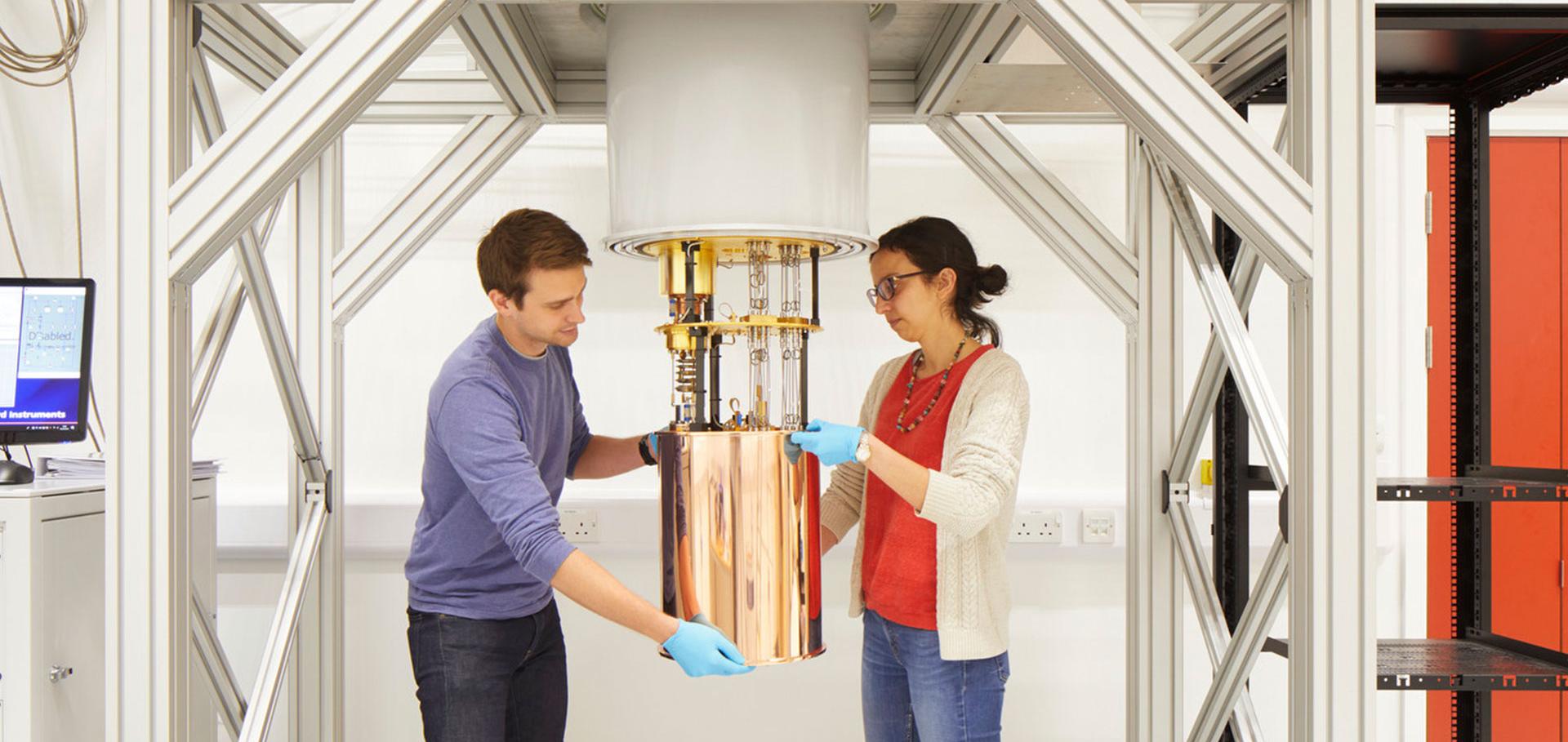
Credit: Jack Hobhouse

Seongrok Seo

Long Term Visitor

Sub department

  • Condensed Matter Physics
seongrok.seo@physics.ox.ac.uk
Robert Hooke Building, room G24
  • About
  • Publications

Determining parameters of metal-halide perovskites using photoluminescence with Bayesian inference

PRX Energy American Physical Society 4:1 (2025) 13001

Authors:

Manuel Kober-Czerny, Akash Dasgupta, Seongrok Seo, Florine Rombach, David McMeekin, Heon Jin, Henry Snaith

Abstract:

In this work, we demonstrate that time-resolved photoluminescence data of metal halide perovskites can be effectively evaluated by combining Bayesian inference with a Markov-chain Monte-Carlo algorithm and a physical model. This approach enables us to infer a high number of parameters that govern the performance of metal halide perovskite-based devices, alongside the probability distributions of those parameters, as well as correlations among all parameters. Via studying a set of halfstacks, comprising electron- and hole-transport materials contacting perovskite thin films, we determine surface recombination velocities at these interfaces with high precision. From the probability distributions of all inferred parameters, we can simulate intensity-dependent photoluminescence quantum efficiency and compare it to experimental data. Finally, we estimate mobility values for vertical charge-carrier transport, which is perpendicular to the plane of the substrate, for all samples using our approach. Since this mobility estimation is derived from charge-carrier diffusion over the length scale of the film thickness and in the vertical direction, it is highly relevant for transport in photovoltaic and light-emitting devices. Our approach of coupling spectroscopic measurements with advanced computational analysis will help speed up scientific research in the field of optoelectronic materials and devices and exemplifies how carefully constructed computational algorithms can derive valuable plurality of information from simple datasets. We expect that our approach can be expanded to a variety of other analysis techniques and that our method will be applicable to other semiconductors.
More details from the publisher
Details from ORA

Uneven Strain Relaxation in Formamidinium Lead Triiodide (FAPbI3) Films upon Aging

ACS Energy Letters American Chemical Society (ACS) 9:7 (2024) 3618-3627

Authors:

Sooeun Shin, Sang-Hyeok Yang, Seongrok Seo, Hyoungmin Park, Urasawadee Amornkitbamrung, Yongjae In, Canjie Wang, Tomoya Nakamura, Atsushi Wakamiya, Young-Min Kim, Hyunjung Shin
More details from the publisher
More details

Understanding the degradation of methylenediammonium and its role in phase-stabilizing formamidinium lead triiodide

Journal of the American Chemical Society American Chemical Society 145:18 (2023) 10275-10284

Authors:

Elisabeth A Duijnstee, Benjamin M Gallant, Philippe Holzhey, Dominik J Kubicki, Silvia Collavini, Bernd K Sturdza, Robin J Nicholas, Harry C Sansom, Joel Smith, Matthias J Gutmann, Santanu Saha, Murali Gedda, Mohamad I Nugraha, Manuel Kober-Czerny, Chelsea Xia, Adam D Wright, Yen-Hung Lin, Alexandra J Ramadan, Andrew Matzen, Esther Y-H Hung, Seongrok Seo, Suer Zhou, Jongchul Lim, Thomas D Anthopoulos, Marina R Filip, Michael B Johnston, Juan Luis Delgado, Henry J Snaith

Abstract:

Formamidinium lead triiodide (FAPbI3) is the leading candidate for single-junction metal–halide perovskite photovoltaics, despite the metastability of this phase. To enhance its ambient-phase stability and produce world-record photovoltaic efficiencies, methylenediammonium dichloride (MDACl2) has been used as an additive in FAPbI3. MDA2+ has been reported as incorporated into the perovskite lattice alongside Cl–. However, the precise function and role of MDA2+ remain uncertain. Here, we grow FAPbI3 single crystals from a solution containing MDACl2 (FAPbI3-M). We demonstrate that FAPbI3-M crystals are stable against transformation to the photoinactive δ-phase for more than one year under ambient conditions. Critically, we reveal that MDA2+ is not the direct cause of the enhanced material stability. Instead, MDA2+ degrades rapidly to produce ammonium and methaniminium, which subsequently oligomerizes to yield hexamethylenetetramine (HMTA). FAPbI3 crystals grown from a solution containing HMTA (FAPbI3-H) replicate the enhanced α-phase stability of FAPbI3-M. However, we further determine that HMTA is unstable in the perovskite precursor solution, where reaction with FA+ is possible, leading instead to the formation of tetrahydrotriazinium (THTZ-H+). By a combination of liquid- and solid-state NMR techniques, we show that THTZ-H+ is selectively incorporated into the bulk of both FAPbI3-M and FAPbI3-H at ∼0.5 mol % and infer that this addition is responsible for the improved α-phase stability.

More details from the publisher
Details from ORA
More details
More details
More details

Pagination

  • First page First
  • Previous page Prev
  • Page 1
  • Current page 2

Footer Menu

  • Contact us
  • Giving to the Dept of Physics
  • Work with us
  • Media

User account menu

  • Log in

Follow us

FIND US

Clarendon Laboratory,

Parks Road,

Oxford,

OX1 3PU

CONTACT US

Tel: +44(0)1865272200

University of Oxfrod logo Department Of Physics text logo
IOP Juno Champion logo Athena Swan Silver Award logo

© University of Oxford - Department of Physics

Cookies | Privacy policy | Accessibility statement

Built by: Versantus

  • Home
  • Research
  • Study
  • Engage
  • Our people
  • News & Comment
  • Events
  • Our facilities & services
  • About us
  • Giving to Physics
  • Current students
  • Staff intranet