Home
Department Of Physics text logo
  • Research
    • Our research
    • Our research groups
    • Our research in action
    • Research funding support
    • Summer internships for undergraduates
  • Study
    • Undergraduates
    • Postgraduates
  • Engage
    • For alumni
    • For business
    • For schools
    • For the public
  • Support
Menu
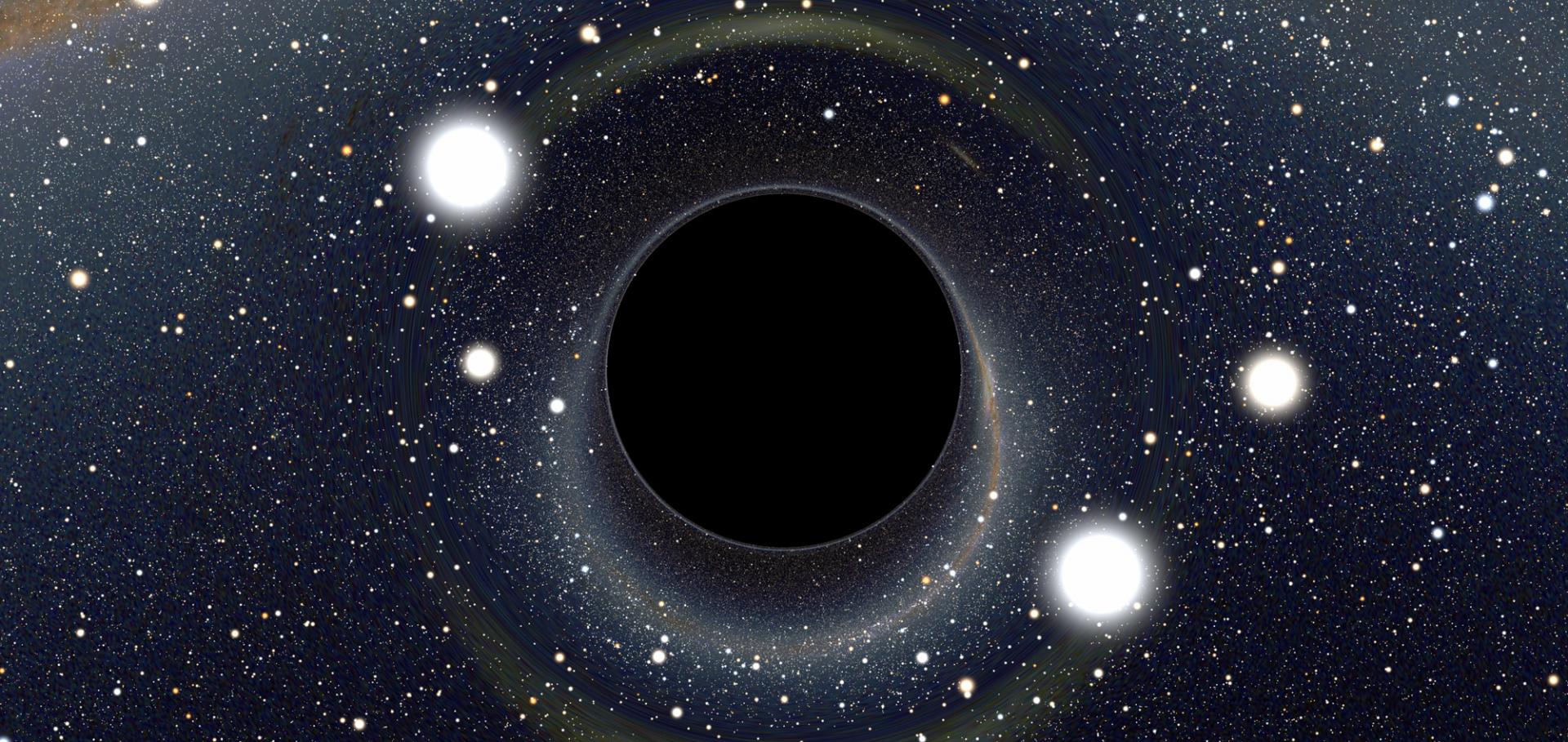
Black Hole

Lensing of space time around a black hole. At Oxford we study black holes observationally and theoretically on all size and time scales - it is some of our core work.

Credit: ALAIN RIAZUELO, IAP/UPMC/CNRS. CLICK HERE TO VIEW MORE IMAGES.

Professor Stephen Smartt CBE FRS MRIA

Professor of Astrophysics

Research theme

  • Astronomy and astrophysics

Sub department

  • Astrophysics

Research groups

  • Hintze Centre for Astrophysical Surveys
  • Pulsars, transients and relativistic astrophysics
  • Rubin-LSST
stephen.smartt@physics.ox.ac.uk
Telephone: 01865273405
Denys Wilkinson Building, room 714
  • About
  • Publications

Revealing the progenitor of SN 2021zby through analysis of the $TESS$ shock-cooling light curve

(2022)

Authors:

Qinan Wang, Patrick Armstrong, Yossef Zenati, Ryan Ridden-Harper, Armin Rest, Iair Arcavi, Charles D Kilpatrick, Ryan J Foley, Brad E Tucker, Chris Lidman, Thomas L Killestein, Melissa Shahbandeh, Joseph P Anderson, Chris Ashall, Jamison Burke, Ting-wan Chen, Kyle A Dalrymple, Kyle W Davis, Michael D Fulton, Lluís Galbany, Mariusz Gromadzki, Nada Ihanec, Jacob E Jencson, David O Jones, Joseph D Lyman, Tomás E Müller-bravo, Megan Newsome, Matt Nicholl, David O'neill, Craig Pellegrino, Sofia Rest, Stephen J Smartt, Ken Smith, Shubham Srivastav, Samaporn Tinyanont, David R Young, Alfredo Zenteno
More details from the publisher

Forbidden hugs in pandemic times

Astronomy & Astrophysics EDP Sciences 667 (2022)

Authors:

Y-Z Cai, A Pastorello, M Fraser, X-F Wang, AV Filippenko, A Reguitti, KC Patra, VP Goranskij, EA Barsukova, TG Brink, N Elias-Rosa, HF Stevance, W Zheng, Y Yang, KE Atapin, S Benetti, TJL de Boer, S Bose, J Burke, R Byrne, E Cappellaro, KC Chambers, W-L Chen, N Emami, H Gao, D Hiramatsu, DA Howell, ME Huber, E Kankare, PL Kelly, R Kotak, T Kravtsov, V Yu Lander, Z-T Li, C-C Lin, P Lundqvist, EA Magnier, EA Malygin, NA Maslennikova, K Matilainen, PA Mazzali, C McCully, J Mo, S Moran, M Newsome, DV Oparin, E Padilla Gonzalez, TM Reynolds, NI Shatsky, SJ Smartt

Abstract:

We present an observational study of the luminous red nova (LRN) AT\,2021biy in the nearby galaxy NGC\,4631. The field of the object was routinely imaged during the pre-eruptive stage by synoptic surveys, but the transient was detected only at a few epochs from $\sim 231$\,days before maximum brightness. The LRN outburst was monitored with unprecedented cadence both photometrically and spectroscopically. AT\,2021biy shows a short-duration blue peak, with a bolometric luminosity of $\sim 1.6 \times 10^{41}$\,erg\,s$^{-1}$, followed by the longest plateau among LRNe to date, with a duration of 210\,days. A late-time hump in the light curve was also observed, possibly produced by a shell-shell collision. AT\,2021biy exhibits the typical spectral evolution of LRNe. Early-time spectra are characterised by a blue continuum and prominent H emission lines. Then, the continuum becomes redder, resembling that of a K-type star with a forest of metal absorption lines during the plateau phase. Finally, late-time spectra show a very red continuum ($T_{\mathrm{BB}} \approx 2050$ K) with molecular features (e.g., TiO) resembling those of M-type stars. Spectropolarimetric analysis indicates that AT\,2021biy has local dust properties similar to those of V838\,Mon in the Milky Way Galaxy. Inspection of archival {\it Hubble Space Telescope} data taken on 2003 August 3 reveals a $\sim 20$\,\msun\ progenitor candidate with log\,$(L/{\rm L}_{\odot}) = 5.0$\,dex and $T_{\rm{eff}} = 5900$\,K at solar metallicity. The above luminosity and colour match those of a luminous yellow supergiant. Most likely, this source is a close binary, with a 17--24\,\msun\ primary component.Comment: 21 pages, 14 figures. Accepted by Astronomy and Astrophysic
More details from the publisher
Details from ORA
More details

A long life of excess: The interacting transient SN 2017hcc

(2022)

Authors:

S Moran, M Fraser, R Kotak, A Pastorello, S Benetti, SJ Brennan, CP Gutiérrez, E Kankare, H Kuncarayakti, S Mattila, TM Reynolds, JP Anderson, PJ Brown, S Campana, KC Chambers, T-W Chen, M Della Valle, M Dennefeld, N Elias-Rosa, L Galbany, FJ Galindo-Guil, M Gromadzki, D Hiramatsu, C Inserra, G Leloudas, TE Müller-Bravo, M Nicholl, A Reguitti, M Shahbandeh, SJ Smartt, L Tartaglia, DR Young
More details from the publisher

Finding high-redshift gamma-ray bursts in tandem near-infrared and optical surveys

(2022)

Authors:

S Campana, G Ghirlanda, R Salvaterra, OA Gonzalez, M Landoni, G Pariani, A Riva5, M Riva, SJ Smartt, NR Tanvir, SD Vergani
More details from the publisher

Finding high-redshift gamma-ray bursts in tandem near-infrared and optical surveys

Nature Astronomy Springer Nature 6:10 (2022) 1101-1104

Authors:

S Campana, G Ghirlanda, R Salvaterra, OA Gonzalez, M Landoni, G Pariani, A Riva, M Riva, SJ Smartt, NR Tanvir, SD Vergani
More details from the publisher

Pagination

  • First page First
  • Previous page Prev
  • …
  • Page 22
  • Page 23
  • Page 24
  • Page 25
  • Current page 26
  • Page 27
  • Page 28
  • Page 29
  • Page 30
  • …
  • Next page Next
  • Last page Last

Footer Menu

  • Contact us
  • Giving to the Dept of Physics
  • Work with us
  • Media

User account menu

  • Log in

Follow us

FIND US

Clarendon Laboratory,

Parks Road,

Oxford,

OX1 3PU

CONTACT US

Tel: +44(0)1865272200

University of Oxfrod logo Department Of Physics text logo
IOP Juno Champion logo Athena Swan Silver Award logo

© University of Oxford - Department of Physics

Cookies | Privacy policy | Accessibility statement

Built by: Versantus

  • Home
  • Research
  • Study
  • Engage
  • Our people
  • News & Comment
  • Events
  • Our facilities & services
  • About us
  • Giving to Physics
  • Current students
  • Staff intranet