Home
Department Of Physics text logo
  • Research
    • Our research
    • Our research groups
    • Our research in action
    • Research funding support
    • Summer internships for undergraduates
  • Study
    • Undergraduates
    • Postgraduates
  • Engage
    • For alumni
    • For business
    • For schools
    • For the public
  • Support
Menu
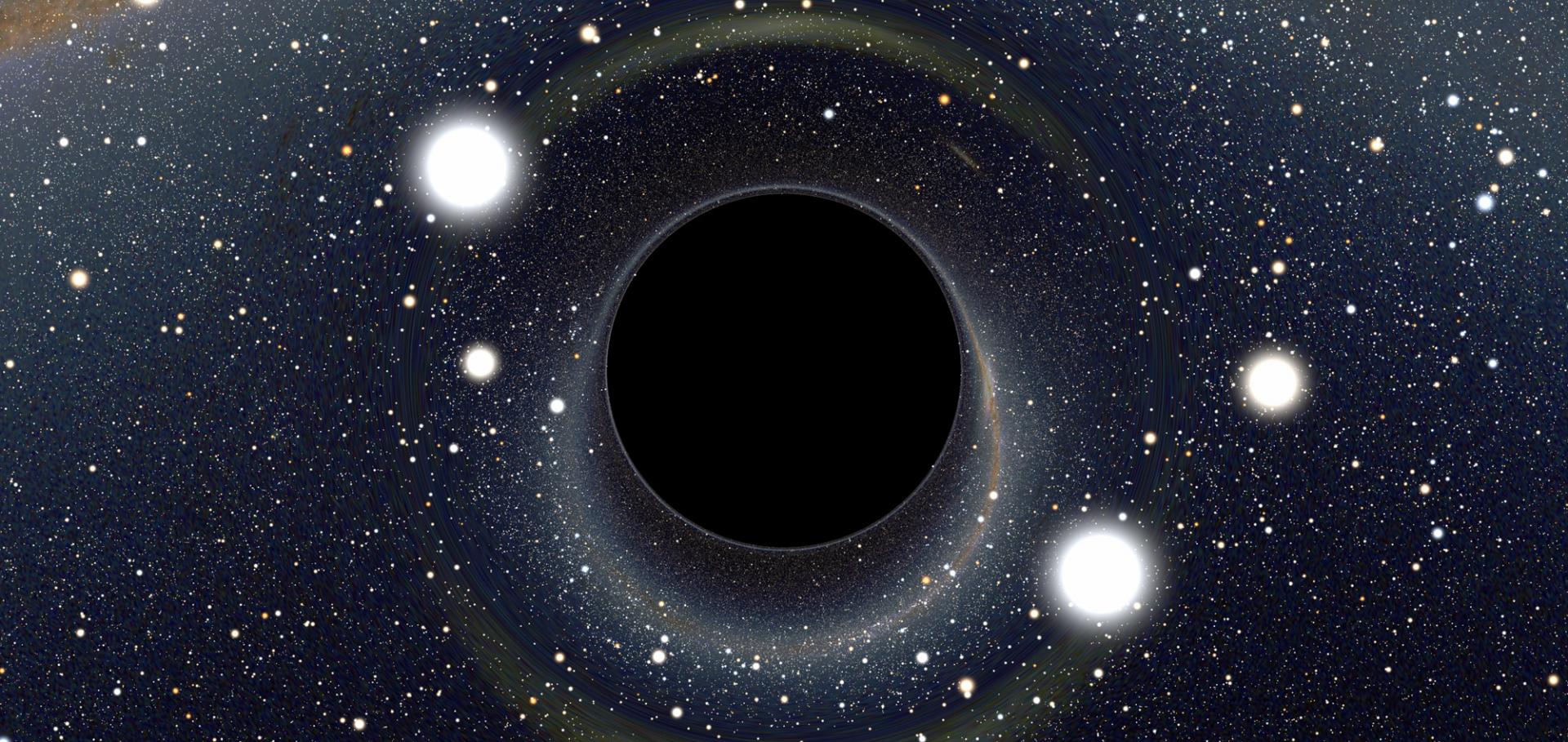
Black Hole

Lensing of space time around a black hole. At Oxford we study black holes observationally and theoretically on all size and time scales - it is some of our core work.

Credit: ALAIN RIAZUELO, IAP/UPMC/CNRS. CLICK HERE TO VIEW MORE IMAGES.

Professor Stephen Smartt CBE FRS MRIA

Professor of Astrophysics

Research theme

  • Astronomy and astrophysics

Sub department

  • Astrophysics

Research groups

  • Hintze Centre for Astrophysical Surveys
  • Pulsars, transients and relativistic astrophysics
  • Rubin-LSST
stephen.smartt@physics.ox.ac.uk
Telephone: 01865273405
Denys Wilkinson Building, room 714
  • About
  • Publications

The Luminous Type Ia Supernova 2022ilv and Its Early Excess Emission

The Astrophysical Journal Letters American Astronomical Society 943:2 (2023) L20-L20

Authors:

Shubham Srivastav, SJ Smartt, ME Huber, G Dimitriadis, KC Chambers, Michael D Fulton, Thomas Moore, FP Callan, James H Gillanders, K Maguire, M Nicholl, Luke J Shingles, SA Sim, KW Smith, JP Anderson, Thomas de Boer, Ting-Wan Chen, Hua Gao, DR Young

Abstract:

We present observations and analysis of the host-less and luminous type Ia supernova 2022ilv, illustrating it is part of the 2003fg-like family, often referred to as super-Chandrasekhar (Ia-SC) explosions. The ATLAS light curve shows evidence of a short-lived, pulse-like early excess, similar to that detected in another luminous type Ia supernova (SN 2020hvf). The light curve is broad and the early spectra are remarkably similar to SN 2009dc. Adopting a redshift of $z=0.026 \pm 0.005$ for SN 2022ilv based on spectral matching, our model light curve requires a large $^{56}$Ni mass in the range $0.7-1.5$ M$_{\odot}$, and a large ejecta mass in the range $1.6-2.3$ M$_{\odot}$. The early excess can be explained by fast-moving SN ejecta interacting with a thin, dense shell of circumstellar material close to the progenitor ($\sim 10^{13}$ cm), a few hours after the explosion. This may be realised in a double-degenerate scenario, wherein a white dwarf merger is preceded by ejection of a small amount ($\sim 10^{-3}-10^{-2}$ M$_{\odot}$) of hydrogen and helium-poor tidally stripped material. A deep pre-explosion Pan-STARRS1 stack indicates no host galaxy to a limiting magnitude of $r \sim 24.5$. This implies a surprisingly faint limit for any host of $M_r \gtrsim -11$, providing further evidence that these types of explosion occur predominantly in low-metallicity environments.Comment: Accepted to ApJL after minor revisio
More details from the publisher
Details from ORA
More details

Revealing the Progenitor of SN 2021zby through Analysis of the TESS Shock-cooling Light Curve

The Astrophysical Journal Letters American Astronomical Society 943:2 (2023) L15-L15

Authors:

Qinan Wang, Patrick Armstrong, Yossef Zenati, Ryan Ridden-Harper, Armin Rest, Iair Arcavi, Charles D Kilpatrick, Ryan J Foley, Brad E Tucker, Chris Lidman, Thomas L Killestein, Melissa Shahbandeh, Joseph P Anderson, Rodrigo Angulo, Chris Ashall, Jamison Burke, Ting-Wan Chen, Sophie von Coelln, Kyle A Dalrymple, Kyle W Davis, Michael D Fulton, Lluís Galbany, Estefania Padilla Gonzalez, Bore Gao, Mariusz Gromadzki, D Andrew Howell, Nada Ihanec, Jacob E Jencson, David O Jones, Joseph D Lyman, Curtis McCully, Tomás E Müller-Bravo, Megan Newsome, Matt Nicholl, David O’Neill, Craig Pellegrino, Sofia Rest, Stephen J Smartt, Ken Smith, Shubham Srivastav, Giacomo Terreran, Samaporn Tinyanont, David R Young, Alfredo Zenteno

Abstract:

Abstract We present early observations and analysis of the double-peaked Type IIb supernova (SN IIb) SN 2021zby. TESS captured the prominent early shock-cooling peak of SN 2021zby within the first ∼10 days after explosion with a 30 minute cadence. We present optical and near-infrared spectral series of SN 2021zby, including three spectra during the shock-cooling phase. Using a multiband model fit, we find that the inferred properties of its progenitor are consistent with a red supergiant or yellow supergiant, with an envelope mass of ∼0.30–0.65 M ⊙ and an envelope radius of ∼120–300 R ⊙. These inferred progenitor properties are similar to those of other SNe IIb with a double-peaked feature, such as SNe 1993J, 2011dh, 2016gkg, and 2017jgh. This study further validates the importance of the high cadence and early coverage in resolving the shape of the shock-cooling light curve, while the multiband observations, particularly UV, are also necessary to fully constrain the progenitor properties.
More details from the publisher
Details from ORA
More details

Day-timescale variability in the radio light curve of the Tidal Disruption Event AT2022cmc: confirmation of a highly relativistic outflow

(2023)

Authors:

L Rhodes, JS Bright, R Fender, I Sfaradi, DA Green, A Horesh, K Mooley, D Pasham, S Smartt, DJ Titterington, AJ van der Horst, DRA Williams
More details from the publisher
Details from ArXiV

The optical light curve of GRB 221009A: the afterglow and the emerging supernova

(2023)

Authors:

MD Fulton, SJ Smartt, L Rhodes, ME Huber, AV Villar, T Moore, S Srivastav, ASB Schultz, KC Chambers, L Izzo, J Hjorth, T-W Chen, M Nicholl, RJ Foley, A Rest, KW Smith, DR Young, SA Sim, J Bright, Y Zenati, T de Boer, J Bulger, J Fairlamb, H Gao, C-C Lin, T Lowe, EA Magnier, IA Smith, R Wainscoat, DA Coulter, DO Jones, CD Kilpatrick, P McGill, E Ramirez-Ruiz, K-S Lee, G Narayan, V Ramakrishnan, R Ridden-Harper, A Singh, Q Wang, AKH Kong, C-C Ngeow, Y-C Pan, S Yang, KW Davis, AL Piro, C Rojas-Bravo, J Sommer, SK Yadavalli
More details from the publisher

The Birth of a Relativistic Jet Following the Disruption of a Star by a Cosmological Black Hole

Nature Astronomy Springer Nature 7:1 (2023) 88-104

Authors:

Dheeraj R Pasham, Matteo Lucchini, Tanmoy Laskar, Benjamin P Gompertz, Shubham Srivastav, Matt Nicholl, Stephen J Smartt, James CA Miller-Jones, Kate D Alexander, Rob Fender, Graham P Smith, M Fulton, Gulab Dewangan, Keith Gendreau, Eric R Coughlin, Lauren Rhodes, Assaf Horesh, Sjoert van Velzen, Itai Sfaradi, Muryel Guolo, Noel Castro Segura, Aysha Aamer, Joseph P Anderson, Iair Arcavi, Seán J Brennan, Kenneth Chambers, Panos Charalampopoulos, Ting-Wan Chen, A Clocchiatti, Thomas de Boer, Michel Dennefeld, Elizabeth Ferrara, Lluís Galbany, Hua Gao, James H Gillanders, Adelle Goodwin, Mariusz Gromadzki, M Huber, Peter G Jonker, Manasvita Joshi, Erin Kara, Thomas L Killestein, Peter Kosec, Daniel Kocevski, Giorgos Leloudas, Chien-Cheng Lin, Raffaella Margutti, Seppo Mattila, Thomas Moore, Tomás Müller-Bravo, Chow-Choong Ngeow, Samantha Oates, Francesca Onori, Yen-Chen Pan, Miguel Perez-Torres, Priyanka Rani, Ronald Remillard, Evan J Ridley, Steve Schulze, Xinyue Sheng, Luke Shingles, Ken W Smith, James F Steiner, Richard Wainscoat, Thomas Wevers, Sheng Yang
More details from the publisher
More details

Pagination

  • First page First
  • Previous page Prev
  • …
  • Page 21
  • Page 22
  • Page 23
  • Page 24
  • Current page 25
  • Page 26
  • Page 27
  • Page 28
  • Page 29
  • …
  • Next page Next
  • Last page Last

Footer Menu

  • Contact us
  • Giving to the Dept of Physics
  • Work with us
  • Media

User account menu

  • Log in

Follow us

FIND US

Clarendon Laboratory,

Parks Road,

Oxford,

OX1 3PU

CONTACT US

Tel: +44(0)1865272200

University of Oxfrod logo Department Of Physics text logo
IOP Juno Champion logo Athena Swan Silver Award logo

© University of Oxford - Department of Physics

Cookies | Privacy policy | Accessibility statement

Built by: Versantus

  • Home
  • Research
  • Study
  • Engage
  • Our people
  • News & Comment
  • Events
  • Our facilities & services
  • About us
  • Giving to Physics
  • Current students
  • Staff intranet