Home
Department Of Physics text logo
  • Research
    • Our research
    • Our research groups
    • Our research in action
    • Research funding support
    • Summer internships for undergraduates
  • Study
    • Undergraduates
    • Postgraduates
  • Engage
    • For alumni
    • For business
    • For schools
    • For the public
  • Support
Menu
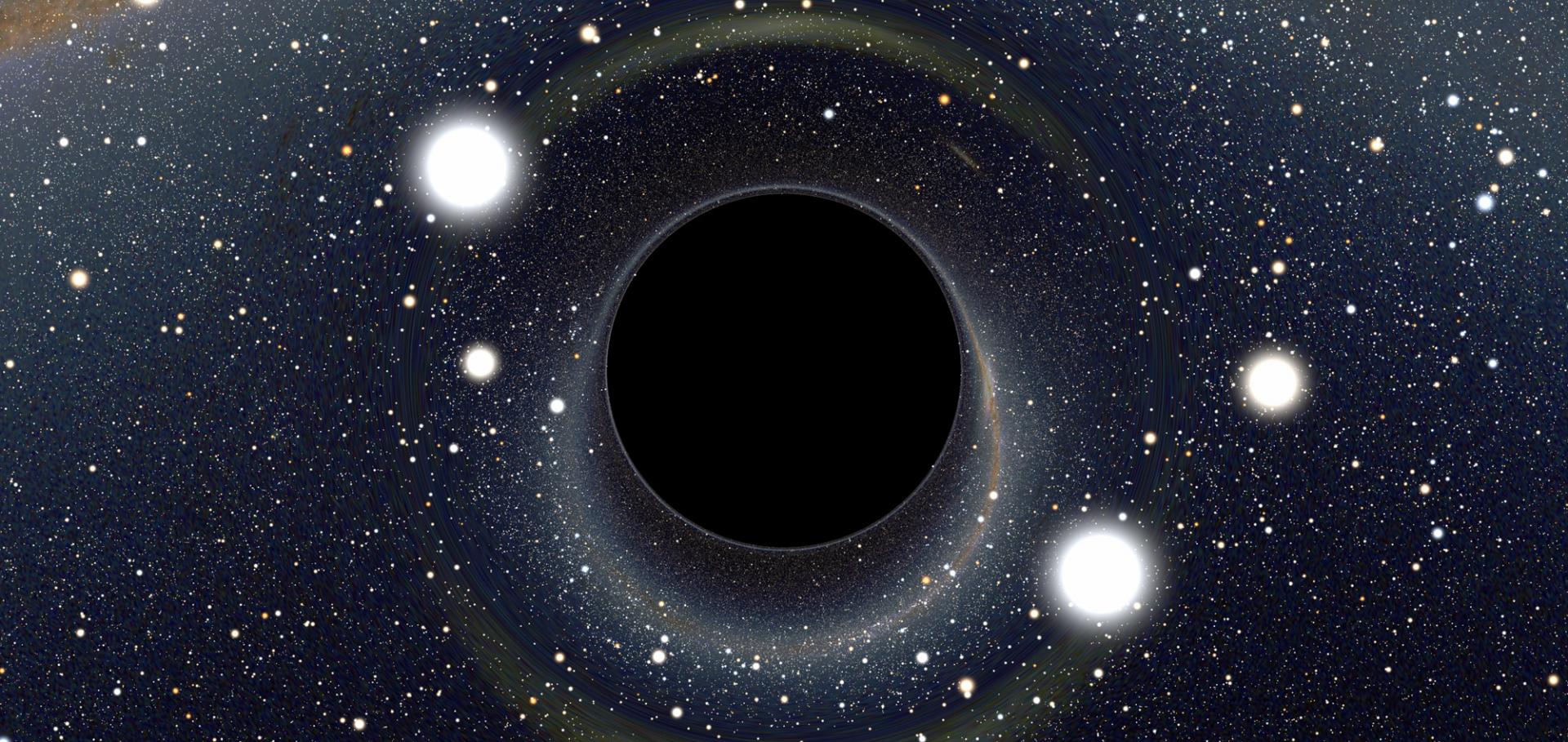
Black Hole

Lensing of space time around a black hole. At Oxford we study black holes observationally and theoretically on all size and time scales - it is some of our core work.

Credit: ALAIN RIAZUELO, IAP/UPMC/CNRS. CLICK HERE TO VIEW MORE IMAGES.

Professor Stephen Smartt CBE FRS MRIA

Professor of Astrophysics

Research theme

  • Astronomy and astrophysics

Sub department

  • Astrophysics

Research groups

  • Hintze Centre for Astrophysical Surveys
  • Pulsars, transients and relativistic astrophysics
  • Rubin-LSST
stephen.smartt@physics.ox.ac.uk
Telephone: 01865273405
Denys Wilkinson Building, room 714
  • About
  • Publications

Observational constraints on the optical and near-infrared emission from the neutron star–black hole binary merger candidate S190814bv

Astronomy & Astrophysics EDP Sciences 643 (2020) A113-A113

Authors:

K Ackley, L Amati, C Barbieri, FE Bauer, S Benetti, MG Bernardini, K Bhirombhakdi, MT Botticella, M Branchesi, E Brocato, SH Bruun, M Bulla, S Campana, E Cappellaro, AJ Castro-Tirado, KC Chambers, S Chaty, T-W Chen, R Ciolfi, A Coleiro, CM Copperwheat, S Covino, R Cutter, F D’Ammando, P D’Avanzo, G De Cesare, V D’Elia, M Della Valle, L Denneau, M De Pasquale, VS Dhillon, MJ Dyer, N Elias-Rosa, PA Evans, RAJ Eyles-Ferris, A Fiore, M Fraser, AS Fruchter, JPU Fynbo, L Galbany, C Gall, DK Galloway, FI Getman, G Ghirlanda, JH Gillanders, A Gomboc, BP Gompertz, C González-Fernández, S González-Gaitán, A Grado

Abstract:

On 2019 August 14, the LIGO and Virgo interferometers detected a high-significance event labelled S190814bv. Preliminary analysis of the GW data suggests that the event was likely due to the merger of a compact binary system formed by a BH and a NS. ElectromagNetic counterparts of GRAvitational wave sources at the VEry Large Telescope (ENGRAVE) collaboration members carried out an intensive multi-epoch, multi-instrument observational campaign to identify the possible optical/near infrared counterpart of the event. In addition, the ATLAS, GOTO, GRAWITA-VST, Pan-STARRS and VINROUGE projects also carried out a search on this event. Our observations allow us to place limits on the presence of any counterpart and discuss the implications for the kilonova (KN) possibly generated by this NS-BH merger, and for the strategy of future searches. Altogether, our observations allow us to exclude a KN with large ejecta mass M> 0.1Msolar to a high (>90%) confidence, and we can exclude much smaller masses in a subsample of our observations. This disfavours the tidal disruption of the neutron star during the merger. Despite the sensitive instruments involved in the campaign, given the distance of S190814bv we could not reach sufficiently deep limits to constrain a KN comparable in luminosity to AT 2017gfo on a large fraction of the localisation probability. This suggests that future (likely common) events at a few hundreds Mpc will be detected only by large facilities with both high sensitivity and large field of view. Galaxy-targeted observations can reach the needed depth over a relevant portion of the localisation probability with a smaller investment of resources, but the number of galaxies to be targeted in order to get a fairly complete coverage is large, even in the case of a localisation as good as that of this event
More details from the publisher
Details from ORA
More details

The low-luminosity type II SN\,2016aqf: A well-monitored spectral evolution of the Ni/Fe abundance ratio

(2020)

Authors:

Tomás E Müller-Bravo, Claudia P Gutiérrez, Mark Sullivan, Anders Jerkstrand, Joseph P Anderson, Santiago González-Gaitán, Jesper Sollerman, Iair Arcavi, Jamison Burke, Lluís Galbany, Avishay Gal-Yam, Mariusz Gromadzki, Daichi Hiramatsu, Griffin Hosseinzadeh, D Andrew Howell, Cosimo Inserra, Erki Kankare, Alexandra Kozyreva, Curtis McCully, Matt Nicholl, Stephen Smartt, Stefano Valenti, Dave R Young
More details from the publisher

Design and Operation of the ATLAS Transient Science Server

Publications of the Astronomical Society of the Pacific IOP Publishing 132:1014 (2020) 085002-085002

Authors:

KW Smith, SJ Smartt, DR Young, JL Tonry, L Denneau, H Flewelling, AN Heinze, HJ Weiland, B Stalder, A Rest, CW Stubbs, JP Anderson, T-W Chen, P Clark, A Do, F Förster, M Fulton, J Gillanders, OR McBrien, D O’Neill, S Srivastav, DE Wright

Abstract:

Core-collapse supernovae (CCSNe) are the bright explosions of massive stars. During the explosion heavy elements are produced by nuclear burning. One of these products is 56Ni that radioactively decays into 56Co. The explosion energy and the produced 56Ni and its product 56Co are what powers the light curves of classical supernovae (SNe). Stripped envelope (SE) SNe have lost their hydrogen (H) and in some cases, helium (He) envelopes through mass loss at some point in their lives. These SE SNe are known to produce SNe of types IIb (weak H), Ib (He-rich), Ic (He-poor), and Ic-BL (He-poor broad lines). Type IIn SNe, on the other hand, are SNe that interact with circumstellar medium (CSM) around the progenitor. The CSM is thought to be caused by the progenitor’s mass loss. The mechanism of the mass loss for these can happen in a variety of ways. All stars have mass loss through stellar winds, but in some cases, it is not enough to produce interaction that would produce a type IIn. The mass loss can also happen because of pair instability pulsations, eruptions, or binary effects. The mass loss can be studied by analysing the observational properties of a SN and understanding the mass loss might shed light on what kind of progenitor produced the SN. In this thesis, photometric and spectroscopic data of SN 2017dio are analysed. The photometric data are used to study the explosion epoch, light curves, and color curves of SN 2017dio and it is compared with four other SNe. The spectroscopic data are used to verify the classification of SN 2017dio, to study the spectral evolution, and to discuss the possible CSM properties and progenitor scenario. The findings indicate that SN 2017dio is a SN of type Ic-BL interacting with H-rich CSM. Both spectroscopic and photometric analysis support the theory of the CSM not being close to the explosion site and the calculated mass loss rate 0.04M⊙/year indicates that the progenitor must have experienced massive mass loss periods in the decade before its explosion
More details from the publisher
Details from ORA
More details

PS15cey and PS17cke: prospective candidates from the Pan-STARRS Search for Kilonovae

(2020)

Authors:

Owen R McBrien, Stephen J Smartt, Mark E Huber, Armin Rest, Ken C Chambers, Claudio Barbieri, Mattia Bulla, Saurabh Jha, Mariusz Gromadzki, Shubham Srivastav, Ken W Smith, David R Young, Shaun McLaughlin, Cosimo Inserra, Matt Nicholl, Morgan Fraser, Kate Maguire, Ting-Wan Chen, Thomas Wevers, Joseph P Anderson, Tomás E Müller-Bravo, Felipe Olivares E., Erkki Kankare, Avishay Gal-Yam, Christopher Waters
More details from the publisher

Observation of inverse Compton emission from a long $\gamma$-ray burst

(2020)

Authors:

VA Acciari, S Ansoldi, LA Antonelli, A Arbet Engels, D Baack, A Babić, B Banerjee, U Barres de Almeida, JA Barrio, J Becerra González, W Bednarek, L Bellizzi, E Bernardini, A Berti, J Besenrieder, W Bhattacharyya, C Bigongiari, A Biland, O Blanch, G Bonnoli, Ž Bošnjak, G Busetto, R Carosi, G Ceribella, Y Chai, A Chilingaryan, S Cikota, SM Colak, U Colin, E Colombo, JL Contreras, J Cortina, S Covino, V D'Elia, P Da Vela, F Dazzi, A De Angelis, B De Lotto, M Delfino, J Delgado, D Depaoli, F Di Pierro, L Di Venere, E Do Souto Espiñeira, D Dominis Prester, A Donini, D Dorner, M Doro, D Elsaesser, V Fallah Ramazani, A Fattorini, G Ferrara, D Fidalgo, L Foffano, MV Fonseca, L Font, C Fruck, S Fukami, RJ García López, M Garczarczyk, S Gasparyan, M Gaug, N Giglietto, F Giordano, N Godinović, D Green, D Guberman, D Hadasch, A Hahn, J Herrera, J Hoang, D Hrupec, M Hütten, T Inada, S Inoue, K Ishio, Y Iwamura, L Jouvin, D Kerszberg, H Kubo, J Kushida, A Lamastra, D Lelas, F Leone, E Lindfors, S Lombardi, F Longo, M López, R López-Coto, A López-Oramas, S Loporchio, B Machado de Oliveira Fraga, C Maggio, P Majumdar, M Makariev, M Mallamaci, G Maneva, M Manganaro, K Mannheim, L Maraschi, M Mariotti, M Martínez, D Mazin, S Mićanović, D Miceli, M Minev, JM Miranda, R Mirzoyan, E Molina, A Moralejo, D Morcuende, V Moreno, E Moretti, P Munar-Adrover, V Neustroev, C Nigro, K Nilsson, D Ninci, K Nishijima, K Noda, L Nogués, S Nozaki, S Paiano, M Palatiello, D Paneque, R Paoletti, JM Paredes, P Peñil, M Peresano, M Persic, PG Prada Moroni, E Prandini, I Puljak, W Rhode, M Ribó, J Rico, C Righi, A Rugliancich, L Saha, N Sahakyan, T Saito, S Sakurai, K Satalecka, K Schmidt, T Schweizer, J Sitarek, I Šnidarić, D Sobczynska, A Somero, A Stamerra, D Strom, M Strzys, Y Suda, T Surić, M Takahashi, F Tavecchio, P Temnikov, T Terzić, M Teshima, N Torres-Albà, L Tosti, V Vagelli, J van Scherpenberg, G Vanzo, M Vazquez Acosta, CF Vigorito, V Vitale, I Vovk, M Will, D Zarić, L Nava, P Veres, PN Bhat, MS Briggs, WH Cleveland, R Hamburg, CM Hui, B Mailyan, RD Preece, O Roberts, A von Kienlin, CA Wilson-Hodge, D Kocevski, M Arimoto, D Tak, K Asano, M Axelsson, G Barbiellini, E Bissaldi, F Fana Dirirsa, R Gill, J Granot, J McEnery, S Razzaque, F Piron, JL Racusin, DJ Thompson, S Campana, MG Bernardini, NPM Kuin, MH Siegel, S Bradley Cenko, P O'Brien, M Capalbi, A D'Aì, M De Pasquale, J Gropp, N Klingler, JP Osborne, M Perri, R Starling, G Tagliaferri, A Tohuvavohu, A Ursi, M Tavani, M Cardillo, C Casentini, G Piano, Y Evangelista, F Verrecchia, C Pittori, F Lucarelli, A Bulgarelli, N Parmiggiani, GE Anderson, JP Anderson, G Bernardi, J Bolmer, MD Caballero-García, IM Carrasco, A Castellón, N Castro Segura, AJ Castro-Tirado, SV Cherukuri, AM Cockeram, P D'Avanzo, A Di Dato, R Diretse, RP Fender, E Fernández-García, JPU Fynbo, AS Fruchter, J Greiner, M Gromadzki, KE Heintz, I Heywood, AJ van der Horst, Y-D Hu, C Inserra, L Izzo, V Jaiswal, P Jakobsson, J Japelj, E Kankare, DA Kann, C Kouveliotou, S Klose, AJ Levan, XY Li, S Lotti, K Maguire, DB Malesani, I Manulis, M Marongiu, S Martin, A Melandri, M Michałowski, JCA Miller-Jones, K Misra, A Moin, KP Mooley, S Nasri, M Nicholl, A Noschese, G Novara, SB Pandey, E Peretti, CJ Pérez del Pulgar, MA Pérez-Torres, DA Perley, L Piro, F Ragosta, L Resmi, R Ricci, A Rossi, R Sánchez-Ramírez, J Selsing, S Schulze, SJ Smartt, IA Smith, VV Sokolov, J Stevens, NR Tanvir, CC Thóne, A Tiengo, E Tremou, E Troja, A de Ugarte Postigo, SD Vergani, M Wieringa, PA Woudt, D Xu, O Yaron, DR Young
More details from the publisher

Pagination

  • First page First
  • Previous page Prev
  • …
  • Page 41
  • Page 42
  • Page 43
  • Page 44
  • Current page 45
  • Page 46
  • Page 47
  • Page 48
  • Page 49
  • …
  • Next page Next
  • Last page Last

Footer Menu

  • Contact us
  • Giving to the Dept of Physics
  • Work with us
  • Media

User account menu

  • Log in

Follow us

FIND US

Clarendon Laboratory,

Parks Road,

Oxford,

OX1 3PU

CONTACT US

Tel: +44(0)1865272200

University of Oxfrod logo Department Of Physics text logo
IOP Juno Champion logo Athena Swan Silver Award logo

© University of Oxford - Department of Physics

Cookies | Privacy policy | Accessibility statement

Built by: Versantus

  • Home
  • Research
  • Study
  • Engage
  • Our people
  • News & Comment
  • Events
  • Our facilities & services
  • About us
  • Giving to Physics
  • Current students
  • Staff intranet