Home
Department Of Physics text logo
  • Research
    • Our research
    • Our research groups
    • Our research in action
    • Research funding support
    • Summer internships for undergraduates
  • Study
    • Undergraduates
    • Postgraduates
  • Engage
    • For alumni
    • For business
    • For schools
    • For the public
  • Support
Menu
CMP
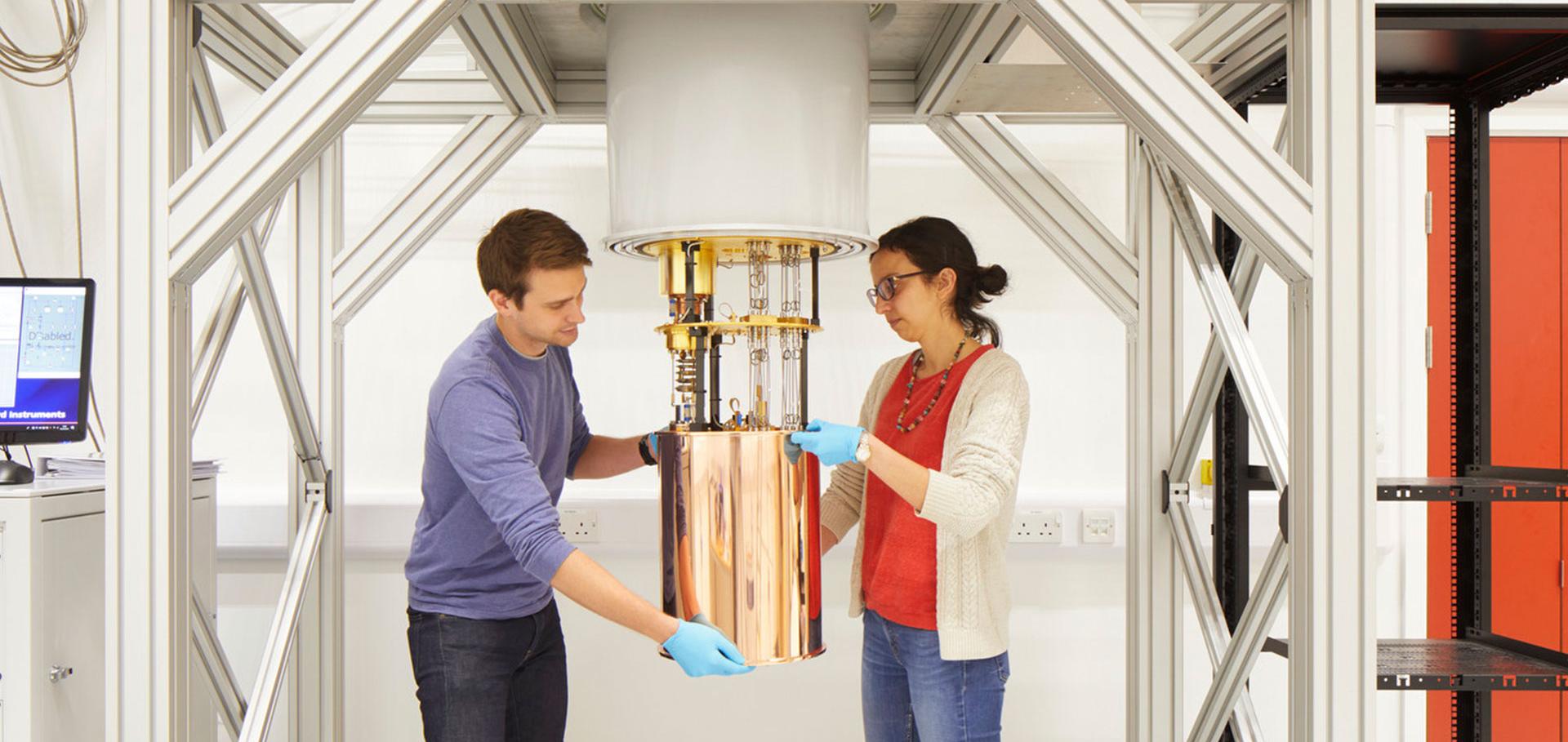
Credit: Jack Hobhouse

Prof Henry Snaith FRS

Professor of Physics

Sub department

  • Condensed Matter Physics

Research groups

  • Photovoltaic & Optoelectronic Device Group
Henry.Snaith@physics.ox.ac.uk
Robert Hooke Building, room G21
  • About
  • Publications

Halide segregation in mixed-halide perovskites: influence of A-site cations

ACS Energy Letters American Chemical Society 6:2 (2021) 799-808

Authors:

Alexander Knight, Anna Juliane Borchert, Robert DJ Oliver, Jay Patel, Paolo G Radaelli, Henry Snaith, Michael B Johnston, Laura M Herz

Abstract:

Mixed-halide perovskites offer bandgap tunability essential for multijunction solar cells; however, a detrimental halide segregation under light is often observed. Here we combine simultaneous in situ photoluminescence and X-ray diffraction measurements to demonstrate clear differences in compositional and optoelectronic changes associated with halide segregation in MAPb(Br0.5I0.5)3 and FA0.83Cs0.17Pb(Br0.4I0.6)3 films. We report evidence for low-barrier ionic pathways in MAPb(Br0.5I0.5)3, which allow for the rearrangement of halide ions in localized volumes of perovskite without significant compositional changes to the bulk material. In contrast, FA0.83Cs0.17Pb(Br0.4I0.6)3 lacks such low-barrier ionic pathways and is, consequently, more stable against halide segregation. However, under prolonged illumination, it exhibits a considerable ionic rearrangement throughout the bulk material, which may be triggered by an initial demixing of A-site cations, altering the composition of the bulk perovskite and reducing its stability against halide segregation. Our work elucidates links between composition, ionic pathways, and halide segregation, and it facilitates the future engineering of phase-stable mixed-halide perovskites.
More details from the publisher
Details from ORA
More details
More details

Understanding Dark Current-Voltage Characteristics in Metal-Halide Perovskite Single Crystals

Physical Review Applied American Physical Society (APS) 15:1 (2021) 014006

Authors:

Elisabeth A Duijnstee, Vincent M Le Corre, Michael B Johnston, L Jan Anton Koster, Jongchul Lim, Henry J Snaith
More details from the publisher

Observation of Charge Generation via Photoinduced Stark Effect in Mixed-Cation Lead Bromide Perovskite Thin Films

The Journal of Physical Chemistry Letters American Chemical Society (ACS) 11:23 (2020) 10081-10087

Authors:

Nhu L Tran, Madeline H Elkins, David P McMeekin, Henry J Snaith, Gregory D Scholes
More details from the publisher
More details
More details

Time-Resolved Changes in Dielectric Constant of Metal Halide Perovskites under Illumination

Journal of the American Chemical Society American Chemical Society (ACS) 142:47 (2020) 19799-19803

Authors:

Min Ji Hong, Liangdong Zhu, Cheng Chen, Longteng Tang, Yen-Hung Lin, Wen Li, Rose Johnson, Shirsopratim Chattopadhyay, Henry J Snaith, Chong Fang, John G Labram
More details from the publisher
More details
More details

Dimethylammonium: An A‐site Cation for Modifying CsPbI3

Solar RRL Wiley (2020)

Authors:

Ashley R Marshall, Harry C Sansom, Melissa M McCarthy, Jonathan H Warby, Olivia J Ashton, Bernard Wenger, Henry J Snaith

Abstract:

All‐inorganic perovskite materials are attractive alternatives to organic‐inorganic perovskites because of their potential for higher thermal stability. While CsPbI3 is compositionally stable under elevated temperatures, the cubic perovskite α‐phase is thermodynamically stable only at >330°C and the low‐temperature perovskite γ−phase is metastable and highly susceptible to non‐perovskite δ‐phase conversion in moisture. Many methods have been reported which show that incorporation of acid (aqueous HI) or “HPbI3” – recently shown to be dimethylammonium lead iodide (DMAPbI3) – lower the annealing temperature required to produce the black, perovskite phase of CsPbI3. The optical and crystallographic data presented here show that DMA can successfully incorporate as an A‐site cation to replace Cs in the CsPbI3 perovskite material. This describes the stabilization and lower phase transition temperature reported in the literature when HI or HPbI3 are used as precursors for CsPbI3. The Cs‐DMA alloy only forms a pure‐phase material up to ∽25% DMA; at higher concentrations the CsPbI3 and DMAPbI3 begin to phase segregate. These alloyed materials are more stable to moisture than neat CsPbI3, but do not represent a fully inorganic perovskite material.
More details from the publisher
Details from ORA
More details

Pagination

  • First page First
  • Previous page Prev
  • …
  • Page 39
  • Page 40
  • Page 41
  • Page 42
  • Current page 43
  • Page 44
  • Page 45
  • Page 46
  • Page 47
  • …
  • Next page Next
  • Last page Last

Footer Menu

  • Contact us
  • Giving to the Dept of Physics
  • Work with us
  • Media

User account menu

  • Log in

Follow us

FIND US

Clarendon Laboratory,

Parks Road,

Oxford,

OX1 3PU

CONTACT US

Tel: +44(0)1865272200

University of Oxfrod logo Department Of Physics text logo
IOP Juno Champion logo Athena Swan Silver Award logo

© University of Oxford - Department of Physics

Cookies | Privacy policy | Accessibility statement

Built by: Versantus

  • Home
  • Research
  • Study
  • Engage
  • Our people
  • News & Comment
  • Events
  • Our facilities & services
  • About us
  • Giving to Physics
  • Current students
  • Staff intranet