Home
Department Of Physics text logo
  • Research
    • Our research
    • Our research groups
    • Our research in action
    • Research funding support
    • Summer internships for undergraduates
  • Study
    • Undergraduates
    • Postgraduates
  • Engage
    • For alumni
    • For business
    • For schools
    • For the public
  • Support
Menu
CMP
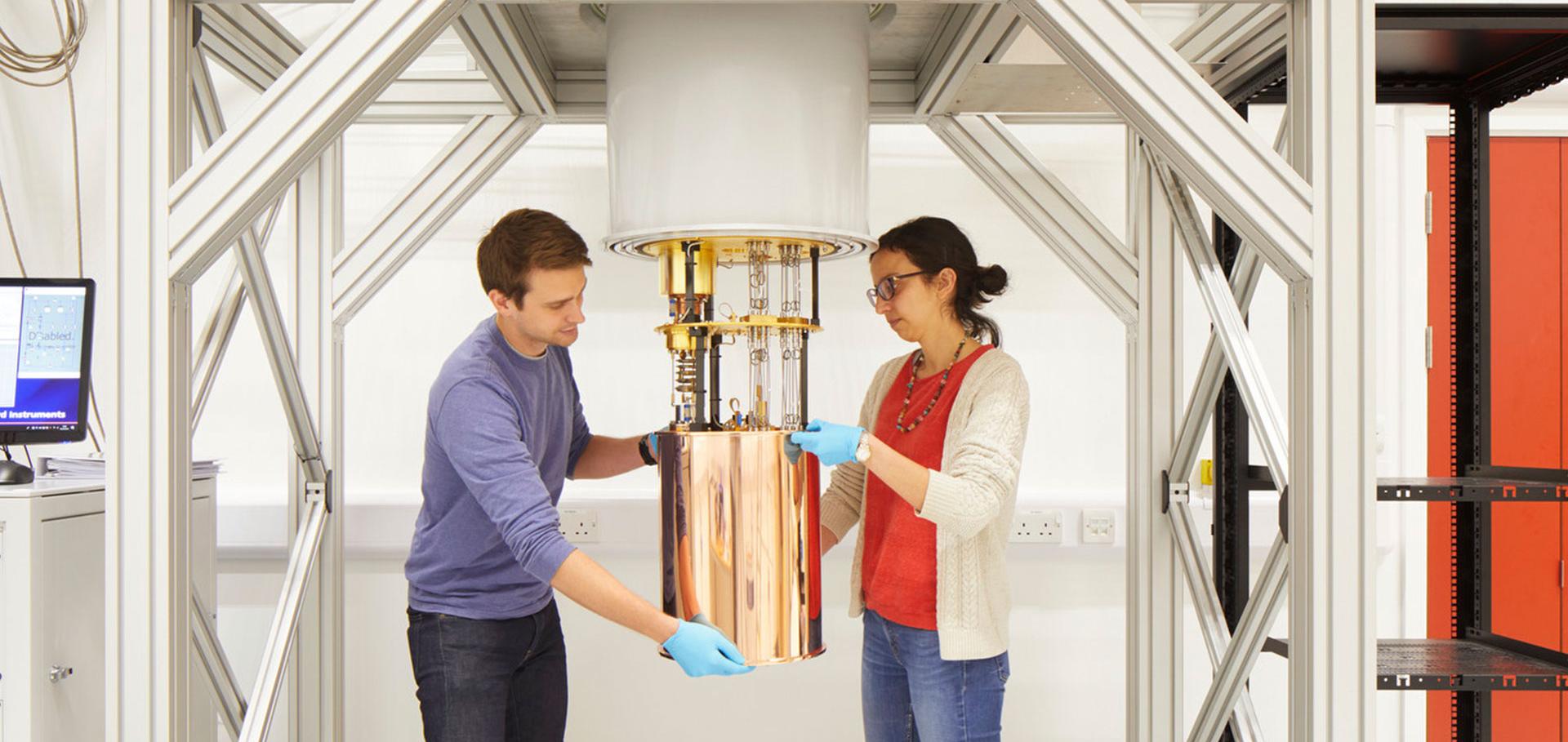
Credit: Jack Hobhouse

Prof Henry Snaith FRS

Professor of Physics

Sub department

  • Condensed Matter Physics

Research groups

  • Photovoltaic & Optoelectronic Device Group
Henry.Snaith@physics.ox.ac.uk
Robert Hooke Building, room G21
  • About
  • Publications

Cs2InAgCl6: A new lead-free halide double perovskite with direct band gap.

Journal of Physical Chemistry Letters American Chemical Society 2017:8 (2017) 772-778

Authors:

George Volonakis, Amir A Haghighirad, Rebecca L Milot, Weng H Sio, Marina R Filip, Bernard Wenger, Michael B Johnston, Laura M Herz, Henry J Snaith, Feliciano Giustino

Abstract:

A2BB'X6 halide double perovskites based on bismuth and silver have recently been proposed as potential environmentally friendly alternatives to lead-based hybrid halide perovskites. In particular, Cs2BiAgX6 (X = Cl, Br) have been synthesized and found to exhibit band gaps in the visible range. However, the band gaps of these compounds are indirect, which is not ideal for applications in thin film photovoltaics. Here, we propose a new class of halide double perovskites, where the B(3+) and B(+) cations are In(3+) and Ag(+), respectively. Our first-principles calculations indicate that the hypothetical compounds Cs2InAgX6 (X = Cl, Br, I) should exhibit direct band gaps between the visible (I) and the ultraviolet (Cl). Based on these predictions, we attempt to synthesize Cs2InAgCl6 and Cs2InAgBr6, and we succeed to form the hitherto unknown double perovskite Cs2InAgCl6. X-ray diffraction yields a double perovskite structure with space group Fm3̅m. The measured band gap is 3.3 eV, and the compound is found to be photosensitive and turns reversibly from white to orange under ultraviolet illumination. We also perform an empirical analysis of the stability of Cs2InAgX6 and their mixed halides based on Goldschmidt's rules, and we find that it should also be possible to form Cs2InAg(Cl1-xBrx)6 for x < 1. The synthesis of mixed halides will open the way to the development of lead-free double perovskites with direct and tunable band gaps.
More details from the publisher
Details from ORA
More details
More details
More details

Inducing swift nucleation morphology control for efficient planar perovskite solar cells by hot-air quenching

Journal of Materials Chemistry A Royal Society of Chemistry (RSC) 5:8 (2017) 3812-3818

Authors:

Seulki Song, Maximilian T Hörantner, Kyoungwon Choi, Henry J Snaith, Taiho Park
More details from the publisher

Measurement and modelling of dark current decay transients in perovskite solar cells

Journal of Materials Chemistry C Royal Society of Chemistry (RSC) 5:2 (2017) 452-462

Authors:

Simon EJ O'Kane, Giles Richardson, Adam Pockett, Ralf G Niemann, James M Cave, Nobuya Sakai, Giles E Eperon, Henry J Snaith, Jamie M Foster, Petra J Cameron, Alison B Walker
More details from the publisher

Predicting and optimising the energy yield of perovskite-on-silicon tandem solar cells under real world conditions

Energy & Environmental Science Royal Society of Chemistry (RSC) 10:9 (2017) 1983-1993

Authors:

Maximilian T Hörantner, Henry J Snaith
More details from the publisher

Influence of interface morphology on hysteresis in vapor-deposited perovskite solar cells

Advanced Electronic Materials Wiley 3:2 (2016) 1600470

Authors:

Jay B Patel, J Wong-Leung, Stephan Van Reenen, Nobuya Sakai, Jacob Tse Wei Wang, Elizabeth S Parrott, Mingzhen Liu, Henry J Snaith, Laura M Herz, Michael Johnston

Abstract:

Hysteresis in the current–voltage characteristics of vapor-deposited perovskite solar cells is shown to originate from an amorphous region of CH3NH3PbI3 at the interface with the device's electron transport layer. Interface engineering is used to produce highly crystalline perovskite material at this interface which results in hysteresis-free evaporated planar heterojunction solar cells.
More details from the publisher
Details from ORA
More details
More details

Pagination

  • First page First
  • Previous page Prev
  • …
  • Page 76
  • Page 77
  • Page 78
  • Page 79
  • Current page 80
  • Page 81
  • Page 82
  • Page 83
  • Page 84
  • …
  • Next page Next
  • Last page Last

Footer Menu

  • Contact us
  • Giving to the Dept of Physics
  • Work with us
  • Media

User account menu

  • Log in

Follow us

FIND US

Clarendon Laboratory,

Parks Road,

Oxford,

OX1 3PU

CONTACT US

Tel: +44(0)1865272200

University of Oxfrod logo Department Of Physics text logo
IOP Juno Champion logo Athena Swan Silver Award logo

© University of Oxford - Department of Physics

Cookies | Privacy policy | Accessibility statement

Built by: Versantus

  • Home
  • Research
  • Study
  • Engage
  • Our people
  • News & Comment
  • Events
  • Our facilities & services
  • About us
  • Giving to Physics
  • Current students
  • Staff intranet