Home
Department Of Physics text logo
  • Research
    • Our research
    • Our research groups
    • Our research in action
    • Research funding support
    • Summer internships for undergraduates
  • Study
    • Undergraduates
    • Postgraduates
  • Engage
    • For alumni
    • For business
    • For schools
    • For the public
  • Support
Menu
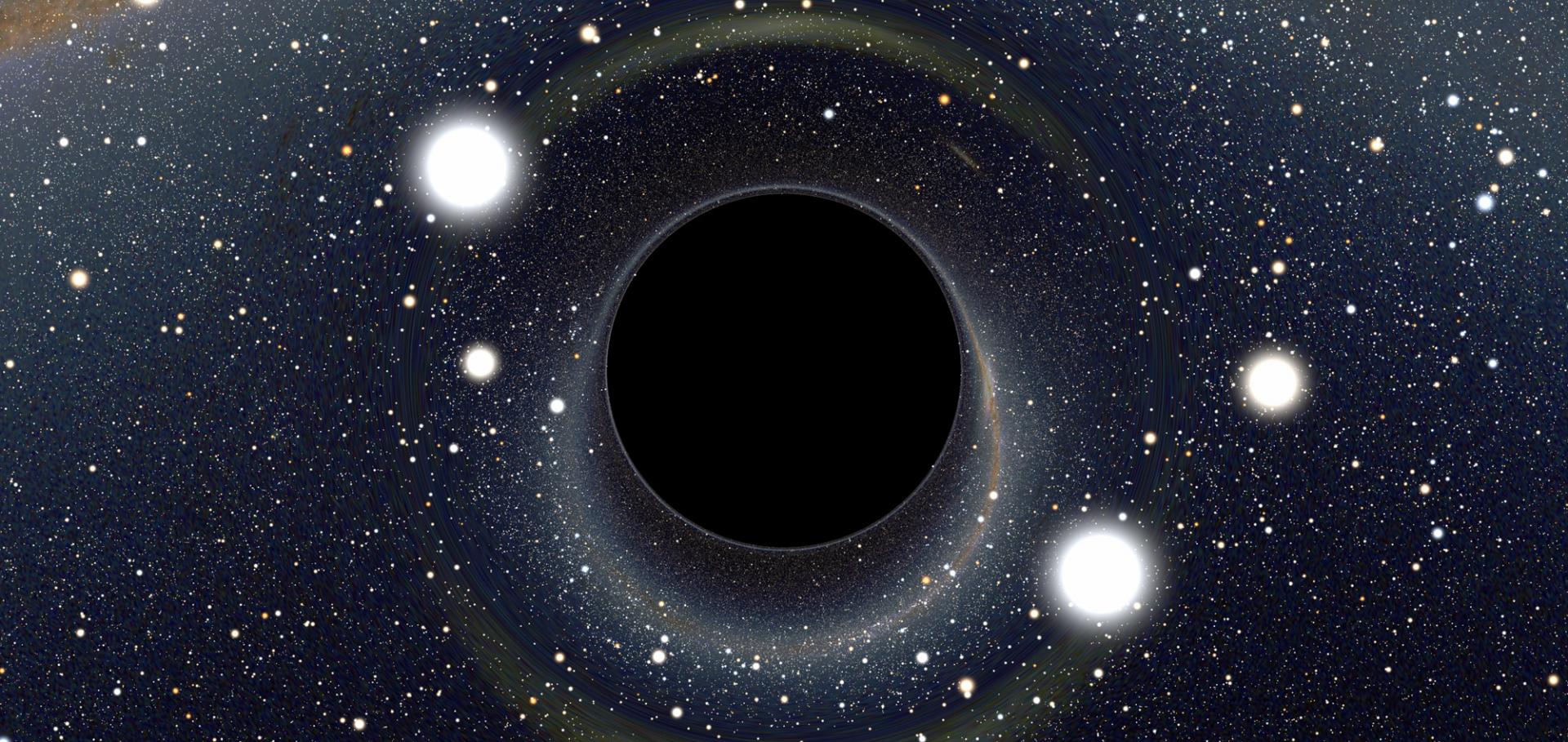
Black Hole

Lensing of space time around a black hole. At Oxford we study black holes observationally and theoretically on all size and time scales - it is some of our core work.

Credit: ALAIN RIAZUELO, IAP/UPMC/CNRS. CLICK HERE TO VIEW MORE IMAGES.

Dr Shubham Srivastav

Postdoctoral Research Assistant

Research theme

  • Astronomy and astrophysics

Sub department

  • Astrophysics

Research groups

  • Hintze Centre for Astrophysical Surveys
shubham.srivastav@physics.ox.ac.uk
  • About
  • Publications

SN 2022jli: A Type Ic Supernova with Periodic Modulation of Its Light Curve and an Unusually Long Rise

The Astrophysical Journal Letters American Astronomical Society 956:1 (2023)

Authors:

T Moore, SJ Smartt, M Nicholl, S Srivastav, HF Stevance, DB Jess, SDT Grant, MD Fulton, L Rhodes, SA Sim, R Hirai, P Podsiadlowski, JP Anderson, C Ashall, W Bate, R Fender, CP Gutiérrez, DA Howell, ME Huber, C Inserra, G Leloudas, LAG Monard, TE Müller-Bravo, BJ Shappee, KW Smith, G Terreran, J Tonry, MA Tucker, DR Young, A Aamer, T-W Chen, F Ragosta, L Galbany, M Gromadzki, L Harvey, P Hoeflich, C McCully, M Newsome, EP Gonzalez, C Pellegrino, P Ramsden, M Pérez-Torres, EJ Ridley, X Sheng, J Weston

Abstract:

Moore et al.We present multiwavelength photometry and spectroscopy of SN 2022jli, an unprecedented Type Ic supernova discovered in the galaxy NGC 157 at a distance of ≈ 23 Mpc. The multiband light curves reveal many remarkable characteristics. Peaking at a magnitude of g = 15.11 ± 0.02, the high-cadence photometry reveals periodic undulations of 12.5 ± 0.2 days superimposed on the 200-day supernova decline. This periodicity is observed in the light curves from nine separate filter and instrument configurations with peak-to-peak amplitudes of ≃ 0.1 mag. This is the first time that repeated periodic oscillations, over many cycles, have been detected in a supernova light curve. SN 2022jli also displays an extreme early excess that fades over ≈25 days, followed by a rise to a peak luminosity of Lopt = 1042.1 erg s−1. Although the exact explosion epoch is not constrained by data, the time from explosion to maximum light is ≳ 59 days. The luminosity can be explained by a large ejecta mass (Mej ≈ 12 ± 6 M⊙) powered by 56Ni, but we find it difficult to quantitatively model the early excess with circumstellar interaction and cooling. Collision between the supernova ejecta and a binary companion is a possible source of this emission. We discuss the origin of the periodic variability in the light curve, including interaction of the SN ejecta with nested shells of circumstellar matter and neutron stars colliding with binary companions.ATLAS is primarily funded through NASA grants NN12AR55G, 80NSSC18K0284, and 80NSSC18K1575. The ATLAS science products are provided by the University of Hawaii, Queen's University Belfast, STScI, SAAO, and Millennium Institute of Astrophysics in Chile. M.N., S.S., A.A., and X.S. are supported by the European Research Council (ERC) under the European Union's Horizon 2020 research and innovation program (grant agreement No. 948381) and by UK Space Agency grant No. ST/Y000692/1. Lasair is supported by the UKRI Science and Technology Facilities Council and is a collaboration between the University of Edinburgh (grant ST/N002512/1) and QUB (grant ST/N002520/1) within the LSST:UK Science Consortium. ZTF is supported by National Science Foundation grant AST-1440341 and a collaboration including Caltech, IPAC, the Weizmann Institute for Science, the Oskar Klein Center at Stockholm University, the University of Maryland, the University of Washington, Deutsches Elektronen-Synchrotron and Humboldt University, Los Alamos National Laboratories, the TANGO Consortium of Taiwan, the University of Wisconsin at Milwaukee, and Lawrence Berkeley National Laboratories. This work is based on observations collected at the European Organisation for Astronomical Research in the Southern Hemisphere, Chile, as part of ePESSTO+ (the advanced Public ESO Spectroscopic Survey for Transient Objects Survey). ePESSTO+ observations were obtained under ESO program ID 108.220C (PI: Inserra). The Las Cumbres Observatory (LCO) data have been obtained via an OPTCON proposal (IDs: OPTICON 22A/004, 22B/002; European Union's Horizon 2020 grant agreement No. 730890), and the LCO team is supported by NSF grants AST-1911225 and AST-1911151. S.S., S.A.S., and S.J.S. acknowledge funding from STFC grants ST/X006506/1 and ST/T000198/1. D.B.J. and S.D.T.G. acknowledge funding from STFC grant awards ST/T00021X/1 and ST/X000923/1. D.B.J. and W.B. acknowledge support from the Leverhulme Trust via the Research Project Grant RPG-2019-371. L.G. and C.P.G. acknowledge financial support from the Spanish Ministerio de Ciencia e Innovación (MCIN), the Agencia Estatal de Investigación (AEI) 10.13039/501100011033, and the European Social Fund (ESF) "Investing in your future" under the 2019 Ramón y Cajal program RYC2019-027683-I; the Marie Skłodowska-Curie and the Beatriu de Pinós 2021 BP 00168 program and the PID2020-115253GA-I00 HOSTFLOWS project, from Centro Superior de Investigaciones Científicas (CSIC) under the PIE project 20215AT016; and the program Unidad de Excelencia María de Maeztu CEX2020-001058-M. We acknowledge funding from ANID, Millennium Science Initiative, ICN12_009. G.L. is supported by a research grant (19054) from VILLUM FONDEN. T.W.C. thanks the Yushan Young Fellow Program by the Ministry of Education, Taiwan for the financial support.With funding from the Spanish government through the "Severo Ochoa Centre of Excellence" accreditation (CEX2020-001058-M).Peer reviewe
More details from the publisher
Details from ORA
More details

Unprecedented Early Flux Excess in the Hybrid 02es-like Type Ia Supernova 2022ywc Indicates Interaction with Circumstellar Material

The Astrophysical Journal Letters American Astronomical Society 956:2 (2023) l34

Authors:

Shubham Srivastav, T Moore, M Nicholl, MR Magee, SJ Smartt, MD Fulton, SA Sim, JM Pollin, L Galbany, C Inserra, A Kozyreva, Takashi J Moriya, FP Callan, X Sheng, KW Smith, JS Sommer, JP Anderson, M Deckers, M Gromadzki, TE Müller-Bravo, G Pignata, A Rest, DR Young
More details from the publisher
More details

The broad-lined Type-Ic supernova SN 2022xxf and its extraordinary two-humped light curves

Astronomy & Astrophysics EDP Sciences 678 (2023) A209-A209

Authors:

H Kuncarayakti, J Sollerman, L Izzo, K Maeda, S Yang, S Schulze, CR Angus, M Aubert, K Auchettl, M Della Valle, L Dessart, K Hinds, E Kankare, M Kawabata, P Lundqvist, T Nakaoka, D Perley, SI Raimundo, NL Strotjohann, K Taguchi, Y-Z Cai, P Charalampopoulos, Q Fang, M Fraser, CP Gutiérrez, R Imazawa, T Kangas, KS Kawabata, R Kotak, T Kravtsov, K Matilainen, S Mattila, S Moran, I Murata, I Salmaso, JP Anderson, C Ashall, EC Bellm, S Benetti, KC Chambers, T-W Chen, M Coughlin, F De Colle, C Fremling, L Galbany, A Gal-Yam, M Gromadzki, SL Groom, A Hajela, C Inserra, MM Kasliwal, AA Mahabal, A Martin-Carrillo, T Moore, TE Müller-Bravo, M Nicholl, F Ragosta, RL Riddle, Y Sharma, S Srivastav, MD Stritzinger, A Wold, DR Young

Abstract:

We report on our study of the supernova (SN) 2022xxf based on observations obtained during the first four months of its evolution. The light curves (LCs) display two humps of similar maximum brightness separated by 75 days, unprecedented for a broad-lined (BL) Type Ic supernova (SN IcBL). SN 2022xxf is the most nearby SN IcBL to date (in NGC 3705,z= 0.0037, at a distance of about 20 Mpc). Optical and near-infrared photometry and spectroscopy were used to identify the energy source powering the LC. Nearly 50 epochs of high signal-to-noise ratio spectroscopy were obtained within 130 days, comprising an unparalleled dataset for a SN IcBL, and one of the best-sampled SN datasets to date. The global spectral appearance and evolution of SN 2022xxf points to typical SN Ic/IcBL, with broad features (up to ~14 000 km s−1) and a gradual transition from the photospheric to the nebular phase. However, narrow emission lines (corresponding to ~ 1000–2500 km s−1) are present in the spectra from the time of the second rise, suggesting slower-moving circumstellar material (CSM). These lines are subtle, in comparison to the typical strong narrow lines of CSM-interacting SNe, for example, Type IIn, Ibn, and Icn, but some are readily noticeable at late times, such as in Mg Iλ5170 and [O I]λ5577. Unusually, the near-infrared spectra show narrow line peaks in a number of features formed by ions of O and Mg. We infer the presence of CSM that is free of H and He. We propose that the radiative energy from the ejecta-CSM interaction is a plausible explanation for the second LC hump. This interaction scenario is supported by the color evolution, which progresses to blue as the light curve evolves along the second hump, and by the slow second rise and subsequent rapid LC drop. SN 2022xxf may be related to an emerging number of CSM-interacting SNe Ic, which show slow, peculiar LCs, blue colors, and subtle CSM interaction lines. The progenitor stars of these SNe likely experienced an episode of mass loss consisting of H/He-free material shortly prior to explosion.
More details from the publisher
More details

GW190425: Pan-STARRS and ATLAS coverage of the skymap and limits on optical emission associated with FRB190425

(2023)

Authors:

SJ Smartt, M Nicholl, S Srivastav, ME Huber, KC Chambers, KW Smith, DR Young, MD Fulton, JL Tonry, CW Stubbs, L Denneau, AJ Cooper, A Aamer, JP Anderson, A Andersson, J Bulger, T-W Chen, P Clark, T de Boer, H Gao, JH Gillanders, A Lawrence, CC Lin, TB Lowe, EA Magnier, P Minguez, T Moore, A Rest, L Shingles, R Siverd, IA Smith, B Stalder, HF Stevance, R Wainscoat, R Williams
More details from the publisher
Details from ArXiV

AT 2022aedm and a New Class of Luminous, Fast-cooling Transients in Elliptical Galaxies

The Astrophysical Journal Letters American Astronomical Society 954:1 (2023) l28

Authors:

M Nicholl, S Srivastav, MD Fulton, S Gomez, ME Huber, SR Oates, P Ramsden, L Rhodes, SJ Smartt, KW Smith, A Aamer, JP Anderson, FE Bauer, E Berger, T de Boer, KC Chambers, P Charalampopoulos, T-W Chen, RP Fender, M Fraser, H Gao, DA Green, L Galbany, BP Gompertz, M Gromadzki, CP Gutiérrez, DA Howell, C Inserra, PG Jonker, M Kopsacheili, TB Lowe, EA Magnier, C McCully, SL McGee, T Moore, TE Müller-Bravo, M Newsome, E Padilla Gonzalez, C Pellegrino, T Pessi, M Pursiainen, A Rest, EJ Ridley, BJ Shappee, X Sheng, GP Smith, G Terreran, MA Tucker, J Vinkó, RJ Wainscoat, P Wiseman, DR Young
More details from the publisher

Pagination

  • First page First
  • Previous page Prev
  • …
  • Page 5
  • Page 6
  • Page 7
  • Page 8
  • Current page 9
  • Page 10
  • Page 11
  • Page 12
  • Page 13
  • …
  • Next page Next
  • Last page Last

Footer Menu

  • Contact us
  • Giving to the Dept of Physics
  • Work with us
  • Media

User account menu

  • Log in

Follow us

FIND US

Clarendon Laboratory,

Parks Road,

Oxford,

OX1 3PU

CONTACT US

Tel: +44(0)1865272200

University of Oxfrod logo Department Of Physics text logo
IOP Juno Champion logo Athena Swan Silver Award logo

© University of Oxford - Department of Physics

Cookies | Privacy policy | Accessibility statement

Built by: Versantus

  • Home
  • Research
  • Study
  • Engage
  • Our people
  • News & Comment
  • Events
  • Our facilities & services
  • About us
  • Giving to Physics
  • Current students
  • Staff intranet