Home
Department Of Physics text logo
  • Research
    • Our research
    • Our research groups
    • Our research in action
    • Research funding support
    • Summer internships for undergraduates
  • Study
    • Undergraduates
    • Postgraduates
  • Engage
    • For alumni
    • For business
    • For schools
    • For the public
Menu
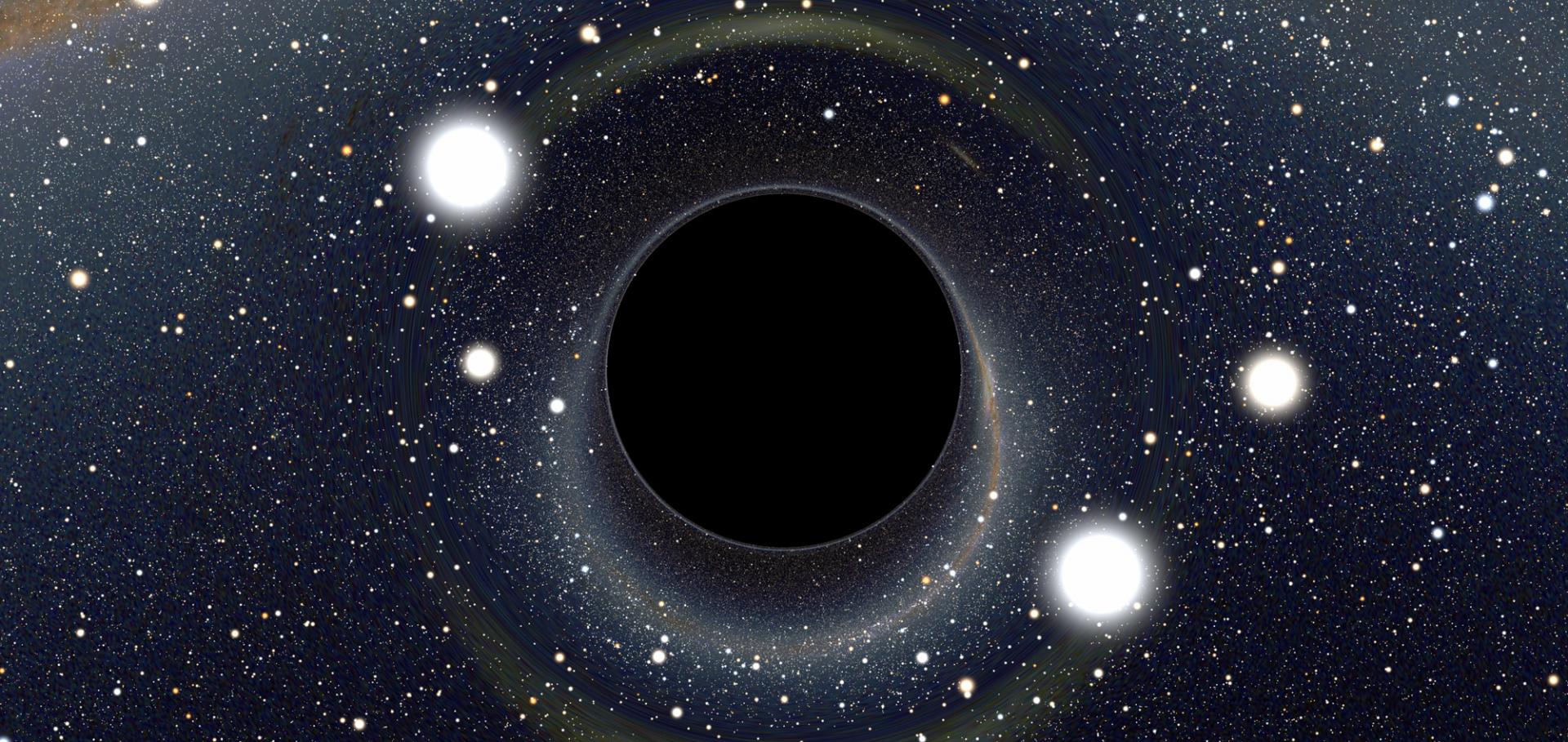
Black Hole

Lensing of space time around a black hole. At Oxford we study black holes observationally and theoretically on all size and time scales - it is some of our core work.

Credit: ALAIN RIAZUELO, IAP/UPMC/CNRS. CLICK HERE TO VIEW MORE IMAGES.

Dr Fiorenzo Stoppa

Royal Society Newton International Fellow

Research theme

  • Astronomy and astrophysics

Sub department

  • Astrophysics

Research groups

  • Hintze Centre for Astrophysical Surveys
  • Rubin-LSST
fiorenzo.stoppa@physics.ox.ac.uk
  • About
  • Publications

Consistency tests for comparing astrophysical models and observations

Monthly Notices of the Royal Astronomical Society Oxford University Press (OUP) 524:1 (2023) 1061-1074

Authors:

Fiorenzo Stoppa, Eric Cator, Gijs Nelemans

Abstract:

ABSTRACT In astronomy, there is an opportunity to enhance the practice of validating models through statistical techniques, specifically to account for measurement error uncertainties. While models are commonly used to describe observations, there are instances where there is a lack of agreement between the two. This can occur when models are derived from incomplete theories, when a better-fitting model is not available or when measurement uncertainties are not correctly considered. However, with the application of specific tests that assess the consistency between observations and astrophysical models in a model-independent way, it is possible to address this issue. The consistency tests (ConTESTs) developed in this paper use a combination of non-parametric methods and distance measures to obtain a test statistic that evaluates the closeness of the astrophysical model to the observations. To draw conclusions on the consistency hypothesis, a simulation-based methodology is performed. In particular, we built two tests for density models and two for regression models to be used depending on the case at hand and the power of the test needed. We used ConTEST to examine synthetic examples in order to determine the effectiveness of the tests and provide guidance on using them while building a model. We also applied ConTEST to various astronomy cases, identifying which models were consistent and, if not, identifying the probable causes of rejection.
More details from the publisher
More details

The Gravitational Wave Universe Toolbox

Astronomy & Astrophysics EDP Sciences 663 (2022) A155-A155

Authors:

Shu-Xu Yi, Gijs Nelemans, Christiaan Brinkerink, Zuzanna Kostrzewa-Rutkowska, Sjoerd T Timmer, Fiorenzo Stoppa, Elena M Rossi, Simon F Portegies Zwart

Abstract:

Context.As the importance of gravitational wave (GW) astrophysics increases rapidly, astronomers interested in GWs who are not experts in this field sometimes need to get a quick idea of what GW sources can be detected by certain detectors, and the accuracy of the measured parameters.Aims.The GW-Toolbox is a set of easy-to-use, flexible tools to simulate observations of the GW universe with different detectors, including ground-based interferometers (advanced LIGO, advanced VIRGO, KAGRA, Einstein Telescope, Cosmic Explorer, and also customised interferometers), space-borne interferometers (LISA and a customised design), and pulsar timing arrays mimicking the current working arrays (EPTA, PPTA, NANOGrav, IPTA) and future ones. We include a broad range of sources, such as mergers of stellar-mass compact objects, namely black holes, neutron stars, and black hole–neutron star binaries, supermassive black hole binary mergers and inspirals, Galactic double white dwarfs in ultra-compact orbit, extreme-mass-ratio inspirals, and stochastic GW backgrounds.Methods.We collected methods to simulate source populations and determine their detectability with various detectors. Our aim is to provide a comprehensive description of the methodology and functionality of the GW-Toolbox.Results.The GW-Toolbox produces results that are consistent with previous findings in the literature, and the tools can be accessed via a website interface or as a Python package. In the future, this package will be upgraded with more functions.
More details from the publisher
More details

The Gravitational Wave Universe Toolbox

Astronomy & Astrophysics EDP Sciences 663 (2022) A156-A156

Authors:

Shu-Xu Yi, Fiorenzo Stoppa, Gijs Nelemans, Eric Cator

Abstract:

Context:TheGW-Universe Toolboxis a software package that simulates observations of the gravitational wave (GW) Universe with different types of GW detectors, including Earth-based and space-borne laser interferometers and pulsar timing arrays. It is accessible as a website, and can also be imported and run locally as a Python package.Methods:We employ the method used by theGW-Universe Toolboxto generate a synthetic catalogue of detection of stellar-mass binary black hole (BBH) mergers. As an example of its scientific application, we study how GW observations of BBHs can be used to constrain the merger rate as a function of redshift and masses. We study advanced LIGO (aLIGO) and theEinsteinTelescope (ET) as two representatives of the second and third generation GW observatories, respectively. We also simulate the observations from a detector that is half as sensitive as the ET at its nominal designed sensitivity, which represents an early phase of the ET. We used two methods to obtain the constraints on the source population properties from the catalogues: the first uses a parameteric differential merger rate model and applies a Bayesian inference on the parameters; the other is non-parameteric and uses weighted Kernel density estimators.Results:Our results show the overwhelming advantages of the third generation detector over those of the second generation for the study of BBH population properties, especially at redshifts higher than ∼2, where the merger rate is believed to peak. With the simulated aLIGO catalogue, the parameteric Bayesian method can still give some constraints on the merger rate density and mass function beyond its detecting horizon, while the non-parametric method loses the constraining ability completely there. The difference is due to the extra information placed by assuming a specific parameterisation of the population model in the Bayesian method. In the non-parameteric method, no assumption of the general shape of the merger rate density and mass function are placed, not even the assumption of its smoothness. These two methods represent the two extreme situations of general population reconstruction. We also find that, despite the numbers of detected events of the half ET can easily be compatible with full ET after a longer observation duration, and the catalogue from the full ET can still give much better constraints on the population properties due to its smaller uncertainties on the physical parameters of the GW events.
More details from the publisher
More details

AutoSourceID-Light

Astronomy & Astrophysics EDP Sciences 662 (2022) A109-A109

Authors:

F Stoppa, P Vreeswijk, S Bloemen, S Bhattacharyya, S Caron, G Jóhannesson, R Ruiz de Austri, C van den Oetelaar, G Zaharijas, PJ Groot, E Cator, G Nelemans

Abstract:

Aims.With the ever-increasing survey speed of optical wide-field telescopes and the importance of discovering transients when they are still young, rapid and reliable source localization is paramount. We present AutoSourceID-Light (ASID-L), an innovative framework that uses computer vision techniques that can naturally deal with large amounts of data and rapidly localize sources in optical images.Methods.We show that the ASID-L algorithm based on U-shaped networks and enhanced with a Laplacian of Gaussian filter provides outstanding performance in the localization of sources. A U-Net network discerns the sources in the images from many different artifacts and passes the result to a Laplacian of Gaussian filter that then estimates the exact location.Results.Using ASID-L on the optical images of the MeerLICHT telescope demonstrates the great speed and localization power of the method. We compare the results with SExtractor and show that our method outperforms this more widely used method. ASID-L rapidly detects more sources not only in low- and mid-density fields, but particularly in areas with more than 150 sources per square arcminute. The training set and code used in this paper are publicly available.
More details from the publisher
More details

MeerCRAB: MeerLICHT classification of real and bogus transients using deep learning

Experimental Astronomy Springer Science and Business Media LLC 51:2 (2021) 319-344

Authors:

Zafiirah Hosenie, Steven Bloemen, Paul Groot, Robert Lyon, Bart Scheers, Benjamin Stappers, Fiorenzo Stoppa, Paul Vreeswijk, Simon De Wet, Marc Klein Wolt, Elmar Körding, Vanessa McBride, Rudolf Le Poole, Kerry Paterson, Daniëlle LA Pieterse, Patrick Woudt
More details from the publisher
More details

Pagination

  • First page First
  • Previous page Prev
  • Page 1
  • Page 2
  • Current page 3

Footer Menu

  • Contact us
  • Giving to the Dept of Physics
  • Work with us
  • Media

User account menu

  • Log in

Follow us

FIND US

Clarendon Laboratory,

Parks Road,

Oxford,

OX1 3PU

CONTACT US

Tel: +44(0)1865272200

University of Oxfrod logo Department Of Physics text logo
IOP Juno Champion logo Athena Swan Silver Award logo

© University of Oxford - Department of Physics

Cookies | Privacy policy | Accessibility statement

Built by: Versantus

  • Home
  • Research
  • Study
  • Engage
  • Our people
  • News & Comment
  • Events
  • Our facilities & services
  • About us
  • Giving to Physics
  • Current students
  • Staff intranet