Home
Department Of Physics text logo
  • Research
    • Our research
    • Our research groups
    • Our research in action
    • Research funding support
    • Summer internships for undergraduates
  • Study
    • Undergraduates
    • Postgraduates
  • Engage
    • For alumni
    • For business
    • For schools
    • For the public
  • Support
Menu
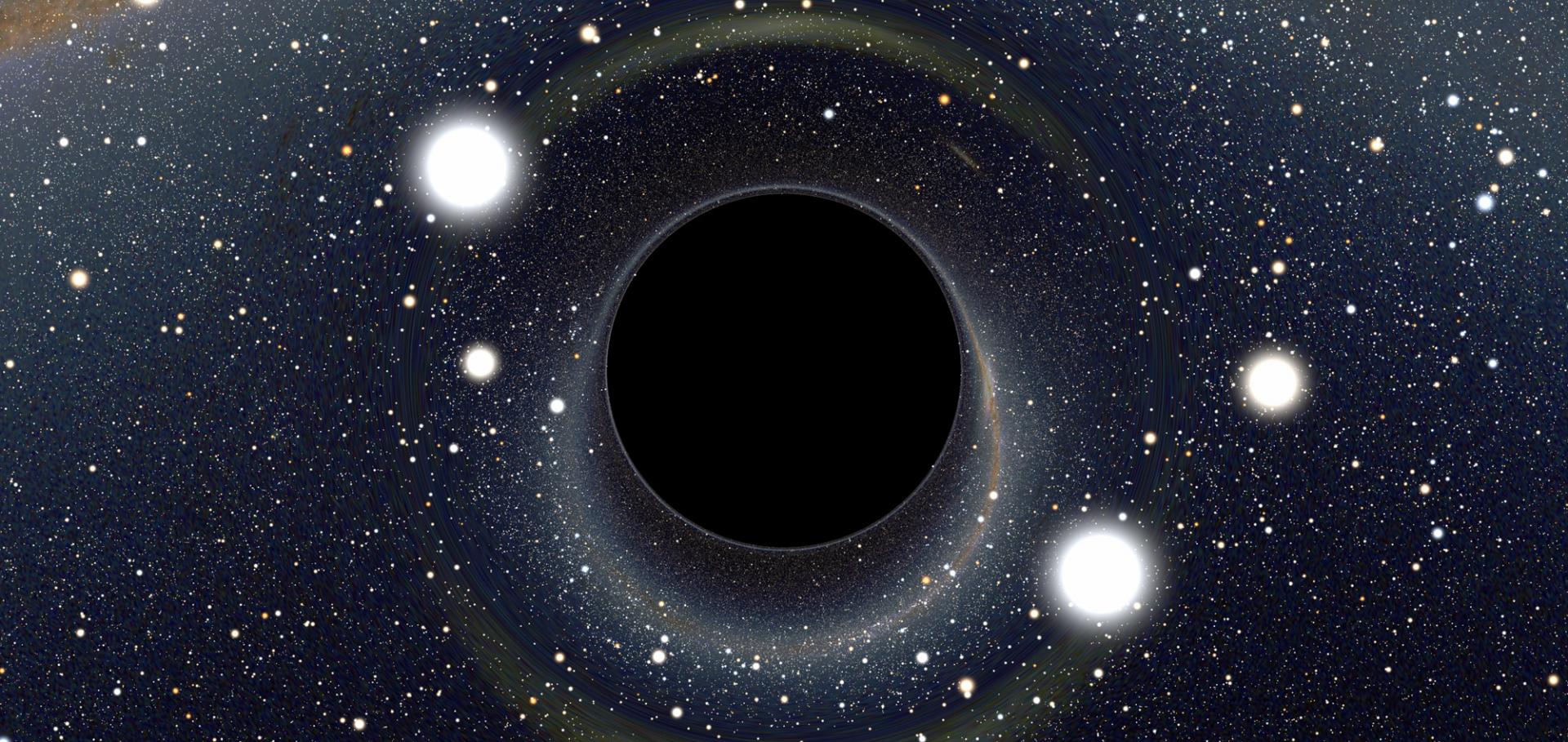
Black Hole

Lensing of space time around a black hole. At Oxford we study black holes observationally and theoretically on all size and time scales - it is some of our core work.

Credit: ALAIN RIAZUELO, IAP/UPMC/CNRS. CLICK HERE TO VIEW MORE IMAGES.

Dr Thomas Williams

Visitor

Research theme

  • Astronomy and astrophysics

Sub department

  • Astrophysics

Research groups

  • Galaxy formation and evolution
thomas.williams@physics.ox.ac.uk
Professional Website
  • About
  • Publications

JINGLE, a JCMT legacy survey of dust and gas for galaxy evolution studies: II. SCUBA-2 850 μm data reduction and dust flux density catalogues

Monthly Notices of the Royal Astronomical Society Oxford University Press 486:3 (2019) 4166-4185

Authors:

MWL Smith, CJR Clark, I De Looze, I Lamperti, A Saintonge, CD Wilson, G Accurso, E Brinks, Martin Bureau, EJ Chung, PJ Cigan, DL Clements, T Dharmawardena, L Fanciullo, Y Gao, Y Gao, WK Gear, HL Gomez, J Greenslade, HS Hwang, F Kemper, JC Lee, C Li, L Lin, L Liu, DC Molnár, A Mok, H-A Pan, M Sargent, P Scicluna, CMA Smith, S Urquhart, TG Williams, T Xiao, C Yang, M Zhu

Abstract:

We present the SCUBA-2 850μm component of JINGLE, the new JCMT large survey for dust and gas in nearby galaxies, which with 193 galaxies is the largest targeted survey of nearby galaxies at 850 μm. We provide details of our SCUBA-2 data reduction pipeline, optimized for slightly extended sources, and including a calibration model adjusted to match conventions used in other far-infrared (FIR) data. We measure total integrated fluxes for the entire JINGLE sample in 10 infrared/submillimetre bands, including all WISE, Herschel-PACS, Herschel-SPIRE, and SCUBA-2 850 μm maps, statistically accounting for the contamination by CO(J = 3–2) in the 850 μm band. Of our initial sample of 193 galaxies, 191 are detected at 250 μm with a ≥5σ significance. In the SCUBA-2 850 μm band we detect 126 galaxies with ≥3σ significance. The distribution of the JINGLE galaxies in FIR/sub-millimetre colour–colour plots reveals that the sample is not well fit by single modified-blackbody models that assume a single dust-emissivity index (β). Instead, our new 850 μm data suggest either that a large fraction of our objects require β < 1.5, or that a model allowing for an excess of sub-mm emission (e.g. a broken dust emissivity law, or a very cold dust component ≲10 K) is required. We provide relations to convert FIR colours to dust temperature and β for JINGLE-like galaxies. For JINGLE the FIR colours correlate more strongly with star-formation rate surface-density rather than the stellar surface-density, suggesting heating of dust is greater due to younger rather than older stellar-populations, consistent with the low proportion of early-type galaxies in the sample.
More details from the publisher
Details from ORA
More details

Pagination

  • First page First
  • Previous page Prev
  • …
  • Page 25
  • Page 26
  • Page 27
  • Page 28
  • Page 29
  • Page 30
  • Page 31
  • Page 32
  • Current page 33

Footer Menu

  • Contact us
  • Giving to the Dept of Physics
  • Work with us
  • Media

User account menu

  • Log in

Follow us

FIND US

Clarendon Laboratory,

Parks Road,

Oxford,

OX1 3PU

CONTACT US

Tel: +44(0)1865272200

University of Oxfrod logo Department Of Physics text logo
IOP Juno Champion logo Athena Swan Silver Award logo

© University of Oxford - Department of Physics

Cookies | Privacy policy | Accessibility statement

Built by: Versantus

  • Home
  • Research
  • Study
  • Engage
  • Our people
  • News & Comment
  • Events
  • Our facilities & services
  • About us
  • Giving to Physics
  • Current students
  • Staff intranet