Home
Department Of Physics text logo
  • Research
    • Our research
    • Our research groups
    • Our research in action
    • Research funding support
    • Summer internships for undergraduates
  • Study
    • Undergraduates
    • Postgraduates
  • Engage
    • For young people
    • For teachers
    • For the public
    • For alumni
    • For business
  • Support
Menu
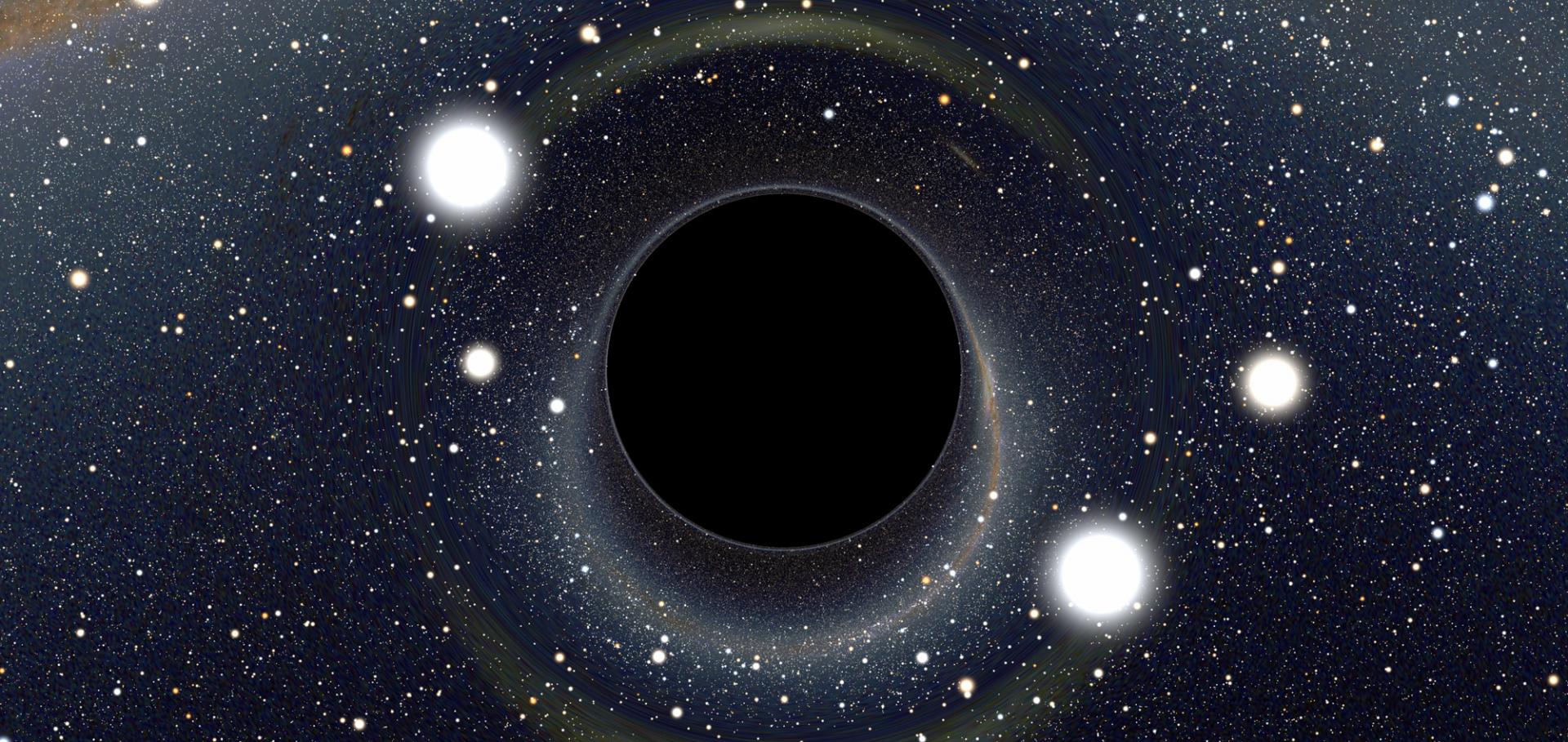
Black Hole

Lensing of space time around a black hole. At Oxford we study black holes observationally and theoretically on all size and time scales - it is some of our core work.

Credit: ALAIN RIAZUELO, IAP/UPMC/CNRS. CLICK HERE TO VIEW MORE IMAGES.

Dr Thomas Williams

Visitor

Research theme

  • Astronomy and astrophysics

Sub department

  • Astrophysics

Research groups

  • Galaxy formation and evolution
thomas.williams@physics.ox.ac.uk
Professional Website
  • About
  • Publications

Giant molecular cloud catalogues for PHANGS-ALMA: Methods and initial results

Monthly Notices of the Royal Astronomical Society 502:1 (2021) 1218-1245

Authors:

E Rosolowsky, A Hughes, AK Leroy, J Sun, M Querejeta, A Schruba, A Usero, CN Herrera, D Liu, J Pety, T Saito, I Bešlić, F Bigiel, G Blanc, M Chevance, DA Dale, S Deger, CM Faesi, SCO Glover, JD Henshaw, RS Klessen, JMD Kruijssen, K Larson, J Lee, S Meidt, A Mok, E Schinnerer, DA Thilker, TG Williams

Abstract:

We present improved methods for segmenting CO emission from galaxies into individual molecular clouds, providing an update to the cprops algorithms presented by Rosolowsky & Leroy. The new code enables both homogenization of the noise and spatial resolution among data, which allows for rigorous comparative analysis. The code also models the completeness of the data via false source injection and includes an updated segmentation approach to better deal with blended emission. These improved algorithms are implemented in a publicly available Python package, pycprops. We apply these methods to 10 of the nearest galaxies in the PHANGS-ALMA survey, cataloguing CO emission at a common 90 pc resolution and a matched noise level. We measure the properties of 4986 individual clouds identified in these targets. We investigate the scaling relations among cloud properties and the cloud mass distributions in each galaxy. The physical properties of clouds vary among galaxies, both as a function of galactocentric radius and as a function of dynamical environment. Overall, the clouds in our target galaxies are well-described by approximate energy equipartition, although clouds in stellar bars and galaxy centres show elevated line widths and virial parameters. The mass distribution of clouds in spiral arms has a typical mass scale that is 2.5× larger than interarm clouds and spiral arms clouds show slightly lower median virial parameters compared to interarm clouds (1.2 versus 1.4).
More details from the publisher
More details

PHANGS-HST: Star cluster spectral energy distribution fitting with cigale

Monthly Notices of the Royal Astronomical Society 502:1 (2021) 1366-1385

Authors:

JA Turner, DA Dale, JC Lee, M Boquien, R Chandar, S Deger, KL Larson, A Mok, DA Thilker, L Ubeda, BC Whitmore, F Belfiore, F Bigiel, GA Blanc, E Emsellem, K Grasha, B Groves, RS Klessen, K Kreckel, JMD Kruijssen, AK Leroy, E Rosolowsky, P Sanchez-Blazquez, E Schinnerer, A Schruba, SD Van Dyk, TG Williams

Abstract:

The sensitivity and angular resolution of photometric surveys executed by the Hubble Space Telescope (HST) enable studies of individual star clusters in galaxies out to a few tens of megaparsecs. The fitting of spectral energy distributions (SEDs) of star clusters is essential for measuring their physical properties and studying their evolution. We report on the use of the publicly available Code Investigating GALaxy Emission (cigale) SED fitting package to derive ages, stellar masses, and reddenings for star clusters identified in the Physics at High Angular resolution in Nearby GalaxieS-HST (PHANGS-HST) survey. Using samples of star clusters in the galaxy NGC 3351, we present results of benchmark analyses performed to validate the code and a comparison to SED fitting results from the Legacy Extragalactic Ultraviolet Survey. We consider procedures for the PHANGS-HST SED fitting pipeline, e.g. the choice of single stellar population models, the treatment of nebular emission and dust, and the use of fluxes versus magnitudes for the SED fitting. We report on the properties of clusters in NGC 3351 and find, on average, the clusters residing in the inner star-forming ring of NGC 3351 are young (<10 Myr) and massive (105 M⊙) while clusters in the stellar bulge are significantly older. Cluster mass function fits yield β values around -2, consistent with prior results with a tendency to be shallower at the youngest ages. Finally, we explore a Bayesian analysis with additional physically motivated priors for the distribution of ages and masses and analyse the resulting cluster distributions.
More details from the publisher
More details

Applying the Tremaine-Weinberg Method to Nearby Galaxies: Stellar Mass-Based Pattern Speeds, and Comparisons with ISM Kinematics

ArXiv 2102.01091 (2021)

Authors:

Thomas G Williams, Eva Schinnerer, Eric Emsellem, Sharon Meidt, Miguel Querejeta, Francesco Belfiore, Ivana Bešlić, Frank Bigiel, Mélanie Chevance, Daniel A Dale, Simon CO Glover, Kathryn Grasha, Ralf S Klessen, JM Diederik Kruijssen, Adam K Leroy, Hsi-An Pan, Jérôme Pety, Ismael Pessa, Erik Rosolowsky, Toshiki Saito, Francesco Santoro, Andreas Schruba, Mattia C Sormani, Jiayi Sun, Elizabeth J Watkins
Details from ArXiV

Giant Molecular Cloud Catalogues for PHANGS-ALMA: Methods and Initial Results

ArXiv 2101.04697 (2021)

Authors:

Erik Rosolowsky, Annie Hughes, Adam K Leroy, Jiayi Sun, Miguel Querejeta, Andreas Schruba, Antonio Usero, Cinthya N Herrera, Daizhong Liu, Jérôme Pety, Toshiki Saito, Ivana Bešlić, Frank Bigiel, Guillermo Blanc, Mélanie Chevance, Daniel A Dale, Sinan Deger, Christopher M Faesi, Simon CO Glover, Jonathan D Henshaw, Ralf S Klessen, JM Diederik Kruijssen, Kirsten Larson, Janice Lee, Sharon Meidt, Angus Mok, Eva Schinnerer, David A Thilker, Thomas G Williams
Details from ArXiV

Distances to PHANGS Galaxies: New Tip of the Red Giant Branch Measurements and Adopted Distances

ArXiv 2012.00757 (2020)

Authors:

Gagandeep S Anand, Janice C Lee, Schuyler D Van Dyk, Adam K Leroy, Erik Rosolowsky, Eva Schinnerer, Kirsten Larson, Ehsan Kourkchi, Kathryn Kreckel, Fabian Scheuermann, Luca Rizzi, David Thilker, R Brent Tully, Frank Bigiel, Guillermo A Blanc, Médéric Boquien, Rupali Chandar, Daniel Dale, Eric Emsellem, Sinan Deger, Simon CO Glover, Kathryn Grasha, Brent Groves, Ralf S Klessen, JM Diederik Kruijssen, Miguel Querejeta, Patricia Sánchez-Blázquez, Andreas Schruba, Jordan Turner, Leonardo Ubeda, Thomas G Williams, Brad Whitmore
Details from ArXiV

Pagination

  • First page First
  • Previous page Prev
  • …
  • Page 37
  • Page 38
  • Page 39
  • Page 40
  • Page 41
  • Page 42
  • Current page 43
  • Page 44
  • Page 45
  • Next page Next
  • Last page Last

Footer Menu

  • Contact us
  • Giving to the Dept of Physics
  • Work with us
  • Media

User account menu

  • Log in

Follow us

FIND US

Clarendon Laboratory,

Parks Road,

Oxford,

OX1 3PU

CONTACT US

Tel: +44(0)1865272200

University of Oxfrod logo Department Of Physics text logo
IOP Juno Champion logo Athena Swan Silver Award logo

© University of Oxford - Department of Physics

Cookies | Privacy policy | Accessibility statement

Built by: Versantus

  • Home
  • Research
  • Study
  • Engage
  • Our people
  • News & Comment
  • Events
  • Our facilities & services
  • About us
  • Giving to Physics
  • Current students
  • Staff intranet