Home
Department Of Physics text logo
  • Research
    • Our research
    • Our research groups
    • Our research in action
    • Research funding support
    • Summer internships for undergraduates
  • Study
    • Undergraduates
    • Postgraduates
  • Engage
    • For alumni
    • For business
    • For schools
    • For the public
  • Support
Menu
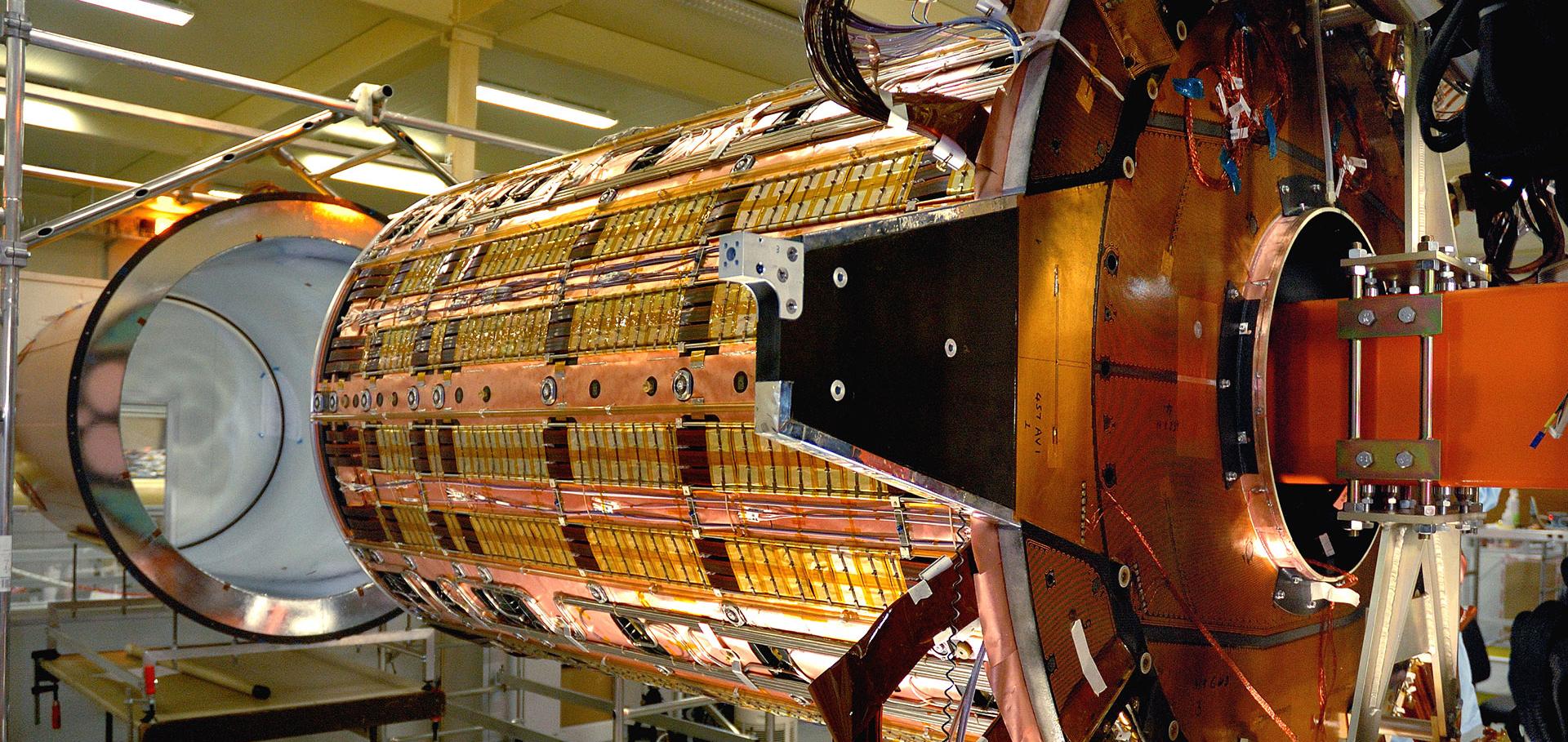
Insertion of STC into TRT at the Department of Physics, Oxford
Credit: CERN

Georg Viehhauser

University Research Lecturer

Sub department

  • Particle Physics

Research groups

  • ePIC
Georg.Viehhauser@physics.ox.ac.uk
Telephone: 01865 (2)73410
Denys Wilkinson Building, room 602
  • About
  • Publications

Measurement of the lambda(+)(c) lifetime.

Phys Rev Lett 86:11 (2001) 2232-2236

Authors:

AH Mahmood, SE Csorna, I Danko, KW McLean, S Márka, Z Xu, R Godang, K Kinoshita, IC Lai, S Schrenk, G Bonvicini, D Cinabro, S McGee, LP Perera, GJ Zhou, E Lipeles, SP Pappas, M Schmidtler, A Shapiro, WM Sun, AJ Weinstein, F Würthwein, DE Jaffe, G Masek, HP Paar, EM Potter, S Prell, V Sharma, DM Asner, A Eppich, TS Hill, RJ Morrison, HN Nelson, RA Briere, GP Chen, BH Behrens, WT Ford, A Gritsan, J Roy, JG Smith, JP Alexander, R Baker, C Bebek, BE Berger, K Berkelman, F Blanc, V Boisvert, DG Cassel, M Dickson, PS Drell, KM Ecklund, R Ehrlich, AD Foland, P Gaidarev, RS Galik, L Gibbons, B Gittelman, SW Gray, DL Hartill, BK Heltsley, PI Hopman, CD Jones, J Kandaswamy, DL Kreinick, M Lohner, A Magerkurth, TO Meyer, NB Mistry, E Nordberg, JR Patterson, D Peterson, D Riley, JG Thayer, D Urner, B Valant-Spaight, A Warburton, P Avery, C Prescott, AI Rubiera, J Yelton, J Zheng, G Brandenburg, A Ershov, YS Gao, DY Kim, R Wilson, TE Browder, Y Li, JL Rodriguez, H Yamamoto, T Bergfeld, BI Eisenstein, J Ernst, GE Gladding, GD Gollin, RM Hans, E Johnson, I Karliner, MA Marsh, M Palmer, C Plager, C Sedlack, M Selen, JJ Thaler, J Williams, KW Edwards, R Janicek, PM Patel, AJ Sadoff, R Ammar, A Bean, D Besson, R Davis, N Kwak, X Zhao, S Anderson, VV Frolov, Y Kubota, SJ Lee, R Mahapatra, JJ O'Neill, R Poling, T Riehle, A Smith, CJ Stepaniak, J Urheim, S Ahmed, MS Alam, SB Athar, L Jian, L Ling, M Saleem, S Timm, F Wappler, A Anastassov, JE Duboscq, E Eckhart, KK Gan, C Gwon, T Hart, K Honscheid, D Hufnagel, H Kagan, R Kass, TK Pedlar, H Schwarthoff, JB Thayer, E von Toerne, MM Zoeller, SJ Richichi, H Severini, P Skubic, A Undrus, S Chen, J Fast, JW Hinson, J Lee, DH Miller, EI Shibata, IP Shipsey, V Pavlunin, D Cronin-Hennessy, AL Lyon, EH Thorndike, CP Jessop, H Marsiske, ML Perl, V Savinov, X Zhou, TE Coan, V Fadeyev, Y Maravin, I Narsky, R Stroynowski, J Ye, T Wlodek, M Artuso, R Ayad, C Boulahouache, K Bukin, E Dambasuren, S Karamov, G Majumder, GC Moneti, R Mountain, S Schuh, T Skwarnicki, S Stone, G Viehhauser, JC Wang, A Wolf, J Wu, S Kopp, CLEO Collaboration

Abstract:

The Lambda+c lifetime is measured using 9.0 fb(-1) of e+e- annihilation data collected on or just below the Upsilon(4S) resonance with the CLEO II.V detector at CESR. Using an unbinned maximum likelihood fit, the Lambda+c lifetime is measured to be 179.6+/-6.9(stat)+/-4.4(syst) fs. The precision of this colliding beam measurement is comparable to other measurements, which are based on fixed-target experiments, with different systematic uncertainties.
More details from the publisher
More details

Measurement of the Λc+ lifetime

Physical Review Letters 86:11 (2001) 2232-2236

Authors:

AH Mahmood, SE Csorna, I Danko, KW McLean, S Márka, Z Xu, R Godang, K Kinoshita, IC Lai, S Schrenk, G Bonvicini, D Cinabro, S McGee, LP Perera, GJ Zhou, E Lipeles, SP Pappas, M Schmidtler, A Shapiro, WM Sun, AJ Weinstein, F Würthwein, DE Jaffe, G Masek, HP Paar, EM Potter, S Prell, V Sharma, DM Asner, A Eppich, TS Hill, RJ Morrison, HN Nelson, RA Briere, GP Chen, BH Behrens, WT Ford, A Gritsan, J Roy, JG Smith, JP Alexander, R Baker, C Bebek, BE Berger, K Berkelman, F Blanc, V Boisvert, DG Cassel, M Dickson, PS Drell, KM Ecklund, R Ehrlich, AD Foland, P Gaidarev, RS Galik, L Gibbons, B Gittelman, SW Gray, DL Hartill, BK Heltsley, PI Hopman, CD Jones, J Kandaswamy, DL Kreinick, M Lohner, A Magerkurth, TO Meyer, NB Mistry, E Nordberg, JR Patterson, D Peterson, D Riley, JG Thayer, D Urner, B Valant-Spaight, A Warburton, P Avery, C Prescott, AI Rubiera, J Yelton, J Zheng, G Brandenburg, A Ershov, YS Gao, DYJ Kim, R Wilson, TE Browder, Y Li, JL Rodriguez, H Yamamoto, T Bergfeld, BI Eisenstein, J Ernst, GE Gladding, GD Gollin, RM Hans, E Johnson, I Karliner, MA Marsh, M Palmer

Abstract:

The lifetime of the lowest-mass charm bryon is measured to provide a window for the nonperturbative sector of heavy quark decay. The data are obtained in a colliding beam environment in the CLEO II.V detector at the Cornell Electron Storage Ring. In this environment, the event topologies and backgrounds are very different from those encountered in high energy fixed-target experiments.
More details from the publisher
More details

First observation of the sigma(*+)(c) baryon and a new measurement of the sigma(*+)(c) mass.

Phys Rev Lett 86:7 (2001) 1167-1170

Authors:

R Ammar, A Bean, D Besson, R Davis, N Kwak, X Zhao, S Anderson, VV Frolov, Y Kubota, SJ Lee, R Mahapatra, JJ O'Neill, R Poling, T Riehle, A Smith, CJ Stepaniak, J Urheim, S Ahmed, MS Alam, SB Athar, L Jian, L Ling, M Saleem, S Timm, F Wappler, A Anastassov, JE Duboscq, E Eckhart, KK Gan, C Gwon, T Hart, K Honscheid, D Hufnagel, H Kagan, R Kass, TK Pedlar, H Schwarthoff, JB Thayer, E von Toerne, MM Zoeller, SJ Richichi, H Severini, P Skubic, A Undrus, S Chen, J Fast, JW Hinson, J Lee, DH Miller, EI Shibata, IP Shipsey, V Pavlunin, D Cronin-Hennessy, AL Lyon, EH Thorndike, CP Jessop, H Marsiske, ML Perl, V Savinov, X Zhou, TE Coan, V Fadeyev, Y Maravin, I Narsky, R Stroynowski, J Ye, T Wlodek, M Artuso, R Ayad, C Boulahouache, K Bukin, E Dambasuren, S Karamov, G Majumder, GC Moneti, R Mountain, S Schuh, T Skwarnicki, S Stone, G Viehhauser, JC Wang, A Wolf, J Wu, S Kopp, AH Mahmood, SE Csorna, I Danko, KW McLean, S Márka, Z Xu, R Godang, K Kinoshita, IC Lai, S Schrenk, G Bonvicini, D Cinabro, S McGee, LP Perera, GJ Zhou, E Lipeles, SP Pappas, M Schmidtler, A Shapiro, WM Sun, AJ Weinstein, F Würthwein, DE Jaffe, G Masek, HP Paar, EM Potter, S Prell, V Sharma, DM Asner, A Eppich, TS Hill, RJ Morrison, RA Briere, GP Chen, BH Behrens, WT Ford, A Gritsan, J Roy, JG Smith, JP Alexander, R Baker, C Bebek, BE Berger, K Berkelman, F Blanc, V Boisvert, DG Cassel, M Dickson, PS Drell, KM Ecklund, R Ehrlich, AD Foland, P Gaidarev, RS Galik, L Gibbons, B Gittelman, SW Gray, DL Hartill, BK Heltsley, PI Hopman, CD Jones, DL Kreinick, M Lohner, A Magerkurth, TO Meyer, NB Mistry, E Nordberg, JR Patterson, D Peterson, D Riley, JG Thayer, D Urner, B Valant-Spaight, A Warburton, P Avery, C Prescott, AI Rubiera, J Yelton, J Zheng, G Brandenburg, A Ershov, YS Gao, DY Kim, R Wilson, TE Browder, Y Li, JL Rodriguez, H Yamamoto, T Bergfeld, BI Eisenstein, J Ernst, GE Gladding, GD Gollin, RM Hans, E Johnson, I Karliner, MA Marsh, M Palmer, C Plager, C Sedlack, M Selen, JJ Thaler, J Williams, KW Edwards, R Janicek, PM Patel, AJ Sadoff, CLEO Collaboration

Abstract:

Using data recorded with the CLEO II and CLEO II.V detector configurations at the Cornell Electron Storage Rings, we report the first observation and mass measurement of the Sigma(*+)(c) charmed baryon, and an updated measurement of the mass of the Sigma(+)(c) baryon. We find M(Sigma(*+)(c))-M(Lambda(+)(c)) = (231.0+/-1.1+/-2.0) MeV, and M(Sigma(+)(c))-M(Lambda(+)(c)) = (166.4+/-0.2+/-0.3) MeV, where the errors are statistical and systematic, respectively.
More details from the publisher
More details
More details

Study ofχc1andχc2meson production inBmeson decays

Physical Review D American Physical Society (APS) 63:3 (2001) 031102

Authors:

S Chen, J Fast, JW Hinson, J Lee, DH Miller, EI Shibata, IPJ Shipsey, V Pavlunin, D Cronin-Hennessy, AL Lyon, EH Thorndike, V Savinov, TE Coan, V Fadeyev, YS Gao, Y Maravin, I Narsky, R Stroynowski, J Ye, T Wlodek, M Artuso, R Ayad, C Boulahouache, K Bukin, E Dambasuren, S Karamov, G Majumder, GC Moneti, R Mountain, S Schuh, T Skwarnicki, S Stone, JC Wang, A Wolf, J Wu, S Kopp, M Kostin, AH Mahmood, SE Csorna, I Danko, KW McLean, Z Xu, R Godang, G Bonvicini, D Cinabro, M Dubrovin, S McGee, GJ Zhou, E Lipeles, SP Pappas, M Schmidtler, A Shapiro, WM Sun, AJ Weinstein, F Würthwein, DE Jaffe, G Masek, HP Paar, EM Potter, S Prell, DM Asner, A Eppich, TS Hill, RJ Morrison, RA Briere, GP Chen, A Gritsan, JP Alexander, R Baker, C Bebek, BE Berger, K Berkelman, F Blanc, V Boisvert, DG Cassel, PS Drell, JE Duboscq, KM Ecklund, R Ehrlich, AD Foland, P Gaidarev, L Gibbons, B Gittelman, SW Gray, DL Hartill, BK Heltsley, PI Hopman, L Hsu, CD Jones, J Kandaswamy, DL Kreinick, M Lohner, A Magerkurth, TO Meyer, NB Mistry, E Nordberg, M Palmer, JR Patterson, D Peterson, D Riley, A Romano, JG Thayer, D Urner, B Valant-Spaight, G Viehhauser, A Warburton, P Avery, C Prescott, AI Rubiera, H Stoeck, J Yelton, G Brandenburg, A Ershov, DY-J Kim, R Wilson, H Yamamoto, T Bergfeld, BI Eisenstein, J Ernst, GE Gladding, GD Gollin, RM Hans, E Johnson, I Karliner, MA Marsh, C Plager, C Sedlack, M Selen, JJ Thaler, J Williams, KW Edwards, R Janicek, PM Patel, AJ Sadoff, R Ammar, A Bean, D Besson, X Zhao, S Anderson, VV Frolov, Y Kubota, SJ Lee, R Mahapatra, JJ O’Neill, R Poling, T Riehle, A Smith, CJ Stepaniak, J Urheim, S Ahmed, MS Alam, SB Athar, L Jian, L Ling, M Saleem, S Timm, F Wappler, A Anastassov, E Eckhart, KK Gan, C Gwon, T Hart, K Honscheid, D Hufnagel, H Kagan, R Kass, TK Pedlar, H Schwarthoff, JB Thayer, E von Toerne, MM Zoeller, SJ Richichi, H Severini, P Skubic, A Undrus
More details from the publisher

Correlated a c+ a c- production in e + e - annihilations at √s-10.5 GeV

Physical Review D 63:11 (2001)

Authors:

A Bornheim, E Lipeles, SP Pappas, M Schmidtler, A Shapiro, WM Sun, AJ Weinstein, DE Jaffe, R Mahapatra, G Masek, HP Paar, DM Asner, A Eppich, TS Hill, RJ Morrison, RA Briere, GP Chen, T Ferguson, H Vogel, A Gritsan, JP Alexander, R Baker, C Bebek, BE Berger, K Berkelman, F Blanc, V Boisvert, DG Cassel, PS Drell, JE Duboscq, KM Ecklund, R Ehrlich, P Gaidarev, RS Galik, L Gibbons, B Gittelman, SW Gray, DL Hartill, BK Heltsley, PI Hopman, L Hsu, CD Jones, J Kandaswamy, DL Kreinick, M Lohner, A Magerkurth, TO Meyer, NB Mistry, E Nordberg, M Palmer, JR Patterson, D Peterson, D Riley, A Romano, JG Thayer, D Urner, B Valant-Spaight, G Viehhauser, A Warburton, P Avery, C Prescott, AI Rubiera, H Stoeck, J Yelton, G Brandenburg, A Ershov, DYJ Kim, R Wilson, T Bergfeld, BI Eisenstein, J Ernst, GE Gladding, GD Gollin, RM Hans, E Johnson, I Karliner, MA Marsh, C Plager, C Sedlack, M Selen, JJ Thaler, J Williams, KW Edwards, R Janicek, PM Patel, AJ Sadoff, R Ammar, A Bean, D Besson, P Brabant, X Zhao, S Anderson, VV Frolov, Y Kubota, SJ Lee, JJ O’Neill, R Poling, T Riehle, A Smith, CJ Stepaniak

Abstract:

Using 13.6 fb -1 of continuum two-jet e + e - →cc events collected with the CLEO detector, we have searched for baryon number correlations at the primary quark level. We have measured the likelihood for a A c+ charmed baryon to be produced in the hemisphere opposite a A c- relative to the likelihood for a A c- charmed baryon to be produced opposite an anticharmed meson D; in all cases, the reconstructed hadrons must have momentum greater than 2.3 GeV/c. We find that, given a A c- (reconstructed in five different decay modes), a Ac+ is observed in the opposite hemisphere (0.72±0.11)% of the time (not corrected for efficiency). By contrast, given a D in one hemisphere, a A c+ is observed in the opposite hemisphere only (0.21 ±0.02)% of the time. Normalized to the total number of either A c- or D "tags," it is therefore 3.52±0.45±0.42 times more likely to find a A c+ opposite a A~ than a D meson. This enhancement is not observed in the JETSET 7.3 e + e - →cc Monte Carlo simulation. ©2001 The American Physical Society.
More details from the publisher

Pagination

  • First page First
  • Previous page Prev
  • …
  • Page 280
  • Page 281
  • Page 282
  • Page 283
  • Current page 284
  • Page 285
  • Page 286
  • Page 287
  • Page 288
  • …
  • Next page Next
  • Last page Last

Footer Menu

  • Contact us
  • Giving to the Dept of Physics
  • Work with us
  • Media

User account menu

  • Log in

Follow us

FIND US

Clarendon Laboratory,

Parks Road,

Oxford,

OX1 3PU

CONTACT US

Tel: +44(0)1865272200

University of Oxfrod logo Department Of Physics text logo
IOP Juno Champion logo Athena Swan Silver Award logo

© University of Oxford - Department of Physics

Cookies | Privacy policy | Accessibility statement

Built by: Versantus

  • Home
  • Research
  • Study
  • Engage
  • Our people
  • News & Comment
  • Events
  • Our facilities & services
  • About us
  • Giving to Physics
  • Current students
  • Staff intranet