Home
Department Of Physics text logo
  • Research
    • Our research
    • Our research groups
    • Our research in action
    • Research funding support
    • Summer internships for undergraduates
  • Study
    • Undergraduates
    • Postgraduates
  • Engage
    • For alumni
    • For business
    • For schools
    • For the public
  • Support
Menu
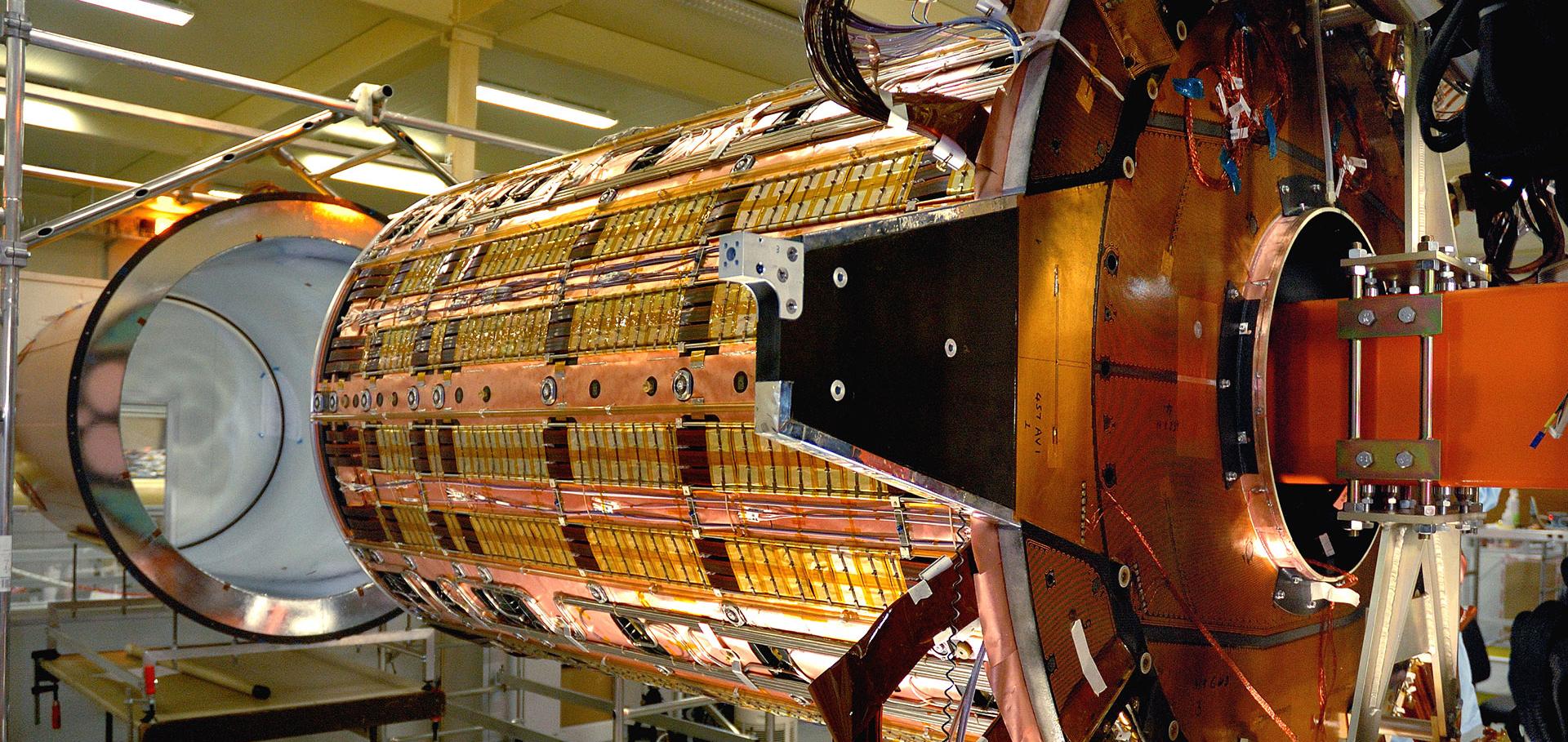
Insertion of STC into TRT at the Department of Physics, Oxford
Credit: CERN

Georg Viehhauser

University Research Lecturer

Sub department

  • Particle Physics

Research groups

  • ePIC
Georg.Viehhauser@physics.ox.ac.uk
Telephone: 01865 (2)73410
Denys Wilkinson Building, room 602
  • About
  • Publications

Continuum charged D* spin alignment at √s=10.5 GeV

Physical Review D Particles Fields Gravitation and Cosmology 58:5 (1998) 520031-520038

Authors:

G Brandenburg, RA Briere, A Ershov, YS Gao, DYJ Kim, R Wilson, H Yamamoto, TE Browder, Y Li, JL Rodriguez, T Bergfeld, BI Eisenstein, J Ernst, GE Gladding, GD Gollin, RM Hans, E Johnson, I Karliner, MA Marsh, M Palmer, M Selen, JJ Thaler, KW Edwards, A Bellerive, R Janicek, DB MacFarlane, PM Patel, AJ Sadoff, R Ammar, P Baringer, A Bean, D Besson, D Coppage, C Darling, R Davis, S Kotov, I Kravchenko, N Kwak, L Zhou, S Anderson, Y Kubota, SJ Lee, JJ O'Neill, R Poling, T Riehle, A Smith, MS Alam, SB Athar, Z Ling, AH Mahmood, S Timm, F Wappler, A Anastassov, JE Duboscq, D Fujino, KK Gan, T Hart, K Honscheid, H Kagan, R Kass, J Lee, MB Spencer, M Sung, A Undrus, A Wolf, MM Zoeller, B Nemati, SJ Richichi, WR Ross, H Severini, P Skubic, M Bishai, J Fast, JW Hinson, N Menon, DH Miller, EI Shibata, IPJ Shipsey, M Yurko, S Glenn, Y Kwon, AL Lyon, S Roberts, EH Thorndike, CP Jessop, K Lingel, H Marsiske, ML Perl, V Savinov, D Ugolini, X Zhou, TE Coan, V Fadeyev, I Korolkov, Y Maravin, I Narsky, V Shelkov, J Staeck, R Stroynowski, I Volobouev

Abstract:

A measurement of the spin alignment of charged D* mesons produced in continuum e+e-→cc̄ events at √s = 10.5 GeV is presented. This study using 4.72 fb-1 of CLEO II data shows that there is little evidence of any D* spin alignment.
More details from the publisher
More details

Hadronic transitions Y (2S)→Y(1S)

Physical Review D Particles Fields Gravitation and Cosmology 58:5 (1998) 520041-5.20042E6

Authors:

JP Alexander, R Baker, C Bebek, BE Berger, K Berkelman, K Bloom, V Boisvert, DG Cassel, DS Crowcroft, M Dickson, S von Dombrowski, PS Drell, KM Ecklund, R Ehrlich, AD Foland, P Gaidarev, RS Galik, L Gibbons, B Gittelman, SW Gray, DL Hartill, BK Heltsley, PI Hopman, J Kandaswamy, PC Kim, DL Kreinick, T Lee, Y Liu, NB Mistry, CR Ng, E Nordberg, M Ogg, JR Patterson, D Peterson, D Riley, A Soffer, B Valant-Spaight, C Ward, M Athanas, P Avery, CD Jones, M Lohner, S Patton, C Prescott, J Yelton, J Zheng, G Brandenburg, RA Briere, A Ershov, YS Gao, DYJ Kim, R Wilson, H Yamamoto, TE Browder, Y Li, JL Rodriguez, T Bergfeld, BI Eisenstein, J Ernst, GE Gladding, GD Gollin, RM Hans, E Johnson, I Karliner, MA Marsh, M Palmer, M Selen, JJ Thaler, KW Edwards, A Bellerive, R Janicek, DB MacFarlane, PM Patel, AJ Sadoff, R Ammar, P Baringer, A Bean, D Besson, D Coppage, C Darling, R Davis, S Kotov, I Kravchenko, N Kwak, L Zhou, S Anderson, Y Kubota, SJ Lee, JJ O'Neill, R Poling, T Riehle, A Smith, MS Alam, SB Athar, Z Ling, AH Mahmood, S Timm, F Wappler, A Anastassov, JE Duboscq

Abstract:

Using a 73.6 pb-1 data sample of Y(2S) events collected with the CLEO II detector at the Cornell Electron Storage Ring, we have investigated the hadronic transitions between the Y(2S) and the Y(1S). The dipion transition Y(2S)→Y(1S)π+π was studied using two different analysis techniques. Selecting events in which Y(1S)→e+e-,μ+μ- ("exclusive" analysis), and using the Y(1S) leptonic branching fractions world averages from the PDG review, we obtained B(Y(2S)→Y(1S)π+π-) = 0.189±0.004±0.010, while using a method allowing Y(1S)→anything ("inclusive" analysis) we obtained B(Y(2S)→Y(1S)π+π- = 0.196 ±0.002±0.010. The appropriate weighted average of the two measurements gives B(Y(2S) →Y(1S)μ+μ-) = 0.192±0.002±0.010. Combining the exclusive and inclusive results we derive the Y(1S) leptonic branching fractions Bee = 0.0229±0.0008±0.0011 and Bμμ = 0.0249±0.0008±0.0013. We also studied Y(2S)→Y(1S)π0π0 and obtained B(Y(2S)→Y(1S)π0π0) = 0.092±0.006±0.008. Parameters of the ππ system (dipion invariant mass spectra, angular distributions) were analyzed and found to be consistent with current theoretical models. Lastly, we searched for the η and single π0 transitions and obtained the 90% confidence level upper limits B(Y(2S)→Y(1S)η)<0.0028 and B(Y(2S)→Y(1S)π0)<0.0011.
More details from the publisher

Measurement of the branching ratios for the decays of D to ηπ , η′π , ηρ , and η′ρ

Physical Review D - Particles, Fields, Gravitation and Cosmology 58:5 (1998) 520021-520029

Authors:

CP Jessop, K Lingel, H Marsiske, ML Perl, SF Schaffner, D Ugolini, R Wang, X Zhou, TE Coan, V Fadeyev, I Korolkov, Y Maravin, I Narsky, V Shelkov, J Staeck, R Stroynowski, I Volobouev, J Ye, M Artuso, A Efimov, F Frasconi, M Gao, M Goldberg, D He, S Kopp, GC Moneti, R Mountain, Y Mukhin, S Schuh, T Skwarnicki, S Stone, G Viehhauser, X Xing, J Bartelt, SE Csorna, V Jain, S Marka, A Freyberger, R Godang, K Kinoshita, IC Lai, P Pomianowski, S Schrenk, G Bonvicini, D Cinabro, R Greene, LP Perera, B Barish, M Chadha, S Chan, G Eigen, JS Miller, C O'Grady, M Schmidtler, J Urheim, AJ Weinstein, F Würthwein, DM Asner, DW Bliss, WS Brower, G Masek, HP Paar, V Sharma, J Gronberg, R Kutschke, DJ Lange, S Menary, RJ Morrison, HN Nelson, TK Nelson, C Qiao, JD Richman, D Roberts, A Ryd, MS Witherell, R Balest, BH Behrens, K Cho, WT Ford, H Park, P Rankin, J Roy, JG Smith, JP Alexander, C Bebek, BE Berger, K Berkelman, K Bloom, DG Cassel, HA Cho, DM Coffman, DS Crowcrott, M Dickson, PS Drell, KM Ecklund, R Ehrlich, R Elia, AD Foland, P Gaidarev

Abstract:

Using a data sample with an integrated luminosity of 3.9 fb collected in e e annihilation with the CLEO-II detector at the Cornell Electron Storage Ring, we have measured the branching ratios for the decay modes D → (η,η′)π and D →(η,η′)ρ relative to D → φπ . These decay modes are among the most common hadronic decays of the D , and can be related by factorization to the semileptonic decays D →(η,η′)ℓ ν . The results obtained are compared with previous CLEO results and with the branching ratios measured for the related semileptonic decays. We also report results on the Cabibbo-suppressed decays of the D to the same final states.

Improved measurement of the pseudoscalar decay constant fDs

Physical Review D Particles Fields Gravitation and Cosmology 58:3 (1998) 0320021-03200210

Authors:

M Chada, S Chan, G Eigen, JS Miller, C O'Grady, M Schmidtler, J Urheim, AJ Weinstein, F Würthwein, DW Bliss, G Masek, HP Paar, S Prell, V Sharma, DM Asner, J Gronberg, TS Hill, DJ Lange, RJ Morrison, HN Nelson, TK Nelson, D Roberts, A Ryd, R Balest, BH Behrens, WT Ford, H Park, J Roy, JG Smith, JP Alexander, R Baker, C Bebek, BE Berger, K Berkelman, K Bloom, V Boisvert, DG Cassel, DS Crowcroft, M Dickson, S von Dombrowski, PS Drell, KM Ecklünd, R Ehrlich, AD Foland, P Gaidarev, L Gibbons, B Gittelman, SW Gray, DL Hartill, BK Heltsley, PI Hopman, J Kandaswamy, PC Kim, DL Kreinick, T Lee, Y Liu, NB Mistry, CR Ng, E Nordberg, M Ogg, JR Patterson, D Peterson, D Riley, A Soffer, B Valant-Spaight, C Ward, M Athanas, P Avery, CD Jones, M Lohner, S Patton, C Prescott, J Yelton, J Zheng, G Brandenburg, RA Briere, A Ershov, YS Gao, DYJ Kim, R Wilson, H Yamamoto, TE Browder, Y Li, JL Rodriguez, T Bergfeld, BI Eisenstein, J Ernst, GE Gladding, GD Gollin, RM Hans, E Johnson, I Karliner, MA Marsh, M Palmer, M Selen, JJ Thaler, KW Edwards, A Bellerive, R Janicek, DB MacFarlane

Abstract:

We present a new determination of fDs using 5 million e+e-→cc̄ events obtained with the CLEO II detector. Our value is derived from our new measured ratio Γ(D+s → μ+ν)/Δ(D+s → φπ+) = 0.173 ± 0.023 ± 0.035. Using ß(D+s → φπ+) = (3.6 ± 0.9)%, we extract fDs = (280 ± 19 ± 28 ± 34) MeV. We compare this result with various model calculations.
More details from the publisher
More details

Observation of B+→ωK+and search for related B decays modes

Physical Review Letters 81:2 (1998) 272-276

Authors:

T Bergfeld, BI Eisenstein, J Ernst, GE Gladding, GD Gollin, RM Hans, E Johnson, I Karliner, MA Marsh, M Palmer, M Selen, JJ Thaler, KW Edwards, A Bellerive, R Janicek, DB MacFarlane, PM Patel, AJ Sadoff, R Ammar, P Baringer, A Bean, D Besson, D Coppage, C Darling, R Davis, S Kotov, I Kravchenko, N Kwak, L Zhou, S Anderson, Y Kubota, SJ Lee, JJ O'Neill, R Poling, T Riehle, A Smith, MS Alam, SB Athar, Z Ling, AH Mahmood, S Timm, F Wappler, A Anastassov, JE Duboscq, D Fujino, KK Gan, T Hart, K Honscheid, H Kagan, R Kass, J Lee, MB Spencer, M Sung, A Undrus, A Wolf, MM Zoeller, B Nemati, SJ Richichi, WR Ross, H Severini, P Skubic, M Bishai, J Fast, JW Hinson, N Menon, DH Miller, EI Shibata, IPJ Shipsey, M Yurko, S Glenn, Y Kwon, AL Lyon, S Roberts, EH Thorndike, CP Jessop, K Lingel, H Marsiske, ML Perl, V Savinov, D Ugolini, X Zhou, TE Coan, V Fadeyev, I Korolkov, Y Maravin, I Narsky, V Shelkov, J Staeck, R Stroynowski, I Volobouev, J Ye, M Artuso, F Azfar, A Efimov, M Goldberg, D He, S Kopp, GC Moneti, R Mountain, S Schuh

Abstract:

We have searched for two-body charmless decays of B mesons to purely hadronic exclusive final states including ω or φ mesons using data collected with the CLEO II detector. With this sample of 6.6 ×10⁶B mesons we observe a signal for the ωK+ final state, and measure a branching fraction of B(B+→ωK+)=(1.5−0.6+0.7)±0.2)×10−5We also observe some evidence for the φK* final state, and upper limits are given for 22 other decay modes. These results provide the opportunity for studies of theoretical models and physical parameters. © 1998 American Physical Society.
More details from the publisher
More details

Pagination

  • First page First
  • Previous page Prev
  • …
  • Page 298
  • Page 299
  • Page 300
  • Page 301
  • Current page 302
  • Page 303
  • Page 304
  • Page 305
  • Page 306
  • …
  • Next page Next
  • Last page Last

Footer Menu

  • Contact us
  • Giving to the Dept of Physics
  • Work with us
  • Media

User account menu

  • Log in

Follow us

FIND US

Clarendon Laboratory,

Parks Road,

Oxford,

OX1 3PU

CONTACT US

Tel: +44(0)1865272200

University of Oxfrod logo Department Of Physics text logo
IOP Juno Champion logo Athena Swan Silver Award logo

© University of Oxford - Department of Physics

Cookies | Privacy policy | Accessibility statement

Built by: Versantus

  • Home
  • Research
  • Study
  • Engage
  • Our people
  • News & Comment
  • Events
  • Our facilities & services
  • About us
  • Giving to Physics
  • Current students
  • Staff intranet