Home
Department Of Physics text logo
  • Research
    • Our research
    • Our research groups
    • Our research in action
    • Research funding support
    • Summer internships for undergraduates
  • Study
    • Undergraduates
    • Postgraduates
  • Engage
    • For young people
    • For teachers
    • For the public
    • For alumni
    • For business
  • Support
Menu
CMP
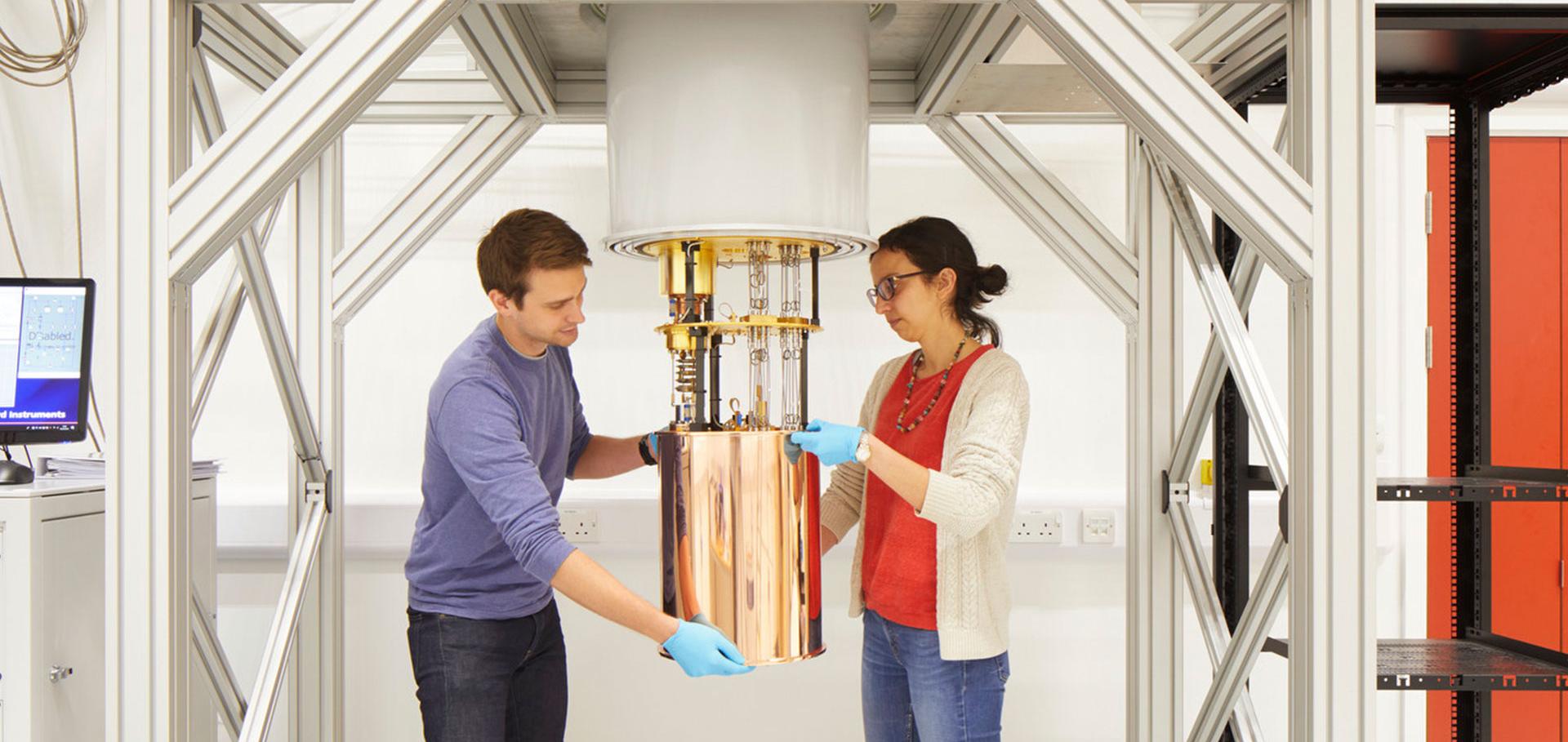
Credit: Jack Hobhouse

Roger Ward

Retired

Sub department

  • Condensed Matter Physics
Roger.Ward@physics.ox.ac.uk
Clarendon Laboratory, room 164
  • About
  • Publications

Structure and magnetism in DyxPr1-x and ErxPr1-x alloys: II. Double-hexagonal close-packed structure

Journal of Physics Condensed Matter 13:45 (2001) 10191-10206

Authors:

PS Clegg, RA Cowley, JP Goff, DF McMorrow, M Sawicki, RCC Ward, MR Wells

Abstract:

The structure and magnetism of epitaxial thin-film dysprosium-praseodymium and erbium-praseodymium alloys with the double-hexagonal close-packed (dhcp) crystal structure have been investigated. Short-range atomic and magnetic order have been found for DyxPr1-x with 0.4 ≥ x ≥ 0.05 and ErxPr1-x with 0.2 ≥ x ≥ 0.05. The distribution of the two species within the alloys was established with x-ray and neutron diffraction techniques. The atomic order is complex; the four planes of the unit cell have differing concentrations of constituents. In addition there are occasional clusters within the close-packed planes. The magnetic behaviour was investigated using neutron diffraction. Surprisingly, only short-range order is observed in the dhcp-structure alloys. Magnetization measurements suggest that Dy0.13Pr0.87 exhibits spin-glass behaviour. The roles of the indirect exchange interaction, the dipole-dipole interaction and the crystal field are considered in detail.
More details from the publisher
More details

89Y NMR Studies of MBE Grown DyFe2/YFe2 Multilayer Films

Hyperfine Interactions Springer Science and Business Media LLC 136-137:3-8 (2001) 433-437

Authors:

GJ Bowden, PC Riedi, GJ Tomka, RCC Ward, MR Wells
More details from the publisher
More details

Giant magnetoresistance by exchange springs in DyFe2/YFe2 superlattices

Physical Review Letters 87:18 (2001) 1868081-1868084

Authors:

SN Gordeev, JML Beaujour, GJ Bowden, BD Rainford, PAJ De Groot, RCC Ward, MR Wells, AGM Jansen

Abstract:

A report on the magnetization and magnetoresistance measurements for antiferromagnetically coupled DyFe2/YFe2 multilayers was presented. The formation of short range springs in the magnetically soft YFe2 layers was demonstrated which resulted in giant magnetoresistance. Both the magnitude of the effect and its dependence on magnetic field were found to be in good agreement with the theory of Levy and Zhang for domain wall induced giant magnetoresistance.
More details from the publisher
More details

Competing magnetic anisotropies in the magnetic and magnetoelastic properties of holmium-thulium superlattices

Physical Review B American Physical Society (APS) 64:9 (2001) 094424

Authors:

C de la Fuente, JI Arnaudas, L Benito, M Ciria, A del Moral, RCC Ward, MR Wells
More details from the publisher

Magnetic transitions and magnetoelasticity in double rare earth superlattices

Journal of Alloys and Compounds 326:1-2 (2001) 234-237

Authors:

A Del Moral, C De la Fuente, L Benito, JI Arnaudas, M Ciria, RCC Ward, MR Wells

Abstract:

We report on zero field cool susceptibility (χZFC), magnetization (M) and magnetoelastic stress (MELS) measurements, in the range 8-200 K and up to 12 T applied magnetic field, on (0001) superlattices [Ho15/Dy30]50 and [Ho30/Dy15]50. Magnetic phase diagrams are proposed, with a wide variety of magnetic phases: paramagnetic, helical, helifan, fan and ferromagnetic. Same magnetic phases for Dy and Ho coexist. Exchange polarization of Ho layers by Dy ones is manifested. Although compressed by basal plane a-lattice parameter misfit, spontaneous ferromagnetic order in Dy layers is suppressed, as well as ferro-cone phase in stretched Ho ones. However, modest applied magnetic field along b-axis (H≅0.6 T, at 10 K) produces ferromagnetic order in Dy (in basal plane) and ferro-cone in Ho. The basal plane hexagonal symmetry breaking magnetoelastic stress Mγ,2 (T = 0, 12 T) is separated for Ho and Dy layers, in good agreement with single-ion magnetoelastic coupling model. © 2001 Elsevier Science B.V. All rights reserved.
More details from the publisher

Pagination

  • First page First
  • Previous page Prev
  • …
  • Page 17
  • Page 18
  • Page 19
  • Page 20
  • Current page 21
  • Page 22
  • Page 23
  • Page 24
  • Page 25
  • …
  • Next page Next
  • Last page Last

Footer Menu

  • Contact us
  • Giving to the Dept of Physics
  • Work with us
  • Media

User account menu

  • Log in

Follow us

FIND US

Clarendon Laboratory,

Parks Road,

Oxford,

OX1 3PU

CONTACT US

Tel: +44(0)1865272200

University of Oxfrod logo Department Of Physics text logo
IOP Juno Champion logo Athena Swan Silver Award logo

© University of Oxford - Department of Physics

Cookies | Privacy policy | Accessibility statement

Built by: Versantus

  • Home
  • Research
  • Study
  • Engage
  • Our people
  • News & Comment
  • Events
  • Our facilities & services
  • About us
  • Giving to Physics
  • Current students
  • Staff intranet